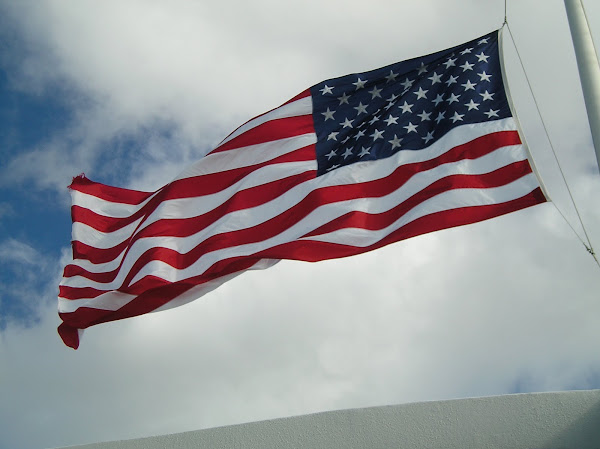
Image courtesy: Pfc. David Hauk, U.S. Army. Kandahar, Afghanistan, November 12, 2009

Friday, April 5, 2013

JAG 28

Images courtesy: Mark Forester Foundation

Thad Forester always knew his brother as Mark, even after he joined the U.S. Air Force. Pilots flying dangerous missions in Afghanistan, however, knew the 29-year-old Air Force combat controller as "JAG 28."

"Mark developed a great relationship with the pilots," Thad, 36, told The Unknown Soldiers. "They tell me that he had such a great sense of humor, but he also commanded respect and knew what he was doing."

Senior Airman Mark Forester didn't become a special operations warrior with a cool-sounding call sign overnight. His journey to a remote forward operating base in Afghanistan, where he directed airstrikes and confronted some of America's worst enemies, was as long as it was improbable.

"He was serving a mission for our church at the time of September 11th," Thad, one of Mark's three older brothers, said."He was angered, he was outraged, and he felt like he needed to do something."

It would be almost six years before Mark volunteered for the armed forces. Before he could serve his country at the highest level, the Haleyville, Ala., native, wanted to strengthen his mind, body and relationship with God.

"Mark was pudgy and baby-faced with narrow shoulders," his big brother said. "He got up to 230 lbs. on the (church) mission."

As soon as Mark returned to Alabama, he hit the gym with a brand of intensity that surprised even those who knew him best.

"He was fully committed," Thad said. "It was a drive I'd never seen in Mark before."

After enlisting in 2007 and completing a grueling Air Force and special operations training regimen, Mark was hand-picked by senior officers for a crucial assignment at Afghanistan's Forward Operating Base Tinsley.


"When he told us where he was going it didn't really mean anything to us," Thad said. "All we knew was it was Afghanistan."

The humble warrior didn't tell his family that being tapped to help defend the Uruzgan Province base, located in the heart of a dangerous, Taliban-infested combat zone, was a remarkable assignment for a senior airman going on his first deployment.

"He said 'Thad, don't tell anyone where I'm going right now, but it's a very active area and I'll have a lot of action,'" Thad said. "It didn't really sink in ... at least to me ... I feel like I was so oblivious to everything."

Mark never shared the details of an Aug. 6, 2010, battle that earned him the Bronze Star with Valor or other instances where his actions saved American and Afghan lives. Like so many of this generation's volunteer warriors, JAG 28 instead chose to lead by example.


"He had full awareness on the battlefield," Thad, who is researching his brother's deployment for an upcoming book, said. "One of Mark's teammates told me he got them what they needed -- not just bombs, but food."

On Sept. 29, 2010, Mark was on the second day of a combat mission when his unit's medic was shot by an enemy sniper. Without hesitating, JAG 28 ran toward his wounded comrade.

That same day in Tuscaloosa, Ala., Thad woke up with no premonition of his brother's final act of heroism.

"When they confirmed we were both home, they knocked on my parents' door first," Thad said. "Then they knocked on my door and delivered the news to me and my wife."

Senior Airman Mark Forester, the church missionary who transformed himself into a warrior, was killed while trying to save another man's life. He was posthumously awarded the Silver Star. The community sprung into action to support the Foresters, which deeply moved Mark's grieving parents and siblings.

"There were signs all over town like 'thank you Mark Forester and your family' and 'God Bless America,'" Thad said.

Seven months before Navy SEALs killed Osama bin Laden, Mark devoted his last full measure to a cause he believed in. While mourning, reflecting, and writing about his youngest sibling, Thad marvels at Mark's metamorphosis from little brother to JAG 28.

"We all have missions on this earth and some of them are different for each person," Thad said. "One of Mark's was to help defeat terrorism, and he did it."

COPYRIGHT 2013 CREATORS.COM


Friday, March 29, 2013

Woman in Combat

Images courtesy: Mike Moyer

Mike Moyer will never forget the night of Mar. 3, 2007.

"It's very much burned into my memory," he told The Unknown Soldiers.

After returning at dusk from his customary Saturday evening run, Mike, who turned on the television but left the lights off while heating up some chicken and rice, heard a surprise knock at the door. He nearly threw up when he saw two military officers standing in the darkness of his dimly lit back porch.

"As soon as I saw them standing there, I knew what happened," Mike said. "It still makes me sick to this day thinking about it."

The officers told Mike, who was in shock, that his 21-year-old daughter, U.S. Army Sgt. Ashly Moyer, was killed earlier that day by an enemy improvised explosive device in Baghdad. She died alongside Sgt. Michael Peek, 23, and Sgt. Brandon Parr, 25.

While Sgt. Moyer was a seasoned soldier from Emmaus, Pa., who also served at the U.S. military detention center at Guantanamo Bay, Cuba, she will always be "daddy's girl" to Mike. Almost every day, he thinks about the father-daughter fishing trip when Ashly, then 6, managed to upstage him.

"She said 'oh, Daddy, I got a fish,' and I said 'yeah right,'" Ashly's father said with a chuckle. "All of a sudden I see this fish jumping out of the water ... a 16-inch trout she caught with a Mickey Mouse rod."

The story is not only a fond memory, it's indicative of how Ashly approached life. The granddaughter of two Marines, including her grandfather, who survived the epic World War II battle at Iwo Jima before serving in Korea and Vietnam, Ashly joined the U.S. Army Reserve with the backing of her dad, who also served in the Marine Corps.

"She came home (from Guantanamo Bay) and decided she wanted to go into active military," Mike said. "She wound up going to Germany, and I figured because it was Europe, she'd have an adventure."

About ten months later, Mike sat across from Ashly at a pub in the ancient German city of Mainz. He was wishing his brown-haired, smiling daughter well before she deployed to Iraq.

"Because of the surge, they called a lot of people up from Germany at the time," Ashly's dad said.

The national media's recent trumpeting of a ban being lifted on women serving in combat positions perplexed Mike, as his daughter served on the front lines more than six years ago. Not only did Ashly's job involve driving armored vehicles to bombsites; Ashly was also present when a fellow female soldier was shot by an enemy sniper.

"Her friend had a metal plate protecting the chest portion ... she was lucky," Mike said. "(Ashly) said it scared the crap out of her, because she heard the shot and all of a sudden her friend went down behind her."

Ashly's final mission occurred in the Baghdad slum of Sadr City. Mike said Ashly's vehicle — the second in a four-vehicle convoy — was engulfed in a "fireball" after the front vehicle struck an improvised explosive device.

"On the Thursday prior to her getting killed on Saturday, she called me," Mike said. "She told me they were coming home in June, they had a month off, and she was thinking about (re-enlisting)."

Ashly also talked about her boyfriend, Jake, a fellow soldier who later told Mike he'd been planning to ask for his daughter's hand in marriage during a planned visit to Pennsylvania. Instead, Jake recounted the horrific image of seeing his girlfriend's vehicle engulfed in flames. The day's harrowing, tragic events still haunt the young combat veteran.

"You lose a part of you, it'll be there all your life, but you just have to learn how to deal with it, even though it will never go away," Mike said. "The love of his life was taken."

So was the little girl who always made her father proud, whether with her Mickey Mouse fishing rod or military-issued rifle. Like so many courageous American women since 9/11, Sgt. Ashly Moyer put her best foot forward during her country's time of need.

"Ashly wasn't a rough and tumble type of girl," her dad said. "She was just brave."

COPYRIGHT 2013 CREATORS.COM


Tuesday, March 26, 2013

In Their Eyes

While looking into the eyes of two young Marines during a Feb. 23 ceremony honoring their fallen brother in arms, I could see the war in Afghanistan. While some say the conflict is "winding down," it will never be over for these patriots, who saw their friend die less than a year ago.

The two Marines, Preston and Mike, made the nearly 600-mile trip from North Carolina's Camp Lejeune to the small town of Leesburg, Ga., to comfort the family of Lance Cpl. Steve Sutton. The 24-year-old Marine was killed while conducting combat operations in Afghanistan's Helmand Province on May 26, 2012.

"Steve Sutton was my brother," Preston said.

Throughout the emotional ceremony, the Marines stood beside Gene Sutton, the fallen Marine's father, who had his arms around both young men when a statue was unveiled to honor Steve. When I spoke with the grieving father before the event, he was overcome with emotion.

"I raised him myself," Gene said through tears.

Image courtesy: U.S. Marine Corps

The elder Sutton spoke about his son's success as a high school and junior college offensive lineman who later volunteered to transfer his athletic prowess from the football field to the battlefield. While immensely proud of all Steve accomplished, Gene misses his son dearly and knew getting through the day's events would be a struggle.

"I don't know how I'm going to make it through hearing them play 'Taps,'" he said.

Just as they were there for Steve during his final hours, Preston and Mike were there for their fellow Marine's dad.

"If there's anything anybody can do for Steve, it would be to continue this support and to support his family," Preston said. "That's what he would want."

"Big Steve," as the burly Marine was nicknamed, will always be in the hearts of his loved ones and those who served alongside him. But he also managed to inspire people who never got the chance to meet him.

"I feel as if I knew him well," Col. Donald Davis, commanding officer of the nearby Marine Corps Logistics Base Albany, said. "He's present here with us not only in spirit, but in the eyes of those of you who raised him and influenced him through his life."

Colonel Davis spoke of what it takes for young men and women to leave home and spend many months in faraway places like Afghanistan, where thousands of U.S. troops still serve more than eleven years after the 9/11 attacks.

"Walking among you and speaking to each of you, as well as (Steve's) family and friends, I see character," Davis said. "I see the attributes needed for a good Marine: patriotism, hard work and a compassion that truly reflects a concept beyond oneself."

These noble qualities could also be seen in Steve's fellow Marines. As I met both warriors and thanked them for their service, I couldn't help but wonder what both had been through. I can't imagine what it's like to lose a close friend, especially during the chaos and confusion of combat.

Despite pain that had to be extraordinary, both Marines addressed the more than 300 people who stood outside on a damp, chilly afternoon outside the Lee County Courthouse. When both Marines spoke, the hand of Steve's father, who was again overcome with emotion, rested on their shoulders.

"He influenced my life," Preston said. "I'm glad to see that there are still people in America that will show up and honor people that fight and serve."

Sadly, too many Americans, starting with politicians on both sides of the aisle, are disengaged from the Afghanistan conflict. Still, there are thousands of combat veterans like Preston and Mike and thousands of families like the Suttons who have lost loved ones since 9/11. These folks don't just live in small towns like Leesburg, Ga.; they are in communities all across the nation.

The next time you meet a veteran or family of a fallen service member, look into their eyes. You won't just see the wars that changed their lives; you will see all that's good about the country they helped defend.

"During his funeral procession, a local young woman said 'we don't have to know one another to be for one another,'" Davis said. "'We are all family.'"

COPYRIGHT 2013 CREATORS.COM

Monday, March 18, 2013

Roll Tide

Images courtesy: Sgt. Jason Cartwright

If you take a drive through the Deep South, you are virtually guaranteed to see numerous University of Alabama flags flying from houses and cars.

Yet few Crimson Tide flags hold the significance of the one Sgt. Jason Cartwright carries in the right cargo pocket of his U.S. Army uniform in Afghanistan. For the soldier, who arrived in the war zone over the summer with his trusted military working dog, the Alabama flag is a reminder of a close friend, U.S. Army Spc. Dusty "Doc" Parrish.

"If you knew Doc, no matter what kind of day, he would (put) a smile on your face," Sgt. Cartwright, 28, wrote to The Unknown Soldiers from Afghanistan. "Doc and I were roommates, both from Alabama, and both big Alabama fans."

While serving in Iraq with the Army's 5th Engineer Battalion, based out of Missouri's Fort Leonard Wood, Cartwright and his fellow soldiers held Parrish in the highest regard.


"We were in the same vehicle," Cartwright wrote. "I was his gunner and he was our medic."

On June 4, 2009, Spc. Parrish, 23, was killed in Balad, Iraq, when his vehicle was struck by an armor-piercing grenade. The loss of Parrish, who left behind a wife and son, devastated the soldier's hometown of Jasper, Ala., as well as Cartwright and his entire unit.

"We were real close friends to Doc," Cartwright wrote.

Nearing the end of his third combat deployment and the second hunting for roadside bombs with his dog, Cartwright carries not only the Alabama flag that once flew in the room he shared with Parrish, but also his fallen comrade's courageous spirit.

"(Through) all my deployments and being here in Afghanistan now, I still want to serve this great country," Cartwright wrote.


Ever since I connected with this soldier in June 2011, I have been astonished by how much he loves his country, his family and Isaac, the fearless dog that has helped save countless lives. Even after many months away from his wife and son and several near-death experiences with Isaac, Cartwright recently made the brave, selfless decision to re-enlist.

"So now I am dedicating six more years," he wrote.

When it was time for his re-enlistment ceremony in Afghanistan, Cartwright asked a friend and brother in arms, Army Lt. Jeremy Carroll, to administer the oath.

"We would have never thought in Iraq in 2008 doing route clearance patrols together that one day in Afghanistan, (Carroll) would be re-enlisting me," Cartwright wrote.


While spending time together before and after the ceremony, the deployed soldiers shared laughs about the "good ole days" serving together in Iraq. They also discussed the pain of losing their good friend in combat.

"Lieutenant Carroll, Isaac and I know today that Doc is watching over us here in this land as we continue (our) mission," Cartwright wrote.

In December, the senior Army dog handler, who is still serving with the 5th Engineer Battalion, explained what a given day is like for himself and Isaac, the friendly black Lab who helped locate 28 roadside bombs during their last combat tour.

"Isaac and I search for over 18 hours — 800 meters of routes and compounds to only get everybody back on that chopper to leave once the mission is complete," Cartwright wrote five months into his current deployment. "That is exactly what we have done together, out front taking point with all the troops behind us."

Cartwright and Isaac have helped locate roadside bombs buried near schools, hospitals and routes traveled by U.S. and Afghan troops. Many people are alive because this soldier and his dog are willing to repeatedly risk everything. Yet Cartwright always praises his fellow soldiers without assigning himself credit for his own gallant, unselfish actions.

Standing on top of a makeshift stone platform during his re-enlistment ceremony in Afghanistan, Sgt. Jason Cartwright raised his right hand with two of his best war buddies, Lt. Carroll and Isaac, by his side. Flying proudly from the platform was the University of Alabama Crimson Tide flag that honors his fallen friend.

"Thanks for serving, Dusty 'Doc' Parrish," the brave soldier wrote.

COPYRIGHT 2013 CREATORS.COM

Note: To see the weekly "Unknown Soldiers" column in your local newspaper, please click here.

Friday, March 8, 2013

Be Proud

Image courtesy: Lance Cpl. Daniel Wetzel

I was filled with pride during my entire phone conversation with Cpl. Kyle Carpenter. As an American citizen, it makes me enormously thankful that this 23-year-old Marine, who is being considered for the Medal of Honor, is willing to sacrifice so much for others.

Few have the courage to do what fellow Marines said Cpl. Carpenter did on Nov. 21, 2010, in Marjah, Afghanistan. When a grenade landed on the roof of a compound he was helping fortify, squad members said he dove on top of the explosive device to shield a fellow Marine.

"The grenade went off, and I woke up a month later," Carpenter told The Unknown Soldiers. "The next thing I really remember is seeing Christmas stockings on the wall."

Carpenter said he has no recollection of jumping on top of the grenade. But the Gilbert, S.C., Marine does recall the harrowing events leading up to the day he lost his right eye.

"Just imagine what it's like walking through mud and it being hard to lift your feet out, even if you don't have anything on your back," Carpenter said. "On most of my patrols, I would carry 800 rounds on my back — a lot of weight — and the weather is well over 100 degrees."

Images courtesy: Cpl. Kyle Carpenter

Carpenter is not seeking accolades or sympathy. He wants Americans to understand what thousands of U.S. troops still stationed in Afghanistan often go through.

"I didn't have a shower for three months," he said.

On Nov. 20, Carpenter and his 2nd Battalion, 9th Marine Regiment brothers in arms knew a confrontation with the Taliban was at hand. Carpenter's squad was ordered to transform a local home into an American compound, deep in the heart of a terrorist stronghold.

"It wasn't a matter of 'I wonder if we're going to get at shot at today?'" Carpenter said. "It was a matter of 'when was it going to start?'"


After trudging through a canal full of mud and sewage, carrying their weapons above their heads while sinking into the sludge beneath their feet, the Marines started building the makeshift U.S. base.

"As we were digging, we heard an extremely loud explosion," the Medal of Honor nominee said. "I turned around and another loud explosion went off in the same area."

Carpenter was shocked when he realized Taliban fighters were lobbing grenades, which were not the enemy's weapons of choice.

"We had never seen or heard grenades throughout our entire deployment," Carpenter said. "Needless to say, we were in disbelief."

Carpenter said at least two Marines were injured in the attack, which included enemy sniper fire. Once night fell, however, they resumed digging and stacking sandbags before a Taliban rocket tore into the roof, which partially collapsed.

"That was pretty much the end of Nov. 20," Carpenter said.

After grabbing a few hours of sleep, the young Marine awoke to a familiar sound.

"Like many mornings in Afghanistan, our alarm clock was AK-47 small arms fire," he said.


Carpenter and a fellow Marine were repairing the damaged roof when the fateful grenade landed nearby. Both young men were badly injured in the blast, which squad members said would have been deadly if it weren't for Carpenter's heroism.

"Everything is a blur because of the medication," he said. "It really was about a year before I started to have fluid memories."

As a Walter Reed patient in Bethesda, Md., Carpenter is still adjusting to missing an eye, wearing artificial teeth, and enduring countless surgeries to repair his jaw. His ears ring constantly, and nerve damage in his arms makes it difficult to button his shirt. But instead of wallowing in pain, Carpenter uses his story to inspire others.

"The best thing that's come out of it is the impact I've had on other people," he said.

If Cpl. Kyle Carpenter is ultimately awarded the nation's highest military honor by President Barack Obama, the young Marine plans to use an increased platform to motivate veterans and fellow wounded warriors.

"I will never stop helping people that need to be helped or trying to make a positive impact on people's lives," Carpenter said.

If this volunteer warrior's words don't leave you consumed with pride, I don't know what will.

COPYRIGHT 2013 CREATORS.COM

Note: To see the weekly "Unknown Soldiers" column in your local newspaper, please click here.

Friday, March 1, 2013

Across the Street

Images courtesy: Mary Grindey

Staff Sgt. Jesse Grindey and his wife were walking down a Hazel Green, Wis., street when they noticed a beautiful house for sale.

"We were walking to the cemetery to visit his grandfather, and I told him 'I like this house,' and he said 'I like it too,'" Mary Grindey told The Unknown Soldiers. "But I said 'who would buy that house ... who would want to live by the cemetery?'"

Hazel Green, located near the Illinois border, is known as Wisconsin's "point of beginning," which is particularly appropriate for Mary. A native of the Philippines, she met her future husband seven years ago in South Korea. They were married in 2008, just before Staff Sgt. Grindey was transferred to Japan. In 2011, Jesse and Mary moved to the United States.

"When we found out we were coming here to the States, he said he would be deployed (to Afghanistan) no matter what," Mary said. "I told him 'don't volunteer.'"

Jesse had been volunteering his entire life. Not only had the Wisconsin native served in Iraq, but he was also a volunteer firefighter and EMT with the Hazel Green Fire Department and Rescue Squad.

"If there was a fire, he'd jump into a fire truck and then jump into the fire," Mary said.

But things were different now, as the Army couple was trying to settle down while raising two young children that Jesse adored. Still, the soldier remained steadfast in his commitment to serve.

"The night before he left, I told him 'can't you get out of the Army?'" Mary said. "He said 'no, this is my job.'"

Jesse deployed to Kandahar, Afghanistan, on Dec. 30, 2011, with the 287th Military Police Company, based out of Fort Riley, Kan. With her husband thousands of miles away, Mary took on the responsibility of caring for two young children in an unfamiliar town and country.

"I talked to him two hours every day for the first month," the soldier's wife said. "He kept saying that he was doing good ... I really felt more comfortable, too."

Then, as Mary and the kids visited Jesse's grandmother on the morning of March 12, 2012, something didn't feel right.

"I had that really, really weird feeling in the morning," Mary said. "I was so sad ... I wanted to cry."

A few hours later, Jesse's tearful sister told Mary she needed to go home.

"I saw the Chaplain and (Army Sergeant First Class) waiting for me, and I could tell it wasn't good news," Mary said.

Image courtesy: U.S. Air Force/Steve Kotecki

Jesse, 30, had succumbed to a medical problem of which no one, including Mary, was aware.

"I was shocked, because I had never seen him in pain," she said. "It just shocked everyone because he was such a healthy guy."

Support for Mary and the couple's children poured in from all over the world.

"I can't ask for a better community than Hazel Green," Mary said. "Jesse's family gave me a lot of support, as well as friends from Kansas, Kentucky, New Hampshire, Japan, Korea and the community here ... I can't even say enough words."

The last time Mary spoke to her husband was three days before he died. It was also her mother's birthday, and Jesse wanted to know if she was enjoying her new house in the Philippines, which the soldier helped pay for with a portion of his salary.

"The last words (he said to) me were 'hey honey, tell your mom happy birthday for me,'" Mary said.

When Mary visited Jesse's grave in the same cemetery where his grandfather is buried, she noticed a "for sale" sign in the window of the house the couple once admired. She decided to buy it.

"We get a lot of snow in the winter, but in summertime, the fall, or the spring, my kids drive their little smart cars and go visit," Mary said. "I can even hear them yelling ... 'Daddy, we're here.'"

As Mary Grindey and her children mark a new point of beginning, they are comforted to know that Staff Sgt. Jesse Grindey, who spent many years putting out fires at home and abroad, is always right across the street.

COPYRIGHT 2013 CREATORS.COM

Note: To see the weekly "Unknown Soldiers" column in your local newspaper, please click here.

Monday, February 25, 2013

Worth a Listen

Images courtesy: Shain Gillette

There is much talk about caring for our nation's veterans. From politicians to non-profit organizations, well-intentioned Americans are saying all the right things about ensuring that returning warriors receive the benefits they so richly deserve.

Still, amid a 24-hour news cycle and the hustle and bustle of our daily lives, a key component of helping combat veterans adjust to being home is sometimes overlooked. Too often, we forget to listen to the brave men and women who understand war like no civilian ever could.

Listening has become a big part of U.S. Army Sgt. 1st Class Josh Gillette's life since a Nov. 1, 2012, improvised explosive device (IED) blast. With shrapnel embedded in his eyes, it's still difficult for the soldier to see the faces of his wife and eight-year-old daughter. But if you ask the wounded warrior to describe his harrowing sixth deployment, he will gladly oblige.

"I like telling my story," Sgt. 1st Class Gillette told The Unknown Soldiers. "A lot of people don't realize (the war) is still going on."

After serving three tours in Iraq and one in Bosnia, Josh was on his second deployment to Afghanistan in September 2012 when a powerful explosion threw him into the air before he landed several feet away. A fellow soldier had stepped on an IED and suffered devastating injuries.

"I was concussed and had to get to a fallen comrade who had lost both legs," Josh said. "We applied first aid and cleared a helicopter to land."

Two days later, the wounded soldier succumbed to his wounds, which left Josh and his Special Forces unit in a state of shock. Despite their grief, however, the soldiers knew they had to keep patrolling Afghanistan's volatile Helmand Province.

"We were pushing outside again to take over a stronghold that the Taliban had," Josh said. "We wanted to show the (Afghan Local Police) that we could take this area."

On Nov. 1, while approaching a mud hut with his trusted military working dog, Banan, the 32-year-old soldier sensed something was wrong.

"I knew he was looking for an IED because of his changed behavior," Josh said.

Moments later, Josh was overwhelmed by blunt force and searing heat. The dog had stepped on an IED, sending Banan and Josh flying through the air. Josh remembers nothing about the ensuing battle, in which his fellow soldiers defeated Taliban fighters who attacked the helicopter evacuating him to safety.

"At that point I blacked out," Josh said.

Banan was killed in the attack, while Josh spent the next two weeks in a confused, nearly comatose state.

"I kind of remember waking up in the hospital 15 days later, which is weird since people said I was talking to them and writing things down," he said. "I don't remember anything."

With shrapnel digging into his eyes, Josh could barely see his battered face in a mirror. Missing his teeth and impaled with rocks, the soldier also needed a titanium rod in his arm and plates in his cheekbones.

"I have limited vision," Josh said. "I can't watch TV, and I can't really read."

After hospital stays in Germany and Bethesda, Md., Josh is home in Tennessee, just across the border from Kentucky's Fort Campbell. The company of his wife and daughter softens the frustration of his restricted eyesight.


"It's been great," Josh said. "I've been getting stronger every day, and the doctors are saying I'm recovering a lot faster than expected."

While the Jacksonville, Fla., native applauds the military for taking great care of him since his injury, the soldier's family suffered severe financial hardship while Josh was hospitalized far from home. That prompted Josh's brother, Shain, to set up a website to ask for the public's help. Nearly $8,000 was raised to help Josh and his family.

"It was real emotional for me," the grateful soldier said. "I wish the best for so many wounded warriors, police, and firefighters ... I hope they get that kind of support."

Like so many U.S. troops and veterans, Sgt. 1st Class Josh Gillette repeatedly put himself in harm's way without asking for anything in return. As his courageous brothers and sisters in arms come home, the least we can do is listen.

COPYRIGHT 2013 CREATORS.COM


Note: To see the weekly "Unknown Soldiers" column in your local newspaper, please click here.

Friday, February 15, 2013

Called to Serve

Images courtesy: Captain Nicholas Schade Whitlock Foundation

The past year has been unimaginably difficult for Ashley Whitlock. But even through grief, the 28-year-old widow of U.S. Air Force Capt. Nick Whitlock knows her husband died doing what he loved most.

"Nick was a man of faith and passion," Ashley told The Unknown Soldiers from Atlanta. "He very much felt that we were called to serve in any capacity we can."

Ashley and Nick became friends after meeting as students at Mercer University in Macon, Ga. They started dating shortly after graduation, just as Nick was beginning to pursue his dream of becoming a military pilot.

"We all encouraged him to go for it," Capt. Whitlock's father, Jimmy, said.

"He thought about it from afar for a very long time," Nick's mother, Clare, said from the couple's Newnan, Ga., home.

Despite competing against Air Force Academy graduates, Nick, who majored in finance, excelled in pilot training. But just like in high school, when the handsome, popular star athlete would hide awards and trophies in his closet, Nick remained humble and focused.


"He earned the highest pilot slot," Ashley said. "Doors were opening for him and he was doing what he was supposed to be doing."

Another thing Nick realized he was supposed to do was ask Ashley to marry him. The couple exchanged vows on Nov. 10, 2010, in Jacksonville, Fla.

"You don't see too many people happily married anymore," Clare said. "It was just a joy to see them together."


Nick was stationed at Florida's Hurlburt Field with the Air Force's 34th Special Operations Squadron. While thrilled to be starting a new life with the man she loved, Ashley, like so many military spouses, had to make difficult adjustments when her husband began deploying overseas.

"I'd always heard in the military that your friends become your family, and it's true," she said. "You learn to weather it together."

On Valentine's Day 2012, Nick kissed Ashley goodbye and left for another deployment. As usual, the airman couldn't tell his wife much about the classified mission, but on Feb. 17, Nick called Ashley from his base's cafe.

"He told me he missed me like crazy, and we started counting down until he came back," she said.

File image courtesy: U.S. Air Force

The next night, with storms filling the northwest Florida sky, Ashley's father answered a knock on his daughter's front door. It was a pair of solemn, uniformed airmen, who informed Ashley that her husband was dead.

"There's nothing that can prepare you for that," she said. "I have to believe that God had a hand in the fact that my family was there with me."

According to the Pentagon, Nick, 29, and three fellow airmen were killed on Feb. 18, 2012, when their U-28 aircraft crashed in the African nation of Djibouti. The team flew surveillance and reconnaissance missions in support of Operation Enduring Freedom.

"In the beginning, you'd wake up startled at night, and it was just horrible, because you were hoping it wasn't real," Nick's father said. "Now it's set in."

"You wake up thinking about it and you go to sleep thinking about it," his mom said.

Image courtesy: U.S. Air Force/Adrian Rowan

In Florida, the base and surrounding area sprung into action.

"The community as a whole really stepped up to help all the families," Ashley said.

In Georgia, where Nick was buried, the outpouring of support astonished the fallen airman's wife and parents. One year after Nick's death, American flags and yellow ribbons still decorate Newnan.

"I've said it a hundred times," Clare said. "I've never felt alone."

"He wasn't just my young man," Jimmy added. "He belonged to the community."

To harness the enthusiasm for keeping Nick's spirit alive, the fallen hero's loved ones and friends joined to form the Captain Nicholas Schade Whitlock Foundation, which provides college scholarships to ambitious young students.

"I want the whole world to know about Nick and what he stood for," Jimmy said.

"I enjoyed the boy he was, but I loved to see the man he became,' Clare said.

Ashley will always treasure the time she spent with Capt. Nick Whitlock. But before she sees him again, she is determined to follow her husband's lead.

"Through our loss, there's a chance to do something for somebody else," she said.

COPYRIGHT 2013 CREATORS.COM


Note: To see the weekly "Unknown Soldiers" column in your local newspaper, please click here.

Saturday, February 9, 2013

63 Seconds

Images courtesy: U.S. Air Force

U.S. Air Force Maj. Duane Dively was returning from a mission over Afghanistan when the U-2 spy plane he was piloting malfunctioned. For the next 63 seconds, Maj. Dively did what he'd been doing for two decades.

He put his country first.

"We think he tried to bring the plane in," the pilot's mother, Donata Dively, told The Unknown Soldiers.

"He could have ejected, but that wasn't the way he was built," his father, Bill Dively, added.

Prior to the June 22, 2005, mission, Duane risked his life in almost every U.S. conflict since Desert Storm. Citing what he felt was an obligation to serve, Duane joined the Marine Corps shortly after 241 U.S. service members were killed in the 1983 terrorist attack on the U.S. Marine barracks in Beirut.

But ever since the Canton, N.Y., native's first time in an airplane, Duane's head was always tilted toward the heavens.

"He always wanted to fly," his mom said. "Duane had a determination ... he was very tenacious."

Duane later joined the Air Force to fulfill his lifelong dream. After earning his wings in 1990, the pilot flew wherever his country needed him.

"From Desert Storm to the Balkans to Somalia ... it seemed like he was always overseas," Bill said.

After registering a perfect score on his pilot tests, Duane began flying the U-2 reconnaissance aircraft, which had become a household name during the Cold War. For most of the next decade and particularly after 9/11, Duane's parents, who live in Hollidaysburg, Pa., rarely knew where their son was flying.

"He'd say 'you're not on the need to know list,'" Donata said with a gentle laugh.

Duane was usually collecting crucial intelligence over Afghanistan and Iraq during missions that he would often volunteer to fly.

"If other (pilots) had children, particularly around the holidays, Duane would volunteer for those three-month deployments so they could spend time together," Donata said.

In early 2005, with America suffering almost daily casualties in Iraq and Afghanistan, the happily married pilot could have retired. Duane, who was about to turn 43, decided to keep flying.

"They go into the service because they love what they're doing," Donata said of brave men and women like her son. "They have the dedication to the people of the United States, their country and God."

As the U-2 lost power over Southwest Asia, Duane did everything he could to save a plane he'd spent countless hours navigating through the clouds of war.

"It costs about $7 million to train a good pilot," Duane's father said, his voice cracking with emotion. "He made the most out of everything he did."

The memorial service honoring Duane, who was one of a select few to ever pilot the U-2, was held in a massive California hangar next to another spy plane he once flew.

"Whenever there was a trouble spot, Duane was there," an Air Force officer told the packed Beale Air Force Base audience.

While it's been more than seven years since Duane's final act of courage, the lives of his wife, parents and brother are forever changed.

"No birthday, holiday or any day having anything to do with that child is ever the same," Donata said.

When Bill plays golf, he always tilts his head upward toward the blue sky, where his oldest son helped define several chapters of American history.

"I think of him all the time," he said.

Duane is buried at Arlington National Cemetery, where he rests among brothers and sisters in arms who also fought to preserve freedom. But as America's post-9/11 conflicts fade from our national consciousness, the fallen hero's mother is worried.

"So many times it's only the immediate families that realize the sacrifice," Donata said. "And I just think we need other people to keep in mind the price that so many people are paying."

Maj. Duane Dively devoted nearly every second to keeping others safe. For that, along with the final 63 seconds of his extraordinary life, the hero pilot's parents have no doubt where their son's soul now flies.

"I think the Lord felt that Duane had used every talent the Lord had given him," Donata said. "It was time for his reward."

COPYRIGHT 2013 CREATORS.COM

Note: To see the weekly "Unknown Soldiers" column in your local newspaper, please click here.

Friday, February 1, 2013

American Man

Images courtesy: Carol Dycus

Friends of U.S. Marine Lance Cpl. Edward Dycus called him "Eddie." His family chose an even shorter, simpler nickname: "man."

As a young man working in a grocery store, Edward turned to his mother one day and said he wanted to serve his country.

"He thought about it and said he wanted to join the Marines," Carol Dycus told The Unknown Soldiers. "He wanted to make his life and my life better."

Edward knew trading the frozen food aisle in Greenville, Miss., for the heat of battle in Afghanistan was a risky proposition. But he never hesitated, even when his mom, who worked with him at the grocery store, responded with some initial skepticism.

"Yeah, I tried to talk him out of it," Edward's mother said. "That's what every parent does."

Despite fearing for his safety, Carol was enormously proud of her son.

"He came home from boot camp and said 'I did it mom, I'm a Marine now,'" she said. "He was just a good guy ... I loved him very much."

With blonde hair and an infectious smile, Edward was enthusiastic and bright, having excelled academically from a young age. When he wasn't inside watching pro and college football, Edward enjoyed going outside to toss around the Frisbee with his friends and four siblings.

"He loved school, he loved his family and he loved his friends," Carol said.

Whenever someone needed help, Edward would bend over backwards to lend a hand.

"He was just a caring guy," his mother said. "He'd do anything for anybody and wouldn't think twice about it."

Edward's mom paused when our conversation shifted to her son's deployment to Afghanistan, which began on his 22nd birthday.

"It's hard to talk about it," she said. "It's hard."

Carol said her son was excited to serve overseas with the 2nd Battalion, 9th Marine Regiment. During his first six weeks in Afghanistan, Edward embraced the opportunity to explore a new country and help protect its citizens.

"It was the first time he'd ever been gone," she said. "But he said he loved it over there."

Then, at the stroke of midnight on Feb. 1, 2012, everything changed.

"An Afghan soldier came up behind him and shot him in the back of the head," Carol said.

While losing a son or daughter is crushing for any parent, the cruel, senseless nature of Edward's sudden death is particularly painful for Carol, who emphasized that her son and his fellow Marines "were over there trying to help" the Afghan people.

Just days before the first anniversary of Edward's murder, the Marine's grieving mother spoke of her family's resilience.

"We're holding up alright," Carol said. "We have no choice."

Even before Edward's flag-draped casket arrived in Mississippi, friends and total strangers came together to show support to the Dycus family.

"It was just amazing," Edward's mom said. "I mean ... it's like the whole town just stopped."

For miles and miles, people lined the streets to honor the fallen Marine during his funeral procession. Carol saw each and every one of them.

"There were people standing out on the side of the road everywhere," she said. "Every business, every house ... it was amazing with all the flags and signs."

Instead of projecting anger and bitterness about her son's death, Carol is joining her kind-hearted neighbors in celebrating Edward's extraordinary life.

"He was an awesome son and just a great guy," she said. "He's a true American hero, and he's my hero."

On Jan. 1, 2013, a U.S. Navy Hospital Corpsman left a simple, yet poignant message on Edward's Facebook page.

"Happy New Year, bud!" he wrote. "Miss you, man."

On the Corpsman's page is a quote that is most commonly attributed to Thomas Carlyle, a 19th century Scottish writer and philosopher.

"Men do less than they ought, unless they do all they can," the quote reads.

As a man, Lance Cpl. Edward Dycus did everything he could to make the world a better place. His family couldn't have chosen a better nickname.

America misses you, man.

COPYRIGHT 2013 CREATORS.COM

Note: To see the weekly "Unknown Soldiers" column in your local newspaper, please click here.