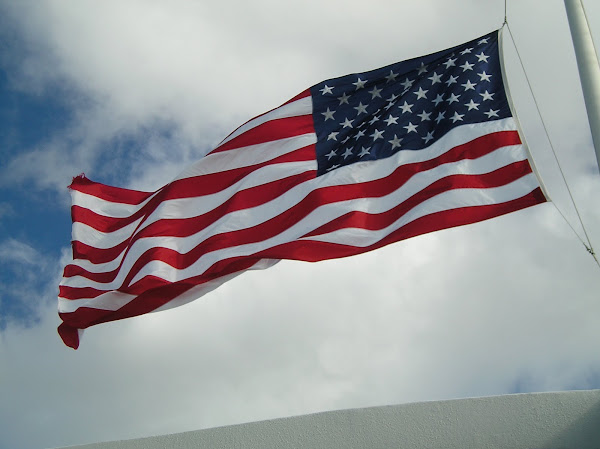
Image courtesy: Pfc. David Hauk, U.S. Army. Kandahar, Afghanistan, November 12, 2009
Showing posts with label somalia. Show all posts

Saturday, February 9, 2013

63 Seconds

Images courtesy: U.S. Air Force

U.S. Air Force Maj. Duane Dively was returning from a mission over Afghanistan when the U-2 spy plane he was piloting malfunctioned. For the next 63 seconds, Maj. Dively did what he'd been doing for two decades.

He put his country first.

"We think he tried to bring the plane in," the pilot's mother, Donata Dively, told The Unknown Soldiers.

"He could have ejected, but that wasn't the way he was built," his father, Bill Dively, added.

Prior to the June 22, 2005, mission, Duane risked his life in almost every U.S. conflict since Desert Storm. Citing what he felt was an obligation to serve, Duane joined the Marine Corps shortly after 241 U.S. service members were killed in the 1983 terrorist attack on the U.S. Marine barracks in Beirut.

But ever since the Canton, N.Y., native's first time in an airplane, Duane's head was always tilted toward the heavens.

"He always wanted to fly," his mom said. "Duane had a determination ... he was very tenacious."

Duane later joined the Air Force to fulfill his lifelong dream. After earning his wings in 1990, the pilot flew wherever his country needed him.

"From Desert Storm to the Balkans to Somalia ... it seemed like he was always overseas," Bill said.

After registering a perfect score on his pilot tests, Duane began flying the U-2 reconnaissance aircraft, which had become a household name during the Cold War. For most of the next decade and particularly after 9/11, Duane's parents, who live in Hollidaysburg, Pa., rarely knew where their son was flying.

"He'd say 'you're not on the need to know list,'" Donata said with a gentle laugh.

Duane was usually collecting crucial intelligence over Afghanistan and Iraq during missions that he would often volunteer to fly.

"If other (pilots) had children, particularly around the holidays, Duane would volunteer for those three-month deployments so they could spend time together," Donata said.

In early 2005, with America suffering almost daily casualties in Iraq and Afghanistan, the happily married pilot could have retired. Duane, who was about to turn 43, decided to keep flying.

"They go into the service because they love what they're doing," Donata said of brave men and women like her son. "They have the dedication to the people of the United States, their country and God."

As the U-2 lost power over Southwest Asia, Duane did everything he could to save a plane he'd spent countless hours navigating through the clouds of war.

"It costs about $7 million to train a good pilot," Duane's father said, his voice cracking with emotion. "He made the most out of everything he did."

The memorial service honoring Duane, who was one of a select few to ever pilot the U-2, was held in a massive California hangar next to another spy plane he once flew.

"Whenever there was a trouble spot, Duane was there," an Air Force officer told the packed Beale Air Force Base audience.

While it's been more than seven years since Duane's final act of courage, the lives of his wife, parents and brother are forever changed.

"No birthday, holiday or any day having anything to do with that child is ever the same," Donata said.

When Bill plays golf, he always tilts his head upward toward the blue sky, where his oldest son helped define several chapters of American history.

"I think of him all the time," he said.

Duane is buried at Arlington National Cemetery, where he rests among brothers and sisters in arms who also fought to preserve freedom. But as America's post-9/11 conflicts fade from our national consciousness, the fallen hero's mother is worried.

"So many times it's only the immediate families that realize the sacrifice," Donata said. "And I just think we need other people to keep in mind the price that so many people are paying."

Maj. Duane Dively devoted nearly every second to keeping others safe. For that, along with the final 63 seconds of his extraordinary life, the hero pilot's parents have no doubt where their son's soul now flies.

"I think the Lord felt that Duane had used every talent the Lord had given him," Donata said. "It was time for his reward."

COPYRIGHT 2013 CREATORS.COM

Note: To see the weekly "Unknown Soldiers" column in your local newspaper, please click here.

Tuesday, January 3, 2012

Trane Kept a Rollin'

Image courtesy: Maggie McCloud

Lt. Col. Trane McCloud's
first name is actually Joseph. Yet throughout his life, the loyal son, devoted husband, caring father and valiant Marine went by his middle name. He did so to honor his mother, who always thought "Trane" was the best fit.

"Trane was very special — even his name," Roma Anderson told the Unknown Soldiers. "It just speaks volumes."

As a child, Trane, who dreamt of someday serving on a battleship, was fascinated with building things. One of little Trane's proudest moments was finishing a complicated model of the USS Missouri.

Years later, big Trane's dreams came true when he served aboard the USS Missouri during Operation Desert Storm.

"How many little boys build a model ship and then wind up serving on that ship?" his mother said.

On Dec. 7, 1991 — the 50th anniversary of the attack on Pearl Harbor — Trane helped guard President George H.W. Bush when he boarded the USS Missouri during commemoration events.

"When the (ceremonies) finished, the president turned to Trane," his father, Ron McCloud, explained. "He said, 'I know you'll make a great Marine officer.'"

The first President Bush — a war hero himself — was right. Trane would go on to serve in Bosnia, Somalia and Iraq. But first, after Desert Storm, he became a great husband.

"Meeting and marrying Trane was the best thing that ever happened to me," Maggie McCloud said.

It quickly became obvious that Maggie and Trane were meant to be together.

"They became quite the couple, I'll tell you that," Trane's dad said.

They also became quite the parents.

"He would work crazy hours when he was deployed and when he wasn't," Maggie said. "But no matter what time he got home, if the kids were up, he would run upstairs, and you would hear giggles and the sounds of joy."

Trane was a "big, tough Marine," Maggie said, but also extremely modest.

"He let his actions speak for themselves," she said.

Before eating a meal, Trane would always bow his head in prayer. Before stating his opinion, he would always take the time to listen to other points of view.

Before deploying to Iraq in August 2006, he spent a special day with each of his three children in Hawaii. Maggie said Trane and the kids called it "Daddy day."

After Trane left the Hawaiian paradise for a combat deployment on the hellish streets of Fallujah, Maggie spoke to her husband only once.

"He had faith in me and the family that we would take care of the home front," she said. "He had a very important job — a tough job — and he wouldn't be on the phone calling home when the other guys couldn't do that too."

On Dec. 4, 2006, less than two weeks before his 40th birthday, Trane died in an Al Anbar Province helicopter crash. A fellow Marine and two U.S. Army soldiers were also killed.

For the McCloud children, even five years after the crash, every day is still Daddy day.

"Daddy made the last birthday cake for me," Meghan, who was just 2 years old when her father died, recently told her mom.

"Daddy bought me chewing gum on my Daddy day," Grace, who was 5, told her grandma.

Hayden, who was 7, whistles almost exactly like his dad and displays many similar traits. With each visit, Roma sees more of Trane in her grandchildren.

"It's a loss, but in their little hearts, he's there as big as life," Trane's mom said.

Trane's spirit lives on in his brother, Army Staff Sgt. Richmond McCloud, 41, who is currently deployed to Afghanistan.

"He figures that by now, his brother would have been in Afghanistan," Ron said. "He has a heartfelt desire to be of service to his country."

Maggie tries her hardest to live every day like the man she'll always love.

"I'm a better person for having him in my life," she said.

Staying true to the name his mom called a perfect fit, Lt. Col. Trane McCloud loved his country, believed in God, and took care of his wife and children. That's just how this Marine rolled.

"Trane was Trane," his mother said. "And he knew who he was."

COPYRIGHT 2011 CREATORS.COM

Saturday, December 3, 2011

Guitar Hero

Image courtesy: United States Forces-Iraq

Since making it home from the 1993 "Black Hawk Down" battle in Somalia, Keni Thomas has become a successful country music singer, motivational speaker and author.

"I came out of the military with a pretty good skill set, and there were jobs I could have taken," Thomas told the Unknown Soldiers. "But music is a disease. It's incurable."

Of all his endeavors, there is nothing more important to this ex-Army Ranger than visiting with wounded heroes of the Afghanistan and Iraq conflicts. He thinks every day about his conversations with combat veterans at various hospitals, including a female military truck driver who lost her leg when her vehicle hit an improvised explosive device.

"I told her it was okay to be upset about what happened to her, and she started crying," Thomas said. "She said, 'I just don't know if anybody will ever love me.' It was so basic and human."

Thomas will never forget the chaotic battle he and his fellow troops fought on the war-torn streets of Mogadishu more than 18 years ago. One reason he's so touched by his encounters with wounded veterans is because he knows he could have easily ended up in a hospital bed, wheelchair or cemetery.

"There's not a day that goes by that I don't think about it in some sort of way," Thomas said. "I don't mean it in a 'Rambo' flashback sort of way; I know by the grace of God is the only reason I'm still around."

Thomas has a special talent for bringing the 99 percent of Americans who have never experienced combat into the minds of the one percent who have.

"It took me a long time to figure it out, Tom, but when you make it home from something like that, there's this weird sense of guilt," he explained. "Why did I survive when other people deserved to live?"

The Army Ranger lost several friends in the brutal urban battle. Even though Thomas threw himself into his music career soon after coming home, feeling content during the past two decades has been difficult. Instead of enjoying his success, he has often agonized over his fallen buddies who didn't get the same opportunity.

"They had families. They had kids. They were twice the soldier I was," Thomas said. "Whenever something good happens in your life, it's like you don't let it happen, because that little voice reminds you of your friends who didn't make it.

"It sabotages everything that's good in your life," he concluded.

In his songs, Thomas sometimes sings directly to fellow combat veterans.

"It's what I do," the singer-songwriter said. "I love to tell stories."

Another challenge recently conquered by the guitar hero was writing a book. In "Get It On: What It Means to Lead the Way," Thomas recounts the chaos of "Black Hawk Down" while using the battle's painful lessons to convey principles of leadership.

Thomas candidly admits that at the Mogadishu battle's outset, when U.S. troops set out to confront a murderous warlord, the highly trained Ranger did not expect the bloodiest American firefight since Vietnam.

"When you set a goal, it always takes longer than you think it's going to take," he said. "It's a good lesson for us."

Whether it's in a book, song, or conversation with a wounded veteran, Thomas tries to convey the same powerful message. Without faith, Thomas believes, he wouldn't be in a position to help others.

"That's one of the beauties of putting some mileage on your life," he said. "You can see with clarity that there's no way you ended up where you ended up on your own accord."

Thomas still thinks about the weeping young amputee who thought she'd never find love.

"Hopefully, she'll find that if she doesn't let the guilt, the wounds and the anger consume her, she'll get back into life and she'll do just fine," he said. "I hope someone will love her, and I hope everybody finds a sense of purpose."

Keni Thomas thinks he's found his.

"When I can't sing anymore, I think my life is going to be dedicated to teaching Iraq and Afghanistan veterans that it's OK to be happy," he said.

COPYRIGHT 2011 CREATORS.COM