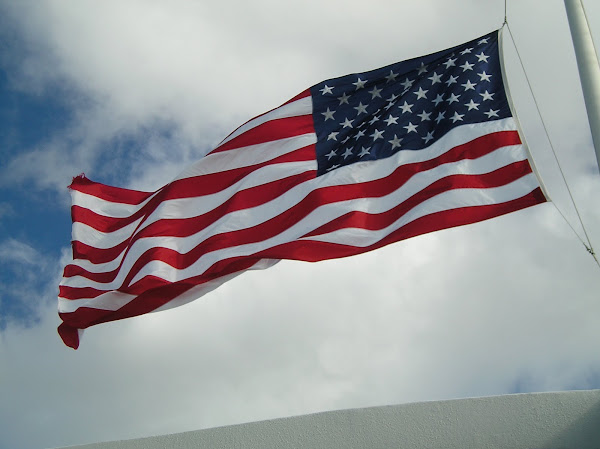
Image courtesy: Pfc. David Hauk, U.S. Army. Kandahar, Afghanistan, November 12, 2009

Monday, February 25, 2013

Worth a Listen

Images courtesy: Shain Gillette

There is much talk about caring for our nation's veterans. From politicians to non-profit organizations, well-intentioned Americans are saying all the right things about ensuring that returning warriors receive the benefits they so richly deserve.

Still, amid a 24-hour news cycle and the hustle and bustle of our daily lives, a key component of helping combat veterans adjust to being home is sometimes overlooked. Too often, we forget to listen to the brave men and women who understand war like no civilian ever could.

Listening has become a big part of U.S. Army Sgt. 1st Class Josh Gillette's life since a Nov. 1, 2012, improvised explosive device (IED) blast. With shrapnel embedded in his eyes, it's still difficult for the soldier to see the faces of his wife and eight-year-old daughter. But if you ask the wounded warrior to describe his harrowing sixth deployment, he will gladly oblige.

"I like telling my story," Sgt. 1st Class Gillette told The Unknown Soldiers. "A lot of people don't realize (the war) is still going on."

After serving three tours in Iraq and one in Bosnia, Josh was on his second deployment to Afghanistan in September 2012 when a powerful explosion threw him into the air before he landed several feet away. A fellow soldier had stepped on an IED and suffered devastating injuries.

"I was concussed and had to get to a fallen comrade who had lost both legs," Josh said. "We applied first aid and cleared a helicopter to land."

Two days later, the wounded soldier succumbed to his wounds, which left Josh and his Special Forces unit in a state of shock. Despite their grief, however, the soldiers knew they had to keep patrolling Afghanistan's volatile Helmand Province.

"We were pushing outside again to take over a stronghold that the Taliban had," Josh said. "We wanted to show the (Afghan Local Police) that we could take this area."

On Nov. 1, while approaching a mud hut with his trusted military working dog, Banan, the 32-year-old soldier sensed something was wrong.

"I knew he was looking for an IED because of his changed behavior," Josh said.

Moments later, Josh was overwhelmed by blunt force and searing heat. The dog had stepped on an IED, sending Banan and Josh flying through the air. Josh remembers nothing about the ensuing battle, in which his fellow soldiers defeated Taliban fighters who attacked the helicopter evacuating him to safety.

"At that point I blacked out," Josh said.

Banan was killed in the attack, while Josh spent the next two weeks in a confused, nearly comatose state.

"I kind of remember waking up in the hospital 15 days later, which is weird since people said I was talking to them and writing things down," he said. "I don't remember anything."

With shrapnel digging into his eyes, Josh could barely see his battered face in a mirror. Missing his teeth and impaled with rocks, the soldier also needed a titanium rod in his arm and plates in his cheekbones.

"I have limited vision," Josh said. "I can't watch TV, and I can't really read."

After hospital stays in Germany and Bethesda, Md., Josh is home in Tennessee, just across the border from Kentucky's Fort Campbell. The company of his wife and daughter softens the frustration of his restricted eyesight.


"It's been great," Josh said. "I've been getting stronger every day, and the doctors are saying I'm recovering a lot faster than expected."

While the Jacksonville, Fla., native applauds the military for taking great care of him since his injury, the soldier's family suffered severe financial hardship while Josh was hospitalized far from home. That prompted Josh's brother, Shain, to set up a website to ask for the public's help. Nearly $8,000 was raised to help Josh and his family.

"It was real emotional for me," the grateful soldier said. "I wish the best for so many wounded warriors, police, and firefighters ... I hope they get that kind of support."

Like so many U.S. troops and veterans, Sgt. 1st Class Josh Gillette repeatedly put himself in harm's way without asking for anything in return. As his courageous brothers and sisters in arms come home, the least we can do is listen.

COPYRIGHT 2013 CREATORS.COM


Note: To see the weekly "Unknown Soldiers" column in your local newspaper, please click here.

Friday, February 15, 2013

Called to Serve

Images courtesy: Captain Nicholas Schade Whitlock Foundation

The past year has been unimaginably difficult for Ashley Whitlock. But even through grief, the 28-year-old widow of U.S. Air Force Capt. Nick Whitlock knows her husband died doing what he loved most.

"Nick was a man of faith and passion," Ashley told The Unknown Soldiers from Atlanta. "He very much felt that we were called to serve in any capacity we can."

Ashley and Nick became friends after meeting as students at Mercer University in Macon, Ga. They started dating shortly after graduation, just as Nick was beginning to pursue his dream of becoming a military pilot.

"We all encouraged him to go for it," Capt. Whitlock's father, Jimmy, said.

"He thought about it from afar for a very long time," Nick's mother, Clare, said from the couple's Newnan, Ga., home.

Despite competing against Air Force Academy graduates, Nick, who majored in finance, excelled in pilot training. But just like in high school, when the handsome, popular star athlete would hide awards and trophies in his closet, Nick remained humble and focused.


"He earned the highest pilot slot," Ashley said. "Doors were opening for him and he was doing what he was supposed to be doing."

Another thing Nick realized he was supposed to do was ask Ashley to marry him. The couple exchanged vows on Nov. 10, 2010, in Jacksonville, Fla.

"You don't see too many people happily married anymore," Clare said. "It was just a joy to see them together."


Nick was stationed at Florida's Hurlburt Field with the Air Force's 34th Special Operations Squadron. While thrilled to be starting a new life with the man she loved, Ashley, like so many military spouses, had to make difficult adjustments when her husband began deploying overseas.

"I'd always heard in the military that your friends become your family, and it's true," she said. "You learn to weather it together."

On Valentine's Day 2012, Nick kissed Ashley goodbye and left for another deployment. As usual, the airman couldn't tell his wife much about the classified mission, but on Feb. 17, Nick called Ashley from his base's cafe.

"He told me he missed me like crazy, and we started counting down until he came back," she said.

File image courtesy: U.S. Air Force

The next night, with storms filling the northwest Florida sky, Ashley's father answered a knock on his daughter's front door. It was a pair of solemn, uniformed airmen, who informed Ashley that her husband was dead.

"There's nothing that can prepare you for that," she said. "I have to believe that God had a hand in the fact that my family was there with me."

According to the Pentagon, Nick, 29, and three fellow airmen were killed on Feb. 18, 2012, when their U-28 aircraft crashed in the African nation of Djibouti. The team flew surveillance and reconnaissance missions in support of Operation Enduring Freedom.

"In the beginning, you'd wake up startled at night, and it was just horrible, because you were hoping it wasn't real," Nick's father said. "Now it's set in."

"You wake up thinking about it and you go to sleep thinking about it," his mom said.

Image courtesy: U.S. Air Force/Adrian Rowan

In Florida, the base and surrounding area sprung into action.

"The community as a whole really stepped up to help all the families," Ashley said.

In Georgia, where Nick was buried, the outpouring of support astonished the fallen airman's wife and parents. One year after Nick's death, American flags and yellow ribbons still decorate Newnan.

"I've said it a hundred times," Clare said. "I've never felt alone."

"He wasn't just my young man," Jimmy added. "He belonged to the community."

To harness the enthusiasm for keeping Nick's spirit alive, the fallen hero's loved ones and friends joined to form the Captain Nicholas Schade Whitlock Foundation, which provides college scholarships to ambitious young students.

"I want the whole world to know about Nick and what he stood for," Jimmy said.

"I enjoyed the boy he was, but I loved to see the man he became,' Clare said.

Ashley will always treasure the time she spent with Capt. Nick Whitlock. But before she sees him again, she is determined to follow her husband's lead.

"Through our loss, there's a chance to do something for somebody else," she said.

COPYRIGHT 2013 CREATORS.COM


Note: To see the weekly "Unknown Soldiers" column in your local newspaper, please click here.

Saturday, February 9, 2013

63 Seconds

Images courtesy: U.S. Air Force

U.S. Air Force Maj. Duane Dively was returning from a mission over Afghanistan when the U-2 spy plane he was piloting malfunctioned. For the next 63 seconds, Maj. Dively did what he'd been doing for two decades.

He put his country first.

"We think he tried to bring the plane in," the pilot's mother, Donata Dively, told The Unknown Soldiers.

"He could have ejected, but that wasn't the way he was built," his father, Bill Dively, added.

Prior to the June 22, 2005, mission, Duane risked his life in almost every U.S. conflict since Desert Storm. Citing what he felt was an obligation to serve, Duane joined the Marine Corps shortly after 241 U.S. service members were killed in the 1983 terrorist attack on the U.S. Marine barracks in Beirut.

But ever since the Canton, N.Y., native's first time in an airplane, Duane's head was always tilted toward the heavens.

"He always wanted to fly," his mom said. "Duane had a determination ... he was very tenacious."

Duane later joined the Air Force to fulfill his lifelong dream. After earning his wings in 1990, the pilot flew wherever his country needed him.

"From Desert Storm to the Balkans to Somalia ... it seemed like he was always overseas," Bill said.

After registering a perfect score on his pilot tests, Duane began flying the U-2 reconnaissance aircraft, which had become a household name during the Cold War. For most of the next decade and particularly after 9/11, Duane's parents, who live in Hollidaysburg, Pa., rarely knew where their son was flying.

"He'd say 'you're not on the need to know list,'" Donata said with a gentle laugh.

Duane was usually collecting crucial intelligence over Afghanistan and Iraq during missions that he would often volunteer to fly.

"If other (pilots) had children, particularly around the holidays, Duane would volunteer for those three-month deployments so they could spend time together," Donata said.

In early 2005, with America suffering almost daily casualties in Iraq and Afghanistan, the happily married pilot could have retired. Duane, who was about to turn 43, decided to keep flying.

"They go into the service because they love what they're doing," Donata said of brave men and women like her son. "They have the dedication to the people of the United States, their country and God."

As the U-2 lost power over Southwest Asia, Duane did everything he could to save a plane he'd spent countless hours navigating through the clouds of war.

"It costs about $7 million to train a good pilot," Duane's father said, his voice cracking with emotion. "He made the most out of everything he did."

The memorial service honoring Duane, who was one of a select few to ever pilot the U-2, was held in a massive California hangar next to another spy plane he once flew.

"Whenever there was a trouble spot, Duane was there," an Air Force officer told the packed Beale Air Force Base audience.

While it's been more than seven years since Duane's final act of courage, the lives of his wife, parents and brother are forever changed.

"No birthday, holiday or any day having anything to do with that child is ever the same," Donata said.

When Bill plays golf, he always tilts his head upward toward the blue sky, where his oldest son helped define several chapters of American history.

"I think of him all the time," he said.

Duane is buried at Arlington National Cemetery, where he rests among brothers and sisters in arms who also fought to preserve freedom. But as America's post-9/11 conflicts fade from our national consciousness, the fallen hero's mother is worried.

"So many times it's only the immediate families that realize the sacrifice," Donata said. "And I just think we need other people to keep in mind the price that so many people are paying."

Maj. Duane Dively devoted nearly every second to keeping others safe. For that, along with the final 63 seconds of his extraordinary life, the hero pilot's parents have no doubt where their son's soul now flies.

"I think the Lord felt that Duane had used every talent the Lord had given him," Donata said. "It was time for his reward."

COPYRIGHT 2013 CREATORS.COM

Note: To see the weekly "Unknown Soldiers" column in your local newspaper, please click here.

Friday, February 1, 2013

American Man

Images courtesy: Carol Dycus

Friends of U.S. Marine Lance Cpl. Edward Dycus called him "Eddie." His family chose an even shorter, simpler nickname: "man."

As a young man working in a grocery store, Edward turned to his mother one day and said he wanted to serve his country.

"He thought about it and said he wanted to join the Marines," Carol Dycus told The Unknown Soldiers. "He wanted to make his life and my life better."

Edward knew trading the frozen food aisle in Greenville, Miss., for the heat of battle in Afghanistan was a risky proposition. But he never hesitated, even when his mom, who worked with him at the grocery store, responded with some initial skepticism.

"Yeah, I tried to talk him out of it," Edward's mother said. "That's what every parent does."

Despite fearing for his safety, Carol was enormously proud of her son.

"He came home from boot camp and said 'I did it mom, I'm a Marine now,'" she said. "He was just a good guy ... I loved him very much."

With blonde hair and an infectious smile, Edward was enthusiastic and bright, having excelled academically from a young age. When he wasn't inside watching pro and college football, Edward enjoyed going outside to toss around the Frisbee with his friends and four siblings.

"He loved school, he loved his family and he loved his friends," Carol said.

Whenever someone needed help, Edward would bend over backwards to lend a hand.

"He was just a caring guy," his mother said. "He'd do anything for anybody and wouldn't think twice about it."

Edward's mom paused when our conversation shifted to her son's deployment to Afghanistan, which began on his 22nd birthday.

"It's hard to talk about it," she said. "It's hard."

Carol said her son was excited to serve overseas with the 2nd Battalion, 9th Marine Regiment. During his first six weeks in Afghanistan, Edward embraced the opportunity to explore a new country and help protect its citizens.

"It was the first time he'd ever been gone," she said. "But he said he loved it over there."

Then, at the stroke of midnight on Feb. 1, 2012, everything changed.

"An Afghan soldier came up behind him and shot him in the back of the head," Carol said.

While losing a son or daughter is crushing for any parent, the cruel, senseless nature of Edward's sudden death is particularly painful for Carol, who emphasized that her son and his fellow Marines "were over there trying to help" the Afghan people.

Just days before the first anniversary of Edward's murder, the Marine's grieving mother spoke of her family's resilience.

"We're holding up alright," Carol said. "We have no choice."

Even before Edward's flag-draped casket arrived in Mississippi, friends and total strangers came together to show support to the Dycus family.

"It was just amazing," Edward's mom said. "I mean ... it's like the whole town just stopped."

For miles and miles, people lined the streets to honor the fallen Marine during his funeral procession. Carol saw each and every one of them.

"There were people standing out on the side of the road everywhere," she said. "Every business, every house ... it was amazing with all the flags and signs."

Instead of projecting anger and bitterness about her son's death, Carol is joining her kind-hearted neighbors in celebrating Edward's extraordinary life.

"He was an awesome son and just a great guy," she said. "He's a true American hero, and he's my hero."

On Jan. 1, 2013, a U.S. Navy Hospital Corpsman left a simple, yet poignant message on Edward's Facebook page.

"Happy New Year, bud!" he wrote. "Miss you, man."

On the Corpsman's page is a quote that is most commonly attributed to Thomas Carlyle, a 19th century Scottish writer and philosopher.

"Men do less than they ought, unless they do all they can," the quote reads.

As a man, Lance Cpl. Edward Dycus did everything he could to make the world a better place. His family couldn't have chosen a better nickname.

America misses you, man.

COPYRIGHT 2013 CREATORS.COM

Note: To see the weekly "Unknown Soldiers" column in your local newspaper, please click here.

Saturday, January 26, 2013

The Other Fellow First

Images courtesy: Douglas J. Green Memorial Foundation

While working as a summer camp counselor, future U.S. Army Spc. Douglas Green discovered a motto that would guide the rest of his life.

"It was 'the other fellow first,'" Spc. Green's mother, Suni Erlanger, told The Unknown Soldiers.

As a young boy growing up in the northern Virginia suburbs, Doug played with toy Army men but also displayed a level of maturity that went far beyond his years.

"He was my hero way before he enlisted in the Army," Doug's mom said. "He was that boy in school who was against bullying, even when it was tolerated."

On Sept. 11, 2001, Doug, who was only 13, made clear that America's new war wouldn't be someone else's fight.

"He wanted to get al Qaida for what they did to us," Suni said. "I knew something changed in Doug that day."

Doug spent his high school years doing everything from playing football to singing and dancing in school musicals. He also kept in touch with an Army recruiter, even though his parents worried deeply about the risks of serving in a post-9/11 world.

"He didn't have to go in," Doug's mother said. "He had a very sheltered life."
Doug volunteered on his 18th birthday and deployed to Iraq two years later.

"When his Sergeant asked who would want to go out on special missions, Doug's hand was always going up first," Suni said.

After returning to Alaska's Fort Wainwright before an upcoming Afghanistan deployment, Doug joined the local Big Brothers Big Sisters program, where he served as a young boy's mentor.

"He could have done anything ... screwed around, hung out in bars," his mom said. "(His charity work) just amazed me, it really did."

Before deploying, Doug went back to his hometown of Sterling, Va., where he reconnected with Alicia Swanstrom, who he originally met in school. The pair became inseparable, with Doug resolving to ask for her hand in marriage once he returned from Afghanistan.

"I knew he was serious about her," Suni said.

Doug deployed to a remote southern Afghanistan outpost and spent most of 2011 on daring night patrols, which often resulted in tense firefights with Taliban and al Qaida insurgents.

"They let him (come home) for a two-week leave," his mother said. "You could see in his eyes that he'd seen a lot of bloodshed."

With just weeks remaining in his deployment, Doug, who was Jewish, asked his mom to send a Star of David that he could wear around his neck.

"He thought that was going to protect him," Suni said.

The crushing loss of a fellow soldier, Spc. Brandon Mullins, 21, reinforced Doug's belief that his own death could soon be at hand. While Suni said her son would have been allowed to stay behind from his final combat patrols, Doug went anyway.

On Aug. 28, 2011, Spc. Green, 23, was killed when terrorists attacked his unit with small arms fire and roadside bombs, according to the Pentagon.

"He would always assure his other soldiers that everybody would be OK," the fallen soldier's mother said. "He just didn't care about himself."

Two weeks before his death, Doug mailed a heartfelt letter to his loved ones.

"If I could leave you with any words of wisdom it would be two things that I have always tried to live my life by," he wrote. "Make sure you always put yourself in the position of anyone you ever have contact with. You will never truly know a man or woman until you try to see things from their perspective.

"Secondly, never pass judgment or put anger on someone too quickly or harshly," Doug continued. "Because I guarantee you that person is fighting a battle that you know nothing about."

Doug is buried in Section 60 of Arlington National Cemetery, where a toy Army figure and other mementos left by his girlfriend, Alicia, decorated his white headstone during my Dec. 25, 2012, visit.

"I will always love and cherish all of the time I was given on this earth and am thankful for this life and everyone in it," Doug wrote in his final letter.

Indeed, Spc. Douglas Green always put the other fellow first.

COPYRIGHT 2013 CREATORS.COM


Note: The Douglas J. Green Memorial Foundation has been established to help U.S. troops and veterans. Please click here to learn more about the organization and its mission.

Saturday, January 19, 2013

The Mountain

Images courtesy: Capt. Adam Brochetti

As U.S. Marine Capt. Adam Brochetti led a New Year's Eve patrol into one of the most dangerous areas of Afghanistan, he thought of his uncle's last stand on a mountain in Vietnam.

"Moving up to Sangin on that evening, I thought about my uncle, his last moments, and his responsibilities," Capt. Brochetti told The Unknown Soldiers.

Pfc. Frank Brochetti, 20, was posthumously awarded the Silver Star for his heroic actions on April 8, 1972, atop the Nui Ba Den (Black Virgin Mountain) in Vietnam's Tay Ninh Province.

"Although wounded, he still directed fire on the attacking enemy forces until he succeeded in reaching the fighting position," Pfc. Brochetti's award citation reads.

More than 38 years later, the young U.S. Army soldier's gallantry inspired his nervous, courageous nephew as he led Marines to battle in Afghanistan's Helmand Province.

"This could be it, but let's do it," Adam said to himself on Dec. 31, 2010, not knowing if he and his fellow Marines would live to see 2011.

The grandson of a Marine who served in World War II, Adam had grown up hearing stories of his fallen uncle's bravery.

"My whole life, it was a very big deal," Adam said. "You walk into my grandparents' house and there's a shrine with the flag, his picture and his Purple Heart."

While he spent years looking at photos, studying maps and reading letters, it wasn't until he graduated from the U.S. Naval Academy and deployed to Afghanistan that he began to truly understand the sacrifices of people like his uncle.

"Once I became a Marine, it hit me, knowing the kind of Marines I've led," Adam said.

Adam first deployed to Afghanistan in November 2008 with an infantry unit, and after getting a unique opportunity to attend U.S. Army Ranger School upon his return, went back to war in November 2010 with the 2nd Marine Reconnaissance Battalion. As a platoon commander, nothing was more important to Adam than keeping his Marines safe.

"Every decision I made, I made it thinking 'this young Marine, he'll be somebody's uncle someday,'" Adam said. "It's a huge burden of responsibility."

As New Year's Day 2011 dawned over southern Afghanistan's treacherous terrain, Adam and his fellow Marines had survived yet another tense encounter with the enemy. When the entire platoon came home that summer, Adam knew he would have made his uncle proud.

"My biggest accomplishment to date was that I brought them all back," he said. "The biggest compliment was coming back and having my Marines thank me."

Now 29, married and raising a family, Adam is focused on guiding Marines who've made extraordinary sacrifices since 9/11. As Company Commander for wounded, ill and injured Marines at the Walter Reed National Military Medical Center, Adam spends his days helping heroes who've endured immense pain and suffering.

"These were young, strapping studs who commanded respect from the Marines around them," Adam said from Bethesda, Md. "Now some are missing limbs and their entire lives have changed."

Citing post-traumatic stress and suicide as serious problems that continue to grip the military community, Adam is calling on cities and towns across America to embrace wounded warriors and all veterans returning from difficult assignments overseas.

"(Local leaders) need to understand who their vets are and welcome them back with open arms," the Marine said. "Make an attempt to meet their families and help them transition back to society."

Later this year, thanks to his grandparents and a Challenge Grant from the Travis Manion Foundation, Adam will travel with relatives to Vietnam to honor Pfc. Frank Brochetti.

"I want to pay respects to my uncle and give (my grandparents) some closure by walking around that hallowed ground," Adam said.

As he stands atop the mountain where his uncle and many more American heroes made the ultimate sacrifice, Capt. Adam Brochetti will give thanks for the valor of a previous generation, as well as his own.

"They're brave, they're courageous, and they'll go to hell and back for you," he said. "That inspired me not only to be a Marine and serve our country, but because when I look at my guys, I see my uncle."

COPYRIGHT 2013 CREATORS.COM

Note: To see the weekly "Unknown Soldiers" column in your local newspaper, please click here.

Saturday, January 12, 2013

Closer to Home

Images courtesy: Jennifer Clarke

Jennifer Clarke was busy managing a Michigan grocery store when she got a phone call from her husband. He told her she needed to come home from work.

"I said 'I can't leave, I'm in charge of the store,'" Jennifer told The Unknown Soldiers. "Then I remember plain as day, my husband said 'Jennifer, there are two men here in military uniforms.'"

Jennifer's heart dropped as she let go of the phone and ran out the door. Her son, Pfc. Shane Cantu, was in Afghanistan, and all that the military mom wanted was for him to come home alive.

"Please, let my son only be injured," the tearful mother said as she drove home in a panic.

When she walked into her Corunna, Mich., home, a young soldier tried to maintain his composure while delivering an official casualty notification from the U.S. Army.

"Not my boy," Jennifer replied. "He's coming home, right?"

"No ma'am," the solemn soldier replied. "He was killed in action in Afghanistan on Aug. 28, 2012."

Jennifer, hoping she would soon wake from a nightmare, collapsed on the floor.

"You just don't think things like this will hit close to your community," she said.

According to the Department of Defense, Pfc. Cantu, 20, died after he was wounded by shrapnel in eastern Afghanistan. He was serving with the Army's 173rd Airborne Brigade Combat Team, based in Vicenza, Italy.

As the grieving mother reflected less than five months after her only son's death, Jennifer spoke of the last time she corresponded with Shane, who knew his young life was in peril.
"It's getting crazy over here, mom," the soldier said. "I can't promise you I'll be home."

Those difficult words will always be with Jennifer, who knows her son's last days were filled with anguish. On Aug. 15, less than two weeks before Shane's death, his close friend and fellow soldier, Pfc. Andrew Keller, 22, was killed by enemy small arms fire, according to the Pentagon. Shane, who wrote a stirring eulogy in Afghanistan that his mom would later deliver to Pfc. Keller's family, blamed himself.

"I told him you have to stay strong," Jennifer said.

Shane, a former high school football star, joined the Army to better his country. But as he told his mother after boot camp, he also wanted to better himself.

"He hugged me, told me he loved me, and said 'mom, this was the best thing I ever could have done for myself,'" Jennifer said.

The soldier's mother said that Shane, who was known for his smile and sense of humor, wanted to serve in Afghanistan so badly that he broke down and cried after a prior deployment was cancelled.

"I didn't join the Army to sit back and watch," Shane said. "I joined to be a leader."

Instead of waiting for a future opportunity, Shane pleaded his case to an Army officer. The First Lieutenant, who immediately saw the young soldier's potential, would later tell Jennifer how much Shane impressed him.

"It's men like him that make our country strong," the officer said.

When Shane eventually left for Afghanistan in July 2012, Jennifer, like any caring mother, was deeply concerned.

"I was heartbroken, but I knew that's where he needed to be," she said. "As his mother, I stood behind him and I stood proud."

Jennifer will always stand behind her son, who hoped to become a U.S. marshal when his military career concluded. To honor Shane's memory, Jennifer has set up a scholarship fund through the Shiawassee Community Foundation to assist students pursuing law enforcement careers.

Pfc. Shane Cantu was nine years old when America was attacked on Sept. 11, 2001. Yet while growing from boy to man, he developed a devotion to family and freedom that's inspired Americans across all walks of life.

"I get notes saying, 'Thank you for your sacrifices,'" the fallen hero's mom said. "I walk into stores and people hug me and say 'God bless your family.'"

On Sept. 6, Jennifer Clarke watched in awe as hundreds lined Michigan streets to honor the arrival of Shane's flag-draped casket. While her son didn't come home alive, Shane's proud mother realized that his selfless spirit most certainly did.

"This is for my boy," she said.

COPYRIGHT 2013 CREATORS.COM

Wednesday, January 9, 2013

The Youngest Soldier

Images courtesy: Sgt. 1st Class Mark Bell

Khalil Quarles loves the U.S. military. Not only does the 10-year-old boy idolize those who serve, but has dreamt for years about putting on his country's uniform.

"He has Army figurines and talks about the Army all the time," U.S. Army Maj. Norland James told The Unknown Soldiers from Kuwait on Dec. 21. "He would love it if he could have a picture from an Army soldier or become an Army soldier himself."

Tragically, a terrible disease stands between Khalil and his dreams. The young boy, who lives in Baltimore, is suffering from terminal cancer. So when Maj. James heard about Khalil through a friend who works as a hospice nurse, the deployed soldier decided to act.

"We wanted to make his dreams come true," James said.

The 37-year-old soldier, who is serving in Kuwait as chief of medical logistics operations, has devoted the last 13 years of his life to the Army. The Albany, Ga., native, who has also been to Afghanistan twice, just spent another holiday season apart from his family and friends.

Amid the continuing sacrifices of military service, James remains intensely appreciative of civilians who support the men and women of the armed forces. When presented with a chance to brighten what could be Khalil's last holiday season, the soldier knew it was his opportunity to give back.

"It's one thing to say 'thank you' with words, but it's another thing to say 'thank you' with actions coming behind it," James said.

Six days before Christmas, a nurse told Khalil that someone special was waiting to talk to him on Skype.

"He was like 'wow, I can't believe it, I'm talking to an Army soldier in Kuwait who's deployed,'" James said.

The soldier will never forget the boy's reaction.

"Just seeing the look in his eyes ... you can't describe it," James said. "It was amazing and it made me smile."

As the soldier and young boy spoke face-to-face while separated by thousands of miles, Khalil could temporarily forget about his dreadful illness. For about ten minutes, Khalil's wish of speaking to a real-life soldier was finally realized. Unbeknownst to the elated child, though, an even bigger dream was about to be fulfilled.

"When I told him I have a couple of my friends waiting outside for (him), he had a look of amazement," James said.

As Khalil, who walks with crutches, made his way to the front of his family's home to see what James was talking about, the soldier sat at a computer station in Kuwait, eagerly awaiting what he knew was coming next. About 40 U.S. Army Reserve soldiers from Maryland's Fort Meade, along with neighbors and camera crews, were waiting to greet Khalil.

"To see him step out on the front stairs ... all those people," James said. "It gave me joy to see the happiness on his face."

As soldiers and supporters clapped and cried, Khalil was asked to raise his right hand after the singing of the National Anthem. The young boy, who never thought he'd have the chance to meet a soldier, let alone become one, then took the U.S. Armed Forces Oath of Enlistment. Khalil is now an honorary soldier in the U.S. Army Reserve.

"It meant a lot to us and definitely other people who had a part in making this happen," James said.

Early this year, James will come home after completing another overseas deployment. Given the soldier's extraordinary efforts to bring happiness to a sick boy and his loved ones, it wasn't surprising to hear what he plans to do upon returning to American soil.

"I'm hoping to actually meet Khalil and his family," the soldier said.

Every day, the men and women of the U.S. military and their families serve, sacrifice, and sometimes suffer while defending our freedom and security. Maj. Norland James has spent 13 years protecting those ideals. Thanks to this compassionate soldier and his fellow troops, it is an honor to introduce you to the newest member of America's remarkable military community.

His name is Khalil Quarles.

COPYRIGHT 2013 CREATORS.COM

Monday, December 31, 2012

Christmas at Arlington


There's no place like Section 60 of Arlington National Cemetery, especially on Christmas morning.

Visiting the hallowed ground, where many heroes of the wars in Afghanistan and Iraq are laid to rest, is an experience filled with heartbreak. But because of the enormous accomplishments of the brave men and women buried there, Section 60 is also one of the most authentic, inspiring places that any American could visit.

After a Christmas Eve mixture of light snow, sleet and rain, Dec. 25 was a glorious morning in the nation's capital. The winter sun, more forgiving than the brutal desert heat many of our heroes have endured in Afghanistan and Iraq, glistened off the magnificent white headstones that mark this young generation's devotion to freedom.


Amid the majestic setting, however, is the aforementioned sadness. Soon after arriving at Section 60, I saw a little boy standing with a woman, presumably his mother, at the grave of a fallen hero.

"Hi, papa," the child said.

While paying my respects to warriors who made the ultimate sacrifice, including several whose stories have appeared in this column, I looked over again at the young boy and his mom.

Before they left the cemetery, the boy threw his arms around the headstone in front of him. He then unleashed a bear hug that would have undoubtedly made his papa smile.

"Goodbye," the child said before he and his mom slowly walked away.

Whenever I visit Section 60, there are always more graves than my previous trip. It's a tragic, pointed reminder that the conflict launched after Sept. 11, 2001, continues to this very day.

Not far from the last row of the newest temporary grave markers was a young woman, probably in her 20s, sitting in silence on a blanket. She was staring at the name of someone she clearly cared about, probably thinking about what was and what could have been. In her hand was a letter, which she clutched and held close to heart.

When I walked by, I put my hand on her shoulder and told her I was sorry for her loss. She looked up at me and acknowledged my presence, albeit without a spoken word. This was Christmas morning, and she was spending a precious moment with someone she loved. It was time for me to go, but like the little boy and his mom, it was impossible to forget her face.

A few minutes later, I encountered the grave of U.S. Marine Staff Sgt. Vincent Bell. Affixed to the fallen hero's headstone were three pictures: two of the Marine in uniform and one showing him dressed up in a nice suit. Atop his headstone were three rocks, along with a coin, bracelet and gold cross.

On Christmas night, I typed Staff Sgt. Bell's name into my search bar and learned that the 28-year-old Marine served four tours of duty in Iraq before being killed in southern Afghanistan on Nov. 30, 2011, while conducting combat operations. A tough, seasoned warrior from Detroit, Bell repeatedly risked his life for his country and did so with bravery and honor.


How could these young men and women be so extraordinary? How could they volunteer, over and over again, for such dangerous duty? How could their loved ones cope with such profound, overwhelming grief? These are questions that every American, not just those who visit Arlington National Cemetery, should still be pondering.

The American heroes buried in Section 60, and throughout Arlington, are not fictional characters from books and movies. They are husbands, wives, fathers, mothers, sons, daughters, brothers and sisters. They sacrifice lifetimes alongside loved ones like the young woman on the blanket and the little boy who hugged his papa's headstone. And they do it to protect us.

Just as I was leaving Arlington to spend the rest of Christmas Day with my family, a privilege I no longer take for granted, I almost stepped on a gold star. Visitors had hung several decorations on a nearby tree, and the ornament probably blew off during the previous day's bad weather.

Written on the gold star was a simple, perfect message to the heroes of Section 60 and their families: "Thank you."

COPYRIGHT 2012 CREATORS.COM

Wednesday, December 26, 2012

Life As We Know It

Image courtesy: U.S. Air Force/Greg Davis

It's easy to forget that thousands of Americans are still at war.

Whether we're immersed in our families, jobs, hobbies, televisions, computers or smart phones, there are plenty of ways to avoid thinking about a faraway place called Afghanistan. The one percent of our population that volunteers to protect us, however, doesn't have that luxury.

Two North Dakota families are experiencing incomprehensible devastation after a Dec. 3 terrorist attack in Afghanistan's Helmand Province. According to the Department of Defense, two North Dakota National Guardsmen died that day when "enemy forces attacked their unit with an improvised explosive device."

The fallen soldiers' names are Sgt. 1st Class Darren Linde, 41, of Devils Lake, N.D., and Spc. Tyler Orgaard, 20, of Bismarck, N.D.

As I read the casualty notice on my iPhone, I thought about the agony that has been described to me by moms, dads, wives, husbands and siblings who've lost loved ones in Afghanistan or Iraq. To this day, casualty assistance officers are still knocking on the doors of military families that will never be the same.

Instead of hugging and kissing their families at a homecoming ceremony, Sgt. 1st Class Linde and Spc. Orgaard returned to American soil inside flag-draped caskets. Fellow soldiers saluted and bowed their heads during the Dec. 5 dignified transfer ceremony at Delaware's Dover Air Force Base.

During the holiday season, the Linde and Orgaard families are forced to endure the first painful weeks of an unimaginably difficult journey. As we grieve alongside the loved ones of the brave adults and precious children murdered in the tragic Connecticut elementary school massacre, let's also keep these military families, as well as loved ones of all our nation's fallen heroes, in our thoughts and prayers.

According to the North Dakota National Guard, a third soldier, Spc. Ian Placek, 23, was wounded in the Dec. 3 attack. Like thousands of fellow wounded warriors, Spc. Placek, his family and his caregivers have earned our utmost respect, appreciation, and gratitude. As Americans, we have no greater obligation than caring for the valiant men and women who fought for us.

The war in Afghanistan is happening right now. It didn't end when Navy SEALs killed Osama bin Laden or after any of the last three presidential elections. Every day, brave troops like Linde, Orgaard and Placek are patrolling through rugged, dangerous terrain, constantly threatened by enemy snipers and roadside bombs.

I recently went to see the movie "Lincoln" at a local theater. During the film, I was struck most by a scene in which the 16th president, played by Daniel Day-Lewis, rides on horseback through a Civil War battlefield while looking in anguish at countless fallen warriors. Then, to pay tribute, Lincoln removes his iconic hat.

The 19th century was obviously a much different time. But I believe 21st century America would be a better place if we all followed President Abraham Lincoln's example. We must do more to honor the extraordinary men and women who volunteer to risk their lives on post-9/11 battlefields.

Perhaps some of Lincoln's most famous words, uttered on the bloody Civil War battlefield of Gettysburg, can help reawaken our nation to the sacrifices of its heroes.

"It is rather for us to be here dedicated to the great task remaining before us — that from these honored dead we take increased devotion to that cause for which they gave the last full measure of devotion," Lincoln said on Nov. 19, 1863. "That we here highly resolve that these dead shall not have died in vain, that this nation under God shall have a new birth of freedom, and that government of the people, by the people, for the people shall not perish from the earth."

As Lincoln's words inspire us, so should the words of Adrienne Linde, wife of fallen Sgt. 1st Class Darren Linde and mother of their four children.

"Darren gave his life so that others could pass through safely," a statement from the grieving widow said.

As the war in Afghanistan enters its 12th year, let's renew our commitment to honoring America's brave men and women in uniform. Without them, life as we know it would perish.

COPYRIGHT 2012 CREATORS.COM

Images courtesy: North Dakota National Guard