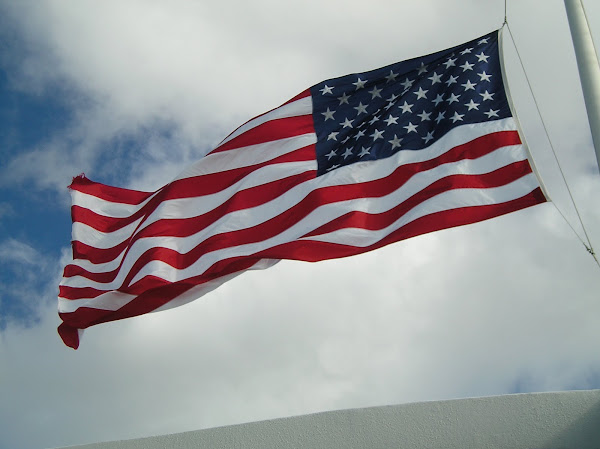
Image courtesy: Pfc. David Hauk, U.S. Army. Kandahar, Afghanistan, November 12, 2009

Friday, August 3, 2012

A Reluctant Star

Images courtesy: U.S. Marine Corps

Lance Cpl. Jeffrey Cole received the Silver Star for his gallant response to an enemy ambush in Marjah, Afghanistan. Yet even while describing the battle's harrowing events, the 22-year-old Georgia native insisted that his fellow Marines are more deserving of recognition.

"I didn't do anything comparative to what they did," Lance Cpl. Cole told The Unknown Soldiers. "I was shot, but I was not wounded, which allowed me to do what I did, and then in the process of me doing that, I got wounded."

While genuine humility is common amongst the roughly 1 percent of Americans who volunteer for military service, Cole's modesty, even after recently receiving the nation's third-highest military honor, is nevertheless striking.

"They deserve the award and not me," he said. "What I saw that day was the most impressive thing I've ever seen in my life."

Cole, eight fellow Marines, and a Navy Hospital Corpsman were on an Aug. 17, 2010, reconnaissance mission in southern Afghanistan's searing heat when the Taliban staged a sneak attack.

"It just erupted," Cole said. "It came out of nowhere."

Cole was hit by rapid fire at virtually the same moment as five fellow Marines. The difference was that Cole's body armor stopped the enemy rounds while the other men were bleeding.

"I got back up after being shot and I was mad, obviously, because I was shot and everyone else was shot," the Marine said. "I just started shooting in the tree line 100 yards away at all the Taliban that were there."

Over the next 30 minutes, the Marines, including Cole and all five others who'd been hit, took the fight to the enemy using only a ditch as cover. As a machine gunner lay bleeding, Cole volunteered to fill his role and confront the enemy head on.

"I was like 'hey, you're wounded and I'm not,'" Cole said. "So I'm gonna take the (machine) gun and I'll give you my rifle."

Cole unleashed a hail of bullets as the terrorists, who were moving closer to the ditch, scrambled for cover. Standing up and exposing himself to the enemy, the Marine continued firing until he was struck by three more bullets. And this time, body armor couldn't protect him.

"I had two go through my arm," Cole said. "It threw me back into the ditch and they put a tourniquet on me."

As the sweaty Marine lay in the ditch with blood spraying from his left arm, which was almost completely numb after one of the bullets severed a nerve, Cole knew his patrol had to move to a safer position, and fast.

"At that point I was the sixth wounded Marine out of only ten," he said. "So it was like, 'all right, we gotta get out of here now.'"

After making it into a nearby compound, the Marines frantically fixed a broken radio to call in air support while securing a perimeter to prevent further attacks. Finally, with the Taliban approximately 30 yards away, U.S. helicopters arrived to evacuate the outnumbered, decimated patrol. All six wounded Marines survived.

Almost two years after bravely grabbing a machine gun and temporarily halting the enemy advance, Cole has endured seven surgeries and countless hours of physical therapy, leaving him with about 40 percent usage of his left arm. Instead of taking any credit for his heroic actions, though, the Marine is focused on regaining his strength.

"I can curl a 15-pound weight now, whereas...almost two years ago I couldn't even lift my arm...I couldn't even lift a finger on my arm, literally," Cole said. "It's taken me a long time and a lot of hard work, but I'm doing a lot better now."

With a Silver Star medal to his name, Cole is recovering at North Carolina's Camp Lejeune while occasionally visiting his family in Woodstock, Ga. He hasn't decided how long he'll stay in the military, although he's committed to always helping other wounded warriors, no matter where his career path ultimately leads.

While reluctant to embrace the term "hero," warriors like Lance Cpl. Jeffrey Cole and his fellow troops deserve adulation. During uncertain times, they are shining stars that every American can be proud of.

COPYRIGHT 2012 CREATORS.COM

Friday, July 27, 2012

Erika and Erica

Image courtesy: Sgt. James Taylor

At just 24 years of age, U.S. Army Reserve Sgt. Erika Bagley has already been to Afghanistan twice.

"It's something I always wanted to do since I was little," Sgt. Bagley told The Unknown Soldiers about serving her country. "I did a semester of college and decided it wasn't for me, so I just decided to join the Army."

While the western New York native was deployed to different areas of Afghanistan in 2007-08 and 2010, she had frequent interactions with the civilian population, whom the U.S. military has been helping for almost 11 years.

"Of course, there are some locals who don't like us there," the soldier said. "But all the locals that I met and that we worked with ... they were very appreciative of everything we've done for them."

Being thousands of miles from home isn't easy for anyone, but Erika handled it about as well as a deployed soldier could.

I emailed my mom a lot, so I definitely kept up communications with (my family)," she said.

Erika's unit helps combat troops stationed on remote forward-operating bases stay connected to the outside world. She is currently preparing for her third overseas deployment.

"It hasn't been harder than I expected it to be," the married satellite communications system specialist said. "I enjoy every minute of it."

Having spent nearly two years of her young life in Afghanistan, Erika is well aware of the sacrifices being made there. Sadly, a tragic July 8 incident is a sobering reminder of the daily risks that thousands of brave men and women in uniform face.

On that violent Sunday in Afghanistan's Wardak province, the Pentagon said six soldiers with the 93rd Military Police Battalion, based at Texas' Fort Bliss, died when an improvised explosive device blew up in the mountainous city of Maidan Shahr.

One of the soldiers killed was U.S. Army Spc. Erica Alecksen, 21, a military police officer from Eatonton, Ga., a small city about 75 miles southeast of Atlanta. The fallen warrior leaves behind her husband, her parents, and a brother.

"What some people don't realize is that the sacrifice is real," Erica's aunt, Lydia Ivanditti, said just 16 days after her niece was killed. "This isn't a video game. It's a heart-wrenching, devastating experience to lose someone you love."

Despite a petite frame, Erica volunteered for difficult duty, which often involved carrying heavy gear that added up to more than half her body weight.

"When she came home from boot camp, I asked her about the experience," Ivanditti said. "She looked me straight in the eye and said, 'I never let them see me cry. Not once.'"

Many tears were shed on July 18 as Erica's flag-draped casket was driven from the Greene County Regional Airport to her family's church. But as the soldier's grieving relatives rode in the motorcade, there was reason for hope as citizens lined the streets.

"We would gasp as we came around the bends and saw throngs of people ... thousands of people," Erica's aunt said. "You'd see people on their front porches with hands on their hearts and little boys saluting."

Afghanistan is barely mentioned on the news these days, even though cities and towns across America continue to suffer the devastating effects of war.

"It wasn't like she just affected one group of people," Ivanditti said about her niece, who was posthumously awarded the Bronze Star. "She affected us all."

Like Sgt. Erika Bagley, Spc. Erica Alecksen went to war because she felt a deep sense of obligation.

"She was excited to go Afghanistan and serve," her aunt said. "It was a source of honor and pride that she was getting to go."

Only the most devoted Americans put on a uniform and say, "I'll go." They are the real celebrities of our culture, not actors, politicians, sports stars, or musicians.

This July at Wisconsin's Fort McCoy, Sgt. Erika Bagley was the only woman participating in the Army Reserve's Best Warrior Competition. By continuing to challenge herself as she prepares for a third deployment, she pays tribute to her fellow troops, including those who made the ultimate sacrifice, like Spc. Erica Alecksen.

"It's an honor to do this," she said.

COPYRIGHT 2012 CREATORS.COM

Image courtesy: Alecksen family

Monday, July 23, 2012

The Click

Images courtesy: Kim DeTample

Every time her 19-year-old son would call from Iraq, Kim DeTample would hear a distinctive sound before his voice.

"I would know it was him because there was a click...a delayed response because of where he was," Kim told The Unknown Soldiers. "I remember the click of the phone to this day."

After Pfc. Nathaniel DeTample arrived in Bayji, Iraq, an industrial city about 130 miles north of Baghdad, in May 2005, he told his mother about the country's inexorable heat.

"He told me to put my face up against a blow dryer," she said. "That's how hot it was."

Despite the harsh conditions, Pfc. DeTample was fulfilling a lifelong dream by serving his country.

"When he was a little guy, about three years old, he got his first buzz cut," the soldier's mother said. "From that day on, he always had that buzz cut."

Nate, as his mother calls him, joined the Boy Scouts at age 10, where he excelled and eventually attained the top rank of Eagle Scout. He also starred on the wrestling mat.

"He was a real determined young man," Kim said.

During his junior year of high school, Nate, whose father and grandfathers served in the military, committed to joining the National Guard.

"He believed in our country," his mother said. "He was one of the little kids who'd always stand for the pledge of allegiance."

After graduating high school, the eastern Pennsylvania native enrolled at Shippensburg University, near Harrisburg. But as other freshmen adjusted to college life, including the party scene, Nate's country came calling.

"I remember when he called and said he might need to report within 24 hours," Kim said. "That drive out (to Shippensburg) to pick him up, I felt like my son was going off to war."

On the morning of Aug. 9, 2005, Kim picked up the phone and heard the usual clicking sound. It was Nate, with whom she hadn't spoken in nearly two weeks, calling from Iraq.

"We're very fortunate that we got to talk to him that morning," she said. "It was truly a blessing that I'll never forget."

Less than 24 hours later, Kim got an early morning knock on the door. Standing outside was a U.S. Army officer.

"It's not good, is it?" the stunned mother said.

"No ma'am, it's not," the soldier replied.

According to the Pentagon, Pfc. DeTample, 19, Spc. John Kulick, 35, Spc. Gennaro Pellegrini Jr., 31, and Sgt. Francis Straub Jr., 24, were killed when a mine exploded and enemy forces attacked their patrol with small arms fire. All four soldiers were serving with a Philadelphia-based Army National Guard unit.

Nate's youth made it particularly difficult to accept his death.

"He was 19 when he died," Kim said. "He was a teenager when he died."

One of the grieving mother's only comforts is knowing that in her son's final moments, he was surrounded by fellow heroes.

"He served with the best," she said. "Three others died, and we will always remember them."

An outpouring of community support has helped the DeTample family cope in the years since. But almost nothing could have prepared Kim for having a son deployed in combat all over again.

Sgt. Staten DeTample, 25, left for Afghanistan almost exactly seven years after his brother arrived in Iraq. Driven by Nate's memory, Sgt. DeTample is making his entire family proud, even if his mother spends every day worrying.

"I know he's going to be fine," Kim said. "But on the other hand, you always think about Nate and the reality that a war is going on in Afghanistan. Hopefully people will remember that."

As her surviving son fights in Afghanistan, Kim is preparing to embark on her own journey to Iraq. Inspired by one of the last videos shot by Pfc. Nathaniel DeTample, in which soldiers are seen handing out shoes to Iraqi children, she wants to perform similar acts of compassion in a healing country where so many Americans and Iraqis made sacrifices.

"It's not just to remember Nate's spirit," she said. "It's to remember all the spirits."

In the meantime, Kim DeTample waits by her phone to hear Sgt. Staten DeTample's voice.

"It's back to the click," she said.

COPYRIGHT 2012 CREATORS.COM


Note: The Travis Manion Foundation is helping Kim DeTample travel to Iraq and embark on her mission to help Iraqi children. To learn more about the Travis Manion Foundation's Challenge Grant program, please click here.

Friday, July 13, 2012

Our Generation

Images courtesy: Sgt. 1st Class Eric Pahon

If you spend a few minutes watching MTV, it's easy to brand this generation as selfish, materialistic and unpatriotic. But if you talk to fine young people like U.S. Army Spc. Alfred Kollie, who recently spoke to The Unknown Soldiers from Afghanistan, you'll realize there are still Americans willing to fight for freedom.

Spc. Kollie, 26, wasn't even born in the United States. He grew up in the West African nation of Liberia, one of the most violent, impoverished countries on the planet.

"We saw a lot of death," Kollie said. "We went through days where it was difficult to find food or eat, but by His grace, we were able to make it through some of those difficult times."

As Civil War engulfed their homeland, the Kollie family fled to Ghana, where they spent eight agonizing years in a refugee camp.

"Living in a camp without electricity, without proper sanitation...people got sick," he said. "My dad also got sick numerous times, and it was very difficult."

Surrounded by brutality, illness, and death, the young refugee still saw light at the end of the tunnel. Kollie's sister, who fled to the United States years earlier, was working to bring her family to America. But as the years went by, the wait became excruciating.

"The whole process just seemed like it was taking forever," Kollie said. "We all got tired...we wanted to go back to Liberia but we couldn't...we were just stuck in the middle."

Amid pain and hardship, a moment arrived that Kollie will never forget.

"Finally, we got the word that we were coming to the States after eight years of waiting," he said. "It was one of those days of my life that I was very happy."

As he arrived in New York from a Ghanaian refugee camp, Kollie realized the light at the end of the tunnel was the Statue of Liberty's torch.

"Arriving in the States was one of the most exciting days of my life," he said. "Everything about the States was seen on TV, and we were actually here."

After moving to Louisiana and then Maryland, Kollie worked his way from salesman to sales manager. But despite his success, the young immigrant wanted to challenge himself even further.

"Since I'm here in America, a land of opportunity, I have to better myself," he said. "Not just for today, but I need to better myself for the future."

Kollie also felt an obligation to better the world. While he wanted to get an education, the frightening experiences of his youth helped mold a yearning to free the oppressed.

"All my life, I really admired the United States military as a fighting force that has set a mark on this planet," he said. "When I got my green card, I was like...I should go ahead and join the Army."

Before he signed his name, however, Kollie reflected on the cruelty he witnessed in Liberia. Like his native land, Afghanistan has been filled with violence for decades, and he knew that by joining the U.S. Army, he would likely be thrust into the middle of another armed conflict.

"At one point, I was like, 'I just came from a country and a situation that was all about war,'" he said. "But sometimes you have to make a move and hope for the better."

Kollie, who enlisted in September 2010, deployed to Afghanistan last fall. As he spoke from a remote forward operating base near the Pakistani border, the soldier had almost no complaints. Other than the searing, unrelenting heat, Kollie enjoys being part of the war effort.

"Everything's going well, and we can't wait to go home," the 82nd Combat Aviation Brigade petroleum specialist said July 5. "It's been a long ten months, and we're doing our best."

From Liberian refugee to American soldier, Spc. Alfred Kollie's journey is extraordinary. His courage also represents scores of young people who have stepped forward since Sept. 11, 2001. While Hollywood often shines the spotlight elsewhere, this generation of volunteer warriors embodies the very best of America.

"I just feel blessed to be part of this country," Kollie said. "It's so amazing to know you have people — a country — that will accept you."

COPYRIGHT 2012 CREATORS.COM

Friday, July 6, 2012

Fields of Gold

Image courtesy: Sgt. Cali Cavanary

Even while Spc. Arronn Fields was in Afghanistan, he was working on his favorite project: restoring a 1969 Ford Mustang Mach 1.

"He was ordering car parts to the U.S.," the soldier's older sister, Sgt. Cali Cavanary, told The Unknown Soldiers. "There were boxes from FedEx everywhere."

The Indiana native had an affinity for muscle cars, and almost nothing mattered more to him than making his prized Mustang whole again. But when Spc. Fields got the opportunity to deploy to Afghanistan, the soldier felt an obligation to serve, even though he'd already fought in Iraq.

"If I don't go, then someone married with kids will have to and that wouldn't be right," Sgt. Cavanary quoted her brother as saying before his January deployment.

Not surprisingly, Fields' job in Afghanistan was to drive military vehicles. And he treated U.S. Army property exactly like his precious Mustang: with reverence.

"He named his vehicle over in Afghanistan Mona," Cavanary said. "He detailed it and took pride in it."

Despite a substantial age gap, Fields and his big sister shared a special bond since childhood.

"He was kind of like my little kid in a sense," Cavanary explained. "I was always constantly watching him ... being put into that kind of parental role of taking care of him."

When his older sister joined the Indiana National Guard, Fields was watching closely.

"I remember when I graduated from basic training in 2002, he came down to Fort Hood, Texas," she recalled. "He was really proud of me and had a big smile on his face."

Fields followed in his sister's footsteps a few years later. While Cavanary was worried to see her little brother deploy to Iraq, he made it home safely in December 2008.

"We didn't talk about Iraq very much," she said. "Soldiers sometimes don't want to talk about it."

Back in Indiana, Fields would do his duty by day and work on his car by night. But as Fields continued to mature, particularly after his first deployment, Cavanary's admiration for her brother continued to grow.

"He was a better soldier than me, to be honest with you," Cavanary said.

When it came time to leave for Afghanistan, the soldier's sister had an uneasy feeling.

"I would tell him it was dangerous, and he would just laugh me off," she said.

Fields had a busy deployment with the 81st Troop Command of the Indiana National Guard, leaving him with barely enough time to correspond with family and friends.

"He called me one time when he was over there, and I missed the call," Cavanary said, adding that he left a voicemail.

Just after midnight on May 22, Fields' sister, who lives in Indianapolis, got a phone call from her mother, who was hysterical.

"She was crying and I couldn't understand her," Cavanary said. "I handed the phone to my husband."

There was a moment of silence before Cavanary tearfully recounted the painful moment when she found out that Spc. Arronn Fields, 27, was killed by enemy grenade fire on May 21 in Qal-ah-ye Mirza Jal, Afghanistan.

Image courtesy: U.S. Air Force/Adrian Rowan

"I didn't think it could be true," the grieving sister said. "But then there was anger. ... Then I wanted to go to Afghanistan and kick some (butt)."

Western Indiana turned out in full force to honor its fallen hero, as residents put up signs on their homes and businesses to salute the hometown soldier's ultimate sacrifice.

"Since I'm in the military, sometimes I think we're taken for granted," she said. "But people do care."

Cavanary, whose deep faith in God has helped calm her initial anger, still wants to serve in Afghanistan.

"Even if I'm not on the front lines, I just want to go and do my part," Cavanary said.

Almost every night, Sgt. Cali Cavanary plays the last voicemail her younger brother left her. While she hopes to one day finish what he started on the battlefield, she's also determined to finish rebuilding his treasured 1969 Ford Mustang.

"He just really loved cars," she said. "That was his favorite thing."

Spc. Arronn Fields also loved America. As his bright, shiny Mustang someday travels down roads surrounded by Indiana's golden fields, the soldier's legacy will roar even louder than the car's powerful engine.

COPYRIGHT 2012 CREATORS.COM

Friday, June 29, 2012

Fly Like An Eagle

Image courtesy: U.S. Army

Despite an intrinsic fear of flying, Pfc. Brandon Goodine volunteered at age 18 to become a U.S. Army paratrooper.

"The first time he was on a plane was to jump off it," the soldier's mother, Mandy Watson, often says.

As I drove down a rural Georgia highway on June 18, the classic Steve Miller Band song "Fly Like An Eagle" started playing on my car radio. But despite the soothing music and bright sunshine, this wasn't just another hot summer morning in McDonough, Ga.

Less than a mile from my destination, I encountered a stark reminder of the day's importance that commanded every motorist's attention.

Surrounded by blue flashing lights, American flags, and Patriot Guard Riders on motorcycles, a hearse carrying the flag-draped casket of Pfc. Goodine made a slow right turn. As the procession reached the church, soldiers greeted the fallen warrior's coffin with salutes, while onlookers stood with their hands on their hearts.

As I walked into the small Baptist church, one of two banners hanging above Goodine's flag-draped casket stood out. On it was a majestic bald eagle, along with "God Bless America."

The first speaker, U.S. Army Maj. Gen. Pat Donohue, told the grieving audience about four qualities that made Goodine, 20, a great 82nd Airborne Division paratrooper.

"He was selfless. He was fearless. And he was a friend," Donohue said, later adding that the fourth quality was the soldier's authentic love for his family.

Goodine and fellow paratroopers in the 4th Squadron, 73rd Cavalry Regiment showed extraordinary bravery, the General said, by confronting terrorists in the Maiwand District of Afghanistan's Kandahar province on June 7.

"Everyone in Brandon's unit knew it was a dangerous place when they learned of their mission," he said.

After Goodine was severely wounded by an improvised explosive device, his fellow soldiers made a heroic attempt to carry him off the battlefield. Tragically, a second improvised explosive device then detonated, robbing one paratrooper of his legs and leaving another, Staff Sgt. Andrew Mills, the subject of a recent column, badly injured.

According to the General, Goodine died a few moments later on a helicopter.

"Despite the dead and wounded, they pressed forward," Donohue said of Goodine's valiant brothers in arms.

The General said he recently corresponded with the brigade commander, who stressed that the tremendous sacrifices made that day helped secure a crucial area near the Arghandab River.

"I can't believe the progress since that operation," Donohue quoted the brigade commander as writing in an email. "They made a difference."

As the General's address concluded and Toby Keith's "American Soldier" began to play, I looked to my right and saw a burly, tough-looking young man overcome by pain. With his head pressed against his knees, he was crying uncontrollably. Even though Afghanistan is thousands of miles from our shores, the ongoing war affects ordinary Americans every single day.

A subsequent speaker, Rev. T.J. Boyd, explained that before becoming a soldier, young Brandon, who was living in Luthersville, Ga., was headed down the potentially destructive path of a troubled teenager. Recognizing imminent danger, he decided to change his life.

"A lot of people say folks from Luthersville can't amount to anything," the pastor said, looking directly at the soldier's grieving parents. "I beg to differ. Your son became a hero."

One of the service's most touching moments came when Rev. Boyd spoke to the soldier's three-year-old daughter, Katy.

"He stepped up and showed everyone he was a good daddy," the pastor said.

Even though Goodine wasn't old enough to buy a beer, his resolve to fight was so persistent that it took not one, but two powerful enemy bombs to end his life.

The terrorists ultimately lost the battle of June 7. They also failed to kill Goodine's spirit, which lives on through his family, fellow troops, and an entire community of heroes.

While soldiers carried Goodine's casket out of the church, I looked at the cover of the funeral program, which shows a bald eagle gliding above snow-covered mountains.

As a boy, Pfc. Brandon Goodine was afraid to fly. As a young man, he sacrificed his life so others could be free. Today, he soars like an eagle through the skies of heaven.

COPYRIGHT 2012 CREATORS.COM

Saturday, June 23, 2012

The Jesse Room

Images courtesy: Sonya Williams

Inside Sonya Williams' Columbus, Ga., home is a special room full of cherished memories. It's called "The Jesse Room."

Named after her fallen husband, Staff Sgt. Jesse Williams, it's a place for Amaya, the couple's six-year-old daughter, to spend time with daddy.

"We talk about him all the time," Sonya said.

Ever since the summer of 2004, when Staff Sgt. Williams walked into the restaurant Sonya was working in and asked the waitress out on a date, she was attracted to his charisma. When she initially hesitated to accept Jesse's invitation, he was relentless in trying to convince her.

"Well, I'm going back to Iraq in nine days, and you may never see me again," the soldier, on leave from a combat deployment, said with a smile.

Sonya said yes, and spent the next nine days getting to know the charming warrior. Before and after Jesse returned to battle, Sonya found herself marveling at his brilliant sense of humor.

"I was really drawn to that, as was everybody," she said. "His presence could fill up a whole room."

On Dec. 23, 2004, about one month after Jesse returned from Iraq, the soldier asked Sonya to marry him. This time, the answer was a quick and resounding "yes."

On Dec. 23, 2006, Jesse and Sonya hugged and kissed each other for the last time while holding their six-month-old daughter. Once again, the soldier was returning to Iraq from mid-deployment leave, except this time, they both knew he wasn't coming back.

"It was at that moment at the airport that we knew we'd never see each other again," Sonya said.

"That was certainly a turning point for me."

Violence in Baqubah, an insurgent hotbed about 30 miles northeast of Baghdad, had reached a boiling point during the soldier's second deployment with the Army's Stryker Brigade Combat Team. Just three weeks before his death, Jesse and a fellow soldier risked their lives on the battlefield to pull their comrades out of a burning vehicle.

Back in Santa Rosa, Calif., where the Williams family was living, Sonya and baby Amaya were driving to a relative's house for Easter Sunday. While she knew in her heart that her husband wouldn't come home alive, Sonya managed a smile when one of his favorite Bob Marley songs came on the radio.

At that exact moment on April 8, 2007, she later learned, Jesse was fighting on Baqubah's treacherous streets. According to the Pentagon, the soldier, 25, was struck by small arms fire while conducting combat operations.

Sonya was notified of her husband's death at her mother's house.

"I saw [the casualty officers] out of the corner of my eye," she recounted. "My mom scooped the baby from my arms and I hit the floor."

Next for Sonya was a painful visit to the house of her husband's father, Herb Williams, with whom Jesse was extremely close. Later, a heartfelt letter the loyal son wrote to his dad before his first deployment — in case of his death — was found in the fallen hero's wallet.

"Thank you for being my dad and thank you for never giving up on me," Jesse wrote.

The soldier also asked his father for a special favor.

"Don't let me be forgotten," he wrote.

After his death, an overwhelming response from the surrounding northern California community made clear that Staff Sgt. Jesse Williams would always be remembered.

"Truly, that is what helped us make it through it," Sonya said. "It was totally unexpected."

Even though the Army widow, 32, and her daughter have since moved to a new city, one constant is "The Jesse Room." In these precious confines, young Amaya can often be found sitting with her mom and Sonya's fiance, a soldier who once served alongside Jesse in Iraq. Every day, they share memories of Amaya's dad.

"Over the years, I've learned to embrace these moments — the emotional moments — because it reminds me of how much I loved him and still love him," Sonya Williams said.

As a little girl learns about her dad through photos, videos, and letters, perhaps we can create more space in our lives to appreciate America's courageous military families. Without their sacrifices, every room in our homes would be empty.

COPYRIGHT 2012 CREATORS.COM

Friday, June 15, 2012

'They're Not Toy Soldiers'

Images courtesy: Linda Mills

"They're not toy soldiers," Linda Mills told The Unknown Soldiers on April 13. "They're real people, and they're not just numbers."

Less than two months after our interview, Linda, the wife of deployed U.S. Army Staff Sgt. Andrew Mills, was picking up dinner at a local Pizza Hut near North Carolina's Fort Bragg. She was planning a fun Thursday evening with some girlfriends, as was customary while their husbands were deployed to Afghanistan.

As the cheery, blonde-haired military spouse drove home in a car filled with the smell of fresh pizza, a call came in on her cell phone from a strange number. As she answered tepidly, a sinking feeling filled her stomach.

"Your husband has been seriously wounded in Afghanistan," a solemn voice on the other end of the line said. "That is all the information we have at this time."

On June 7, Staff Sgt. Mills, 27, alongside at least eight fellow soldiers with the 82nd Airborne Division's 4th Squadron, 73rd Cavalry Regiment, were wounded in twin explosions in Afghanistan's Kandahar Province. Pfc. Brandon Goodine, 20, of Luthersville, Ga., was tragically killed in the attack.

"The worst call of my life," Linda wrote in an email informing me of her husband's injuries. "I didn't have much information the first 12 hours except the fact that 1) he was alive and 2) he was classified as the highest level of injury according to the Army."

Having profiled this fine Army couple in a previous column, I felt sick to my stomach as I read Linda's heartfelt email. Yet when I called her a few minutes later, I was immediately inspired by the Army wife's calm, compassionate demeanor.

"You don't have to say you're sorry," she told me. "Drew is alive, and he'll be coming home soon."

While precise details of the horrific attack are fuzzy, the heroism of Drew and his fellow paratroopers is clear. After Pfc. Goodine suffered catastrophic wounds, Linda said her husband and another soldier were helping evacuate the fallen hero when a second terrorist-planted bomb exploded.

Drew sustained devastating injuries to his legs and abdomen. His fellow warrior lost both his legs.

"I continue to ask you to lift these soldiers and their families up with your prayers," Linda wrote in a Facebook post to family and friends.

After receiving the devastating news while driving home from Pizza Hut, she waited four agonizing hours for information on her husband's condition and whereabouts. At about 2 a.m. Eastern, Linda received a call from a surgeon at Bagram Airfield.

"The doctor stated (Drew) would be intubated for 12 hours before they stabilized him to be flown to Germany for more operations," she wrote.

After an exhausting, sleepless night, Linda's phone rang again. It was a nurse, who uttered the only seven words this Chicago-born, Georgia-raised military wife wanted to hear.

"Your husband wants to talk to you," the nurse said.

Calling his wife "honey bunny," the heavily sedated soldier told her there was a "big chunk missing" from his leg, while the rest of him was thankfully intact.

After cursing the Taliban for murdering Pfc. Goodine, the wounded soldier expressed sorrow for Staff Sgt. Travis Mills (no relation), another hero from his unit. Travis lost both his arms and legs in an April attack, and is currently hospitalized in Bethesda, Md.

"He couldn't imagine the pain Travis Mills went through while losing all his limbs," Linda wrote.

When I met Travis on May 24 at Walter Reed, he told me he'd just talked to Drew by phone. Today, these courageous friends share more than a last name. They are both wounded warriors.

Staff Sgt. Andrew Mills is coming home alive. Pfc. Brandon Goodine is not. The war in Afghanistan is far from over, and as Linda said in April, toy soldiers are not fighting it. These are real Americans making extraordinary sacrifices, which command our undivided attention.

Linda Mills' heart is filled with love for her husband and sorrow for his fallen and wounded comrades. She is also thankful to her family, the Army, and God.

"He's in a lot of pain," Linda Mills said. "But he's coming home."

COPYRIGHT 2012 CREATORS.COM

Note: Staff Sgt. Andrew Mills and his wife, Linda, were reunited on the evening of June 15 in Bethesda, Md.

Saturday, June 9, 2012

American Idol

Image courtesy: Mills Family Fund

More than 20 million people tuned in for the season finale of "American Idol" on May 23. While the program's ratings are down, many continue to obsess over every detail of a glorified talent show, even while tens of thousands of U.S. troops fight in Afghanistan.

With all due respect to Phillip Phillips, the winner of this year's contest, I got to meet a real celebrity on May 24 in Bethesda, Md. His name is Staff Sgt. Travis Mills, and the wounded warrior represents all that is good about our country.

The Walter Reed National Military Medical Center is a place where startling examples of our military's post-9/11 sacrifices are tragically commonplace. While walking through the enormous facility's long hallways, I saw several wounded warriors — many with severe injuries — roll by on their wheelchairs.

Many of these heroes are barely old enough to buy a beer.

Staff Sgt. Mills is 25, and his wife, Kelsey, gave birth to their first child about seven months before an Apr. 10 explosion robbed the soldier of both his arms and legs. I was holding their baby girl, Chloe, when the wounded Army paratrooper came out of the hospital elevator with his wife.

Seeing a young, handsome man without four limbs for the first time is a visceral experience. But not for one second did I look away, as I was proud to be in the company of someone who sacrificed so much to protect the families of civilians like me.

As I put my hand on his shoulder to say thanks, the Vassar, Mich. native looked up, smiled, and said five simple words.

"How's it going?" Staff Sgt. Mills said. "I'm Travis."

Perhaps the most unique aspect of the visit was getting to see Travis interact with Ryan Manion. Ryan lost her brother, Marine 1st Lt. Travis Manion, 26, in Iraq on Apr. 29, 2007. We visited the Mills family to show our support and provide emergency financial assistance from the Travis Manion Foundation.

Ryan immediately bonded with the wounded warrior, who shares her brother's first name and his powerful, intrinsic urge to serve our country. As they talked about the challenges of the six weeks since an enemy improvised explosive device changed the soldier's life, Ryan gave him a pep talk.

"You're allowed to spend some time feeling sorry for yourself," she said with a smile. "But just remember that you get see your beautiful little girl grow up."

Travis nodded his head, looked at Chloe, and incredibly, said he was a lucky man.

If an enemy sniper's bullet had struck Ryan's brother a few inches in either direction, 1st Lt. Manion may have come home in a wheelchair instead of a flag-draped casket.

"I would give anything to have Travis here, no matter what kind of shape he was in," Ryan told the Mills family.

Image courtesy: Travis Manion Foundation

As Ryan showed compassion for another hero named Travis, the quadruple amputee showed the same genuine empathy towards her. Witnessing the interaction between two people who have been so deeply affected by America's post-9/11 conflicts was both sobering and enlightening.

Baby Chloe is too young to understand what's happened to her dad, yet she loves him more than ever. She often sits at the base of his wheelchair — where a patient's legs would normally rest — and gives him huge bear hugs. Given the love that's surrounding Travis, as well as his positive attitude, there is reason for optimism amid incomprehensible pain.

As Americans, we can no longer ignore the sacrifices of our troops and their families. While there is nothing wrong with distracting ourselves by going to the movies or watching a "reality" TV show, too many of us — particularly some in the national media — are creating an alternate reality while our country is still at war.

My reminder of America's continuing conflict is a red, white, and blue bracelet given to me by the Mills family. On one side is the address of a wonderful website set up to rally around the wounded soldier: travismills.org. "American hero" is written on the other.

Staff Sgt. Travis Mills objects to being called an American hero. In his mind, he was just doing his job. In mine, he is a real-life "American Idol."

COPYRIGHT 2012 CREATORS.COM

From left: Tom Sileo, Ryan Manion, Staff Sgt. Travis Mills and Chloe Mills, Kelsey Mills

Saturday, June 2, 2012

Daddy Fly

Images courtesy: Budrejko family

While recently visiting with his aunt, a little boy pointed to the sky as two helicopters flew over his family's Temecula, Calif., home.

"Daddy fly," the two-year-old child said.

The little boy is Andrew Budrejko. His father, Lt. Col. Thomas Budrejko, was one of seven Marines killed on Feb. 22 when two helicopters crashed during a training exercise near Yuma, Ariz.

"He is so young and we all want to make sure he doesn't forget Tom," the fallen Marine's sister, Navy Reserve LT Catherine Alexander, wrote in an email to The Unknown Soldiers. "Andrew was the most important thing in Tom's life and I want to make sure he always knows that."

During 15 years of distinguished service, Lt. Col. Budrejko served in Afghanistan, Kosovo, and three times in Iraq. The 37-year-old AH-1W Cobra attack helicopter pilot was preparing for another deployment to Afghanistan when he was tragically killed on the home front.

"(The) first thing I thought was that it had to be a mistake," his sister wrote. "Tom was one of the best Cobra pilots in the Marine Corps, as his fellow Marines have told us so many times, so how could this happen to him?"

At age 13, after winning a history competition in his hometown of Montville, Conn., and later participating in a national contest, the future pilot decided he wanted to make some history of his own.

"Mom, I'm going to be a Marine," young Tom said.

Budrejko attended the United States Naval Academy, which inspired his little sister to later come to Annapolis and follow in his footsteps.

"I looked up to Tom as long as I can remember and always (tried) to emulate him in everything I did," LT Alexander wrote.

Despite earning several medals for his accomplishments in Afghanistan, Iraq, and Kosovo, the decorated Marine rarely spoke about his heroism in combat.

"He spoke of the huge camel spiders and the dust storms that got caught up in their computers, but never spoke much about his missions," his sister explained.

Alexander breathed a sigh of relief whenever her brother came home from a dangerous combat mission.

"When he was gone on deployment, it was always in my mind that he might not make it home," she explained. "But I never worried about him while he was stateside."

Even as her brother's Memorial Service got underway at California's Camp Pendleton, the crushing loss still didn't feel quite real to the youngest of Tom's three siblings.

"He was so accomplished and in my eyes, invincible," Alexander said.

But as Marines spoke one-by-one about the selflessness of her brother during the decade and a half he devoted to our country, confusion and despair turned to acceptance and appreciation.

"I always knew how great he was, but to hear it from so many people meant so much to our family," she said. "This is where we learned about so many accomplishments that Tom had never bragged about to us."

While adjusting to life without her brother is painful, Alexander, as a member of the military herself, is also grieving for the other six families to lose a loved one in the accident.

"We continue to pray for these families and for the squadron that lost so many good men," Alexander wrote.

Many of Budrejko's fellow Marines are now deployed overseas.

"My father stays in contact with the squadron and sends packages from time to time to support them on their deployment," she added.

The training accident, which is still under investigation, has devastated the Marine's wife, Dianna. Yet to honor her husband's memory, she is committed to carrying on his legacy through their only son.

"She is trying to make sure she stays strong for Andrew and that Andrew remembers his daddy and knows he was a hero," the fallen Marine's sister explained.

Lt. Col. Thomas Budrejko was a man of strong faith. Today, as his little boy points to heaven, it is clear that his daddy is still in flight, albeit a little higher above the clouds.

"He really did live his entire 37 years and didn't waste one minute," LT Catherine Alexander wrote. "He truly was and is the best person I know."

COPYRIGHT 2012 CREATORS.COM