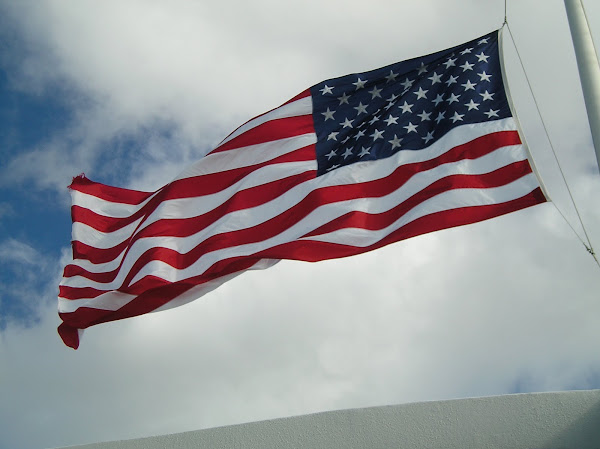
Image courtesy: Pfc. David Hauk, U.S. Army. Kandahar, Afghanistan, November 12, 2009

Thursday, July 4, 2013

Fourth of July

File image courtesy: Sgt. 1st Class Kenneth Foss

For many Americans, July 4th is a day to grill hot dogs and watch fireworks. For U.S. Army Spc. Logan Ellard and his tactical explosive detection dog, Thor, it's another day to search for roadside bombs.

"I enjoy it out here," Spc. Ellard, speaking to The Unknown Soldiers from eastern Afghanistan on June 22, said. "Most of the terrain we're around is in the mountains."

Stationed in Afghanistan's rugged Paktika Province, the 22-year-old Houston, Texas, soldier has quickly learned to appreciate the luxuries that far too many of us take for granted. During our phone call, Ellard repeatedly expressed gratitude for having air conditioning on his forward remote operating base (FOB).

"The FOB is really nice," Ellard said.

The young soldier's upbeat, positive attitude is remarkable considering his daily responsibilities. As a tactical explosive detection dog handler, Ellard's job is to lead Thor into the mountains and make sure the ground beneath the boots of U.S. and Afghan troops is free of deadly bombs.

"There are many foothills and paths that haven't been cleared in a while," Ellard said.

Thor, a Belgian Malinois with an official rank of Sergeant, has been sniffing out enemy improvised explosive devices for four years. The dog's life-saving skills and friendly nature have endeared him to every soldier on the FOB.

"Everybody knows him and everybody loves seeing him," Ellard, who's been with Thor for eight months, said. "When I take him around, he brings the morale up of everyone immensely."

Keeping morale high is a crucial challenge for any combat unit. On June 8, the Headquarters and Headquarters Company of the 10th Mountain Division's 2nd Brigade Combat Team, which Ellard and Thor serve with, was struck by tragedy when an Afghan soldier reportedly opened fire on U.S. troops. The attack killed Lt. Col. Todd Clark, 40, and Maj. Jaimie Leonard, 39.

Thousands of miles from New York State, which both departed warriors called home, there are many thoughts and prayers for the Clark and Leonard families.

"Our hearts definitely go out to them," Ellard said. "We're greatly sad for them."

Even after a horrific act of violence, soldiers in Afghanistan must stay prepared for the unknown perils of the next mission. Every day, Ellard keeps Thor ready to find the next IED.

"We go out and hide (TNT or C4) on the FOB and give someone a route, or they hide them and give us a route," Ellard said. "We make sure our dog is still on odor every day so we know when we're outside, we make sure that we realize their change in behavior on explosive odor when we're outside the wire."

Thor, who sleeps in an air-conditioned or heated kennel, for which Ellard also expressed his thanks, has saved countless lives with his handler.

"If we're on a dismounted mission, walking, we'll be out front to make sure nobody gets hurt," Ellard said. "If we're on a mounted mission, we'll roll outside the wire, near the front truck."

When even the most gentle breeze of danger is felt inside the tall, desolate mountains, Ellard and Thor are the first soldiers to shield their fellow troops.

"I have two security guys who go with (Thor and me) and we search the area of interest," the soldier said.

Through voice commands and hand signals, Ellard communicates with Thor as if he was any other soldier.

"The very first thing they taught us in training is if (the dogs) don't listen to you on the leash, they won't listen to you off the leash," Ellard said.

At just 22 years of age, Ellard trusts a dog with his life.

"He's become my best friend," the soldier said. "We're together every day."

As you mark Independence Day, take a moment to think about Spc. Logan Ellard, Thor, and their fellow U.S. troops still serving in Afghanistan. While walking and driving through rough terrain infested by the Taliban and al-Qaida's bombs, these brave men, women and military service dogs remind us of the very heroes who first freed Americans from tyranny.

"I love my job," Ellard, who is spending July 4th in Afghanistan, said. "And I love doing my job."

COPYRIGHT 2013 CREATORS.COM

Image courtesy: Spc. Mark VanGerpen


Friday, June 28, 2013

Don't Forget

Image courtesy: Spc. Robert Porter

During a June trip to San Diego, I met the wife of a U.S. Navy bomb specialist who was recently killed while serving in Afghanistan. Still devastated and overwhelmed by grief, she shared a concern that is paramount, both now and in the difficult years to come.

"I just want to make sure people don't forget," she said.

The grieving widow's poignant words are similar to what I've heard from many Gold Star spouses, parents and siblings during almost three years of authoring this weekly column. While their loss hurts in a way very few can understand, they are comforted by knowing people remember their loved ones.

This is hard to write and probably even harder for many families of fallen service members to read. In 2013, most Americans are not only forgetting the sacrifices of the brave men and women who preserve their freedom; they're not noticing in the first place.

As of the month's 26th day, 15 U.S. troops had been killed in Afghanistan in June 2013. The fallen heroes are from small towns like Evans Mills, N.Y., Moseley, Va., and Panama, Okla., and large cities like Houston, Phoenix and Sacramento.

Aside from honorable ceremonies in their hometowns and on various military bases, where was the national outpouring for these fallen warriors and their families? Where were the candlelight vigils, celebrity-filled telethons and emotional speeches by national leaders on both sides of the political aisle?

Maybe some Americans were too busy at the beach, at the movies or watching the NBA and Stanley Cup Finals. Maybe some politicians on Capitol Hill, in particular, were too busy enjoying their annual Memorial Day Recess to remember what the holiday actually means.

I used to blame the media for a disturbing, dishonorable national trend. After all, the press has fostered a culture in which names of sex-tape performers are more recognizable to most than names like Sgt. Dakota Meyer, Sgt. 1st Class Leroy Petry, and Staff Sgt. Clinton Romesha, the most recent Afghanistan war heroes to receive the Medal of Honor.

In truth, we have nobody to blame but ourselves. Even after countless polls showing the national media is one of America's least respected, most mistrusted institutions, more journalists would report on the sacrifices on U.S. troops and their families if readers, viewers and web users pressured them to do so.

On June 18, 2013, terrorists attacked Bagram Airfield in Afghanistan with mortar fire. According to the Pentagon, four U.S. Army soldiers — Sgt. Justin Johnson, 25, of Hobe Sound, Fla., Spc. Ember Alt, 21, of Beech Island, S.C., Spc. Robert Ellis, 21, of Kennewick, Wash., and Spc. William Moody, 30, of Burleson, Texas — were killed in the attack.

Image courtesy: U.S. Air Force/Greg Davis

I first heard about the battle at Bagram while watching CNN at San Antonio International Airport. Many national media outlets did report news of the attack, even if some didn't subsequently report the names of the American heroes killed. After all, there were other stories to follow, like the name of Kanye West and Kim Kardashian's baby.

The media is an easy target. The much more difficult one to identify is the one staring at each of us in the mirror.

We are Americans. Thousands of good men and women have died and suffered physical and emotional trauma to give us the privilege of uttering those three words. What being an American will mean, long after the war in Afghanistan ends, is up to us.

The name of the fallen U.S. Navy hero whose wife I was honored to meet is Lt. Chris Mosko. A 28-year-old explosive ordnance disposal platoon commander, Lt. Mosko was born in Massachusetts before living different parts of his life in Connecticut, Delaware, Wisconsin, Pennsylvania, Florida and California.

During his years of military service, Chris disabled numerous enemy improvised explosive devices (IEDs) on post-9/11 battlefields. The elimination of these bombs saved countless lives, including those of innocent children. Chris was killed by an IED in Afghanistan on Apr. 26, 2012.

Will we remember Chris and his fallen brothers and sisters? Will we salute their honorable, voluntary service by overcoming our collective discomfort about discussing the sacrifices being made by the tiny percentage of the population that fights our nation's wars?

Hopefully, we will remember Amanda Mosko's words: "Don't forget."

COPYRIGHT 2013 CREATORS.COM

Image courtesy: Mosko family

Friday, June 21, 2013

The Rescuers

Images courtesy: Char Fontan Westfall

Shortly after word reached military commanders that four U.S. Navy SEALs were engulfed in a chaotic Afghanistan firefight, Chief Petty Officer (SEAL) Jacques Fontan boarded a helicopter to aid in their rescue.

"I was always worried about him and always praying for him," Chief Petty Officer Fontan's wife, Char, told The Unknown Soldiers. "But I never had any doubt that he was coming home."

In May 1996, nine years before he sprung to action during Operation Red Wings, Jacques was a Navy sailor stationed in Jacksonville, Fla., when he met Char, who was working as a lifeguard at several pools on base.

"He was a rescue swimmer instructor," Char said. "We shared the same pools."


Char and Jacques were instantly drawn to each other.

"We just hit it off ... we immediately clicked," she said. "We had a good time together and enjoyed a lot of the same activities."

In 1998, Jacques was about to leave the Navy when he was given a shot at Basic Underwater Demolition/SEAL (BUD/S) training. After six painstaking, rigorous months at BUD/S, Jacques earned his Navy SEAL trident and quickly proposed to Char. They were married in 2000.

Everything changed for the Fontans when 9/11 jolted the entire military community. From the beginning, it was clear to Char that Navy SEALs would play a key role in hunting down the terrorists responsible for attacking America.

"I went from having a happy-go-lucky life and living in a bubble to realizing that (Jacques) was going to be much more involved," she said. "I think it just became much more real what his job was and the danger he was going to be in."


By 2003, Jacques was leaving for missions so secret that he often couldn't tell his wife which countries he'd be fighting in.

"He told me we weren't going to speak for a three month period," Char said. "To this day, I still don't know where they were."

In April 2005, Jacques was permitted to tell his wife that he was leaving for Afghanistan. It was supposed to be his final combat deployment after almost seven years as a Navy SEAL.

"We were going to start a family and enjoy some downtime," Char said of their plans upon Jacques' return.

Less than 48 hours before the June 28, 2005, rescue mission Jacques didn't know was on the horizon, Char ended a phone call with her husband as she always did.

"Be careful," she said.

"We're just flying around in helicopters," Jacques, shielding his wife from worry, said. "It's no big deal."

After a day tutoring a child with autism in Virginia Beach, where Jacques was stationed, Char was at a pizza parlor with the boy and his brother when she saw a troubling news report.

"I saw something on TV about a helicopter crash, and I remember saying a prayer right there for those families," she said. "Then I got a call from one of the (Navy SEAL) wives, and from that point on, I just had a really bad feeling thinking about what I saw on the TV."

Soon after, Char was informed that her husband, Chief Petty Officer Jacques Fontan, 36, was killed when a rocket-propelled grenade struck his helicopter. Seven fellow Navy SEALs and eight Army special operations soldiers died in the attack.

Of the four SEAL heroes fighting on the ground, three were killed and one survived. As the U.S. Navy summary of action notes, June 28, 2005, at that point, "was the single largest loss of life for Naval Special Warfare since World War II."

Eight years later, with bestselling books and a forthcoming major motion picture now telling the Operation Red Wings story, Char Fontan Westfall is remarried and raising children. To this day, when a Navy SEAL is killed in battle, Char springs to action to comfort their loved ones.

"It's my way to thank God and also make Jacques proud and also keep his memory alive," she said.

From rescue swimmer instructor and lifeguard to Navy SEAL hero and Navy SEAL widow, one American couple managed to impact countless lives.

"People say, 'do you think he would have still gone if he knew he wasn't coming back?'" Char said. "And I say he would have."

COPYRIGHT 2013 CREATORS.COM

Friday, June 14, 2013

Two Candles

Images courtesy: Ana Sabrina Carmona

Ana Sabrina Carmona was talking to her fiance, U.S. Army Staff Sgt. Rex Schad, on March 10 when the soldier, who was deployed to Afghanistan, asked her to do him a favor.

"Please light a candle for my buddy, Wittman," Staff Sgt. Schad said.

Sgt. Aaron Wittman, 28, of Chester, Va., was killed by enemy fire on Jan. 10 in Afghanistan's Nangarhar Province. His death deeply impacted soldiers serving in eastern Afghanistan with the Army's 3rd Battalion, 69th Armor Regiment, including Rex.

"It was the first time it hit (Rex) that 'it could have been me,'" Rex's fiancee told The Unknown Soldiers.

Ana Sabrina met Rex through a mutual friend while they were both living in Savannah, Ga.

"We just talked for hours," she said about their first date in one of Savannah's historic squares. "We decided that we were going to be New Year's dates."

After celebrating the dawn of 2012 together, Rex and Ana Sabrina became inseparable.


"It was this whirlwind romance," she said. "I'd never experienced being with a military man, and I didn't really know the risks."

Eleven months later, Rex told Ana Sabrina that he wanted to marry her just before leaving for Afghanistan. After subsequently mailing her a ring just in time for New Year's Eve, the deployed soldier and his bride-to-be started to plan their wedding.

"I can't wait to marry you," Rex often told Ana Sabrina during daily phone conversations. "I can't wait to come back."

First, Rex, who was on his second deployment to Afghanistan, knew he had an important job to do. Winter was coming to a close, which meant the Taliban's annual spring offensive was about to commence.

"As soon as the ice melts, it's going to get bad," the soldier told his fiancee in early March.


Ana Sabrina didn't know that Rex had already saved multiple lives on the battlefield. The Army squad leader was too humble to take credit for his accomplishments.

"Rex was a huge hero and he never even told us," Ana Sabrina said. "He was the ultimate military man ... he was a great soldier."

After Rex asked his fiancee to light a candle for Sgt. Aaron Wittman on March 10, Ana Sabrina, who lives in Atlanta, became nervous when he didn't call her the following morning.

"Sure enough, later that night, his mother called me and told me he was gone," Ana Sabrina said.

According to the Department of Defense, Staff Sgt. Rex Schad, 26, and a fellow soldier, Capt. Andrew Pedersen-Keel, 28, of South Miami, Fla., died March 11 in the Jalrez District of Afghanistan's Wardak Province when they were attacked by small arms fire. Multiple reports said the soldiers were killed when an attacker dressed as an Afghan police officer opened fire on U.S. troops.

A few days later, Ana Sabrina was in Edmond, Okla., where her fiance grew up, to attend Rex's funeral with his grieving family and friends.

"I was walking down an aisle, but it was not my wedding," she said. "It was to his casket."

Instead of reciting her vows at their wedding, Ana Sabrina, 23, read them aloud at Rex's memorial service. While the pain of losing her future husband remains excruciating and surreal, Ana Sabrina continues to take comfort in what she witnessed in Oklahoma.

"I could tell that he was so loved and it was amazing to be able to see that and experience it," she said. "I think that's a lot of what's gotten me through this ... the support of everyone and the love they had for Rex."

Rex, who was also survived by his mother, father and brother, left a lasting imprint on many, including the woman he was so excited to marry.

"I want to continue living for him," she said. "That said; I don't take things for granted anymore."

Each night, Ana Sabrina Carmona lights a candle for two fallen heroes who made the ultimate sacrifice in 2013: Sgt. Aaron Wittman and Staff Sgt. Rex Schad.

"It's crazy to me that I'm lighting two candles now," she said. "But that was Rex's request."

COPYRIGHT 2013 CREATORS.COM

Friday, June 7, 2013

The Last Mission

Images courtesy: Staff Sgt. Brian Jopek (Ret.)

U.S. Army Staff Sgt. Brian Jopek was deployed to Iraq when his oldest son, Ryan, also volunteered to serve his country.

"He went to basic training when I was in Iraq," Staff Sgt. Jopek, who has since retired from the Wisconsin Army National Guard, told The Unknown Soldiers.

Brian also missed his son's high school graduation while serving in combat, but always stayed in close contact with Ryan to give him pointers on life as a soldier.

"Keep your eyes open, keep your head low, and don't get complacent," Brian often told his eldest son.

Born in Nebraska, Ryan spent his formative years in Kansas before attending the last two years of high school in Merrill, Wis., a small city on the picturesque Wisconsin River.

After suffering an early football injury, Ryan grew to love the basketball court, where he excelled from beyond the arc.

"It was just incredible to see him hit those shots," his dad said. "The other guys were a lot faster, but he was the one guy who could hit those three-point shots."

Ryan joined the Army National Guard in 2003, just as thousands of American troops were beginning to fight the nation's second war since the 9/11 attacks.

"We were very proud of him," Brian said. "He was willing to do just about anything for anyone else ... whatever he could."


Not yet old enough to legally buy a beer, Sgt. Ryan Jopek deployed to Iraq during one of its most volatile, violent chapters. With his dad's advice in the back of his mind, the Cavalry Scout would often patrol the war-torn country's streets while manning the "gun tub" atop an armored military Humvee.

Ryan loved trucks since he was a boy.

"I took him to a couple monster truck shows when he was a little kid," Brian said. "He liked to watch monster trucks."

Ryan owned a 1966 Chevrolet pickup truck that he affectionately named "Walter" — after his all-time favorite football player, Chicago Bears legend Walter Payton — which he meticulously washed and repaired. He took both "Walter" and a new car out for spins when he came home in June 2006 for a short break from his Iraq deployment.


"I think he was doing pretty well overall," Brian said of Ryan's spirits before returning to war. "He didn't want to go back, but he knew he needed to ... he didn't want to leave the guys he'd been deployed with."

On the night of Aug. 1, 2006, Brian was in a bar watching monster trucks on television when he thought of Ryan and their many fun-filled outings. With Ryan's deployment nearing its end, the dad was looking forward to spending even more quality time with his 20-year-old son.

"The next morning, I got the knock on the door," Brian said. "At first, I didn't think anything of it, but when I looked at the people and saw the two officers standing there, I knew."

According to the Pentagon, Sgt. Ryan Jopek was killed on Aug. 2, 2006, when an enemy improvised explosive device blew up next to his vehicle near Saddam Hussein's hometown of Tikrit. To this day, Brian is thankful that everyone riding with his son survived.

"The driver was able to get the Humvee out of the kill zone," he said. "Thank God — as bad as it was — that it wasn't worse."

The fallen soldier's father, mother and two siblings subsequently learned that Ryan's final act, carried out just a few days before he was scheduled to leave Iraq, was selfless and heroic.

"He volunteered to go on one last mission that he didn't have to go on," Brian said. "An opening came up on that last convoy, on that gun truck, and he took it. He said he'd go."

The day before what would have been Ryan's 27th birthday, Brian Jopek reflected, as he often does while driving "Walter" around Wisconsin, about his son's willingness to go on one final combat patrol.

"To me, that one last mission is a prime demonstration of what kind of kid he was," the Gold Star father and Iraq war veteran said. "When you're over there ... that's what it's about. It's about the guys next to you."

COPYRIGHT 2013 CREATORS.COM

Friday, May 31, 2013

Right On

In late March, Kennedy Johnston made a Facebook post about going to college to become a teacher. One of the first responses was from her big brother, U.S. Army Sgt. Michael Cable, who was serving in Afghanistan.

"Right on," he wrote.

Kennedy, 19, knew she could always count on Michael's support, as could their four siblings. In fact, Michael's favorite activity was being there for his friends and family, as well as making them laugh.

"Whenever he did talk, it was always something funny," Kennedy said. "He never really talked about anything negative."

Sgt. Cable joined the Army in the summer of 2007. Three years later, he was stationed at Fort Campbell, located on Kentucky's border with Tennessee, as a fire support specialist with the "Screaming Eagles" of the storied 101st Airborne Division.

"He's always been driven for other people, not just himself," the soldier's sister said. "(He wanted) to be all he can be for everybody."

When Michael first deployed to Iraq, his sister wasn't worried.

"It wasn't scary at all," Kennedy said. "If there was anybody in the world who could have went to war and not had any problems, it would have been him."

Sure enough, Michael returned home and spent time with his parents, grandparents, siblings and friends in Owensboro, Ky. Then, the soldier learned he would be deploying to Afghanistan in November 2012. Even though Kennedy knew she would miss her brother, she was similarly undaunted about his next combat deployment.

"I've never been worried ... I've never been concerned," she said. "He's the strongest person I've ever known and I didn't think anything could happen."

Kennedy communicated with Michael as often as possible while he served his country in the mountains of eastern Afghanistan.

"I talked to him a little on Christmas," Kennedy said. "He sent me pictures and he commented on my Facebook statuses about going to college."

Michael was particularly close with his grandparents, who heard from him almost every day. They were the first to sense the concern in the deployed soldier's voice.

"He was telling them that he loved them over and over again," Kennedy said. "You could tell it was way different than (Iraq)."

A few days after Michael's "right on" comment on Facebook, his sister was taking a break in between classes when she noticed something strange.

"I looked at my phone and saw I had 12 missed calls," she said. "My dad texted me and said, 'Hey baby, I need you to call me as soon as you can.'"

When she called, her father told her to leave school and come home as soon as possible.

"I started having really bad anxiety attacks because I didn't know what was going on," she said.

Kennedy's dad broke the news as soon as she walked into her grandparents' house. Michael was dead.

According to the Department of Defense, Sgt. Michael Cable, 26, died on March 27, 2013, from injuries suffered during an attack in the Shinwar District of Afghanistan's Nangarhar Province. The soldier was posthumously awarded the Bronze Star and Purple Heart for the heroism he displayed during his deployment.

Speaking to The Unknown Soldiers on Michael's 27th birthday, Kennedy courageously summoned her strength to describe two months of unimaginable confusion, pain and grief.

"We have people who don't even know Michael or never even met Michael who are hurting," she said. "It's not just us."

Some Americans may no longer be aware that American troops are still fighting a war in Afghanistan. That's not the case in Owensboro, where the city and surrounding communities quickly rallied around the grieving family of Sgt. Michael Cable.

"It's so appreciated that we can't even put it into words," Kennedy said. "People are coming in and hanging out with us because they don't want us to be alone."

I asked Kennedy how she wants her brother to be remembered.

"A hero," she said. "But he's not just a hero ... he's a friend. He was there for everybody."

Right on.

COPYRIGHT 2013 CREATORS.COM

Friday, May 24, 2013

Hot Dogs and Hamburgers

What does Memorial Day mean to you?

For some, it's about a rare weekday off to relax, spend time with family and friends, and perhaps grill some hot dogs and hamburgers. Pools are back open, baseball is on TV, and summer blockbusters have started hitting movie screens.

Of course, there is nothing wrong with enjoying a national holiday. But no matter how difficult or unpleasant, we must also remember the sacrifices that give us the freedom of enjoyment, especially in the aftermath of another terrorist attack on U.S. soil.

Duane Wittman lost his son, U.S. Army Sgt. Aaron Wittman, 28, earlier this year in Afghanistan. We exchanged emails a few days ago.

"I can't begin to explain the emotions that Carol and I experience every day," Aaron's dad wrote. "The grief is enormous!"

As the Taliban launches its annual spring offensive, thousands of U.S. troops are in harm's way. On May 4, five U.S. soldiers were killed by an improvised explosive device planted by terrorists in Maiwand, Afghanistan.

Image courtesy: U.S. Air Force/Roland Balik

After being flown to Dover, Del., five flag-draped caskets arrived in American towns and cities from Meridian, N.Y. to Meridian, Idaho. The fallen heroes were brought home with honor and saluted by their families, friends and neighbors.

U.S. Army Spc. Kevin Cardoza, 19, was the youngest soldier killed in the attack. Staff Sgt. Francis Phillips IV, 28, was the oldest. The other three soldiers — Spc. Thomas Murach, Spc. Brandon Prescott, and 1st Lt. Brandon Landrum — were 22, 24 and 26, respectively.

Less than two weeks after her son's death, Mary Murach wrote to his fellow soldiers still serving in Afghanistan on Facebook.

"Thank you so very much for your service to our country," she wrote. "Thank you for the sacrifices that you and your families make."

Even in their darkest, most difficult hours, the first instinct of America's Gold Star moms, dads, wives, husbands, brothers and sisters is often to thank others. While she will spend Memorial Day dealing with unimaginable pain, Spc. Murach's mother, like her son, sets a selfless example that every American should follow.

No matter what's going on in our lives, good or bad, we should always show appreciation to our men and women in uniform, veterans, fallen heroes and their families. While about one percent of our country volunteers to serve, 100 percent should be saying "thank you."

While speaking earlier this year with the mother of fallen U.S. Marine Lance Cpl. Edward Dycus, 22, she said her son was shot in the back of the head by an Afghan soldier who turned against the U.S. forces trying to help him.

"It's hard to talk about," Carol Dycus said. "It's hard."

Carol deals with grief that very few of us can comprehend. She also makes an important point.

It's hard to talk about the horrors of war and the price that so many military families have paid during almost 12 years of constant conflict. Explaining the price of freedom to our children is even more complicated.

But more than any other holiday, Memorial Day is a springboard for that discussion. Stated simply, every American child should grow up learning about our country's fallen heroes and what they were willing to sacrifice.

Just weeks before he was killed in Afghanistan, U.S. Army Spc. Douglas Green, 23, wrote a letter to his loved ones.

"I will always love and cherish all the time I was given on this earth and am thankful for this life and everyone in it," the soldier wrote.

Memorial Day is about being thankful. It's about being grateful not only for a day off work and a chance to grill hot dogs and hamburgers with family and friends, but for the opportunity to live in a nation that brave men and women are willing to step forward and protect.

To thousands of families who've lost loved ones to war, Memorial Day is one of the most meaningful dates on the calendar. It's the one day of the year that the nation officially pauses to remember the men and women who've sacrificed their futures for America's tomorrow.

What does Memorial Day mean to you?

COPYRIGHT 2013 CREATORS.COM

Image courtesy: Erin Kirk-Cuomo

Friday, May 17, 2013

Rally Cry

Images courtesy: RallyPoint

U.S. Army Capt. Aaron Kletzing first felt the lumps while serving a 15-month combat tour in Iraq.

"Part of the way through the deployment I noticed these big lumps around my collarbone," Kletzing told The Unknown Soldiers. "I figured it was really badly pulled muscles."

After coming home, it became clear that something was seriously wrong.

"I got back from Iraq, and my body was really out-of-whack," Kletzing said. "I was sweating all the time and my energy was really off."

One Friday afternoon in the fall of 2009, Capt. Kletzing got a phone call he would never forget.

"Hey, this is the doctor," he was told. "You have cancer."

When the soldier deployed in December 2007 to a volatile area north of Baghdad, a cancer diagnosis seemed impossible.

"I turned 23 and 24 in Iraq, and I thought to myself that my next birthday, I'm going to have the biggest party ever," Kletzing said. "But my next birthday, I was doing chemotherapy in Chicago."

Kletzing, 29, followed in the footsteps of his older brother, Capt. Andrew Kletzing, when he graduated from the U.S. Military Academy at West Point in 2006.

"By then, both wars were going on, so I figured (serving) was the best thing to do," he said.

Kletzing then flew to Hawaii to prepare for war.

"I think the overall feeling is you have good nerves ... you're focused," the combat veteran said about getting ready for battle. "But there are also those nerves that keep you awake at night."

As his unit's company fire support officer, Kletzing spent seven months leading troops through Iraq's war-torn streets by day while sleeping in deplorable conditions at night.


"That was the world ... that was the universe," he said. "You're living there with Iraqi Security Forces ... living on top of each other with mice everywhere."

After several months without a shower, Kletzing and his soldiers initially welcomed a move to the east side of the Tigris River. The problem was that insurgents and terrorists were there wreaking havoc.

"For a while near (the new outpost) we had a cell of al-Qaida particularly adept at making homemade explosives," Kletzing said.

To this day, the veteran has images from Iraq burned into his memory.

"The thing I remember most vividly is seeing locals who had been hurt," Kletzing said. "(Many of) these people are maimed or shot, and those locals are brought into your aid stations."

Kletzing praised his fellow soldiers for helping him stay calm amid the madness.

"I just had to really rely on my buddies over there," he said.

Once he discovered the lumps near his neck, an already difficult deployment became even more challenging.

"All the way through Iraq, this was growing ... the cancer was spreading throughout my body," Kletzing said. "But I wasn't going to complain."


When the birthday he was so eager to celebrate finally arrived, the 25-year-old soldier, who lost his hair and eyebrows amid grueling chemotherapy treatment, hoped good news was on the horizon. The soldier's birthday wish was granted.

"I ended up doing scans, and it was in remission," he said.

Kletzing, now 29, was accepted to Harvard Business School. Not far from the Boston dorm room where Facebook was born, the U.S. Army veteran came up with a groundbreaking idea that a former Special Forces officer he met in Iraq helped him fully realize.

"The biggest frustration for people who are in the military — who really like being in the military and want to stay in the military — is that they have so little influence over where they're assigned," Kletzing said. "I felt like I'd figured out a way to change that."

Kletzing and Yinon Weiss launched RallyPoint, which they call a "LinkedIn for the military" and encourage all U.S. service members to join.

"We get excited emails every day from people saying 'hey, this is incredible,'" Kletzing said. "Our goal is to be the professional home for everyone in the military."

Today, Aaron Kletzing helps U.S. troops connect with one another in order to improve their lives and careers. He is also a proud Iraq war veteran and grateful cancer survivor.

"Thankfully, it is still in remission," he said. "I'm doing all right."

COPYRIGHT 2013 CREATORS.COM

Saturday, May 11, 2013

Exit 41

Soon after taking Exit 41 off Interstate 85 just south of Atlanta, I saw the harsh reality of nearly 12 years at war in Afghanistan.

The pain in a young widow's eyes. The trepidation in a grieving father's voice. The empty spot in a loving mother's heart.

This is what America's longest armed conflict is about, not public opinion polls or the rhetoric of politicians. While some will have the luxury of pushing the war in Afghanistan aside once it's over, others will carry it with them for all time.

April 20 in Newnan, Ga., was a picturesque spring day. The sky was blue and bright, the sun was warm but not scorching, and a cool breeze gently enveloped the Newnan-Coweta County Airport for an emotional dedication ceremony.

With a long runway, two jets, and countless American flags as a backdrop, hundreds gathered to salute the life of U.S. Air Force Capt. Nick Whitlock, 29, who was killed in the African nation of Djibouti alongside three fellow airmen on Feb. 18, 2012. The foursome flew many special operations missions in support of U.S. troops in Afghanistan before the accident took their lives.

While you may have read about Nick before in this column space, the moving words of his family, friends and fellow airmen shed new light on the character of a young generation that has continually and unselfishly stepped forward since the 9/11 attacks.

"For those who knew Nick well, you will all agree that his charming demeanor and his gregarious personality made him very easy to befriend and get close to," Air Force Capt. Joshua Stinson, who served with Capt. Whitlock, said. "Nick and I started our training on the U-28 (aircraft), and early on I always remember hearing his unique, vivacious laugh down the hall and how he was always able to light up the classroom whenever he entered."

Other than birds chirping and the occasional light breeze, there was complete silence as Nick's father, Jimmy Whitlock, delivered a poignant tribute to his departed son. After thanking the military and political dignitaries in attendance, he looked directly at his wife.

"Thank you, Clare," he said before a heartbreaking pause. "I love you forever."

What the last year has been like for the Whitlocks is truly unimaginable. But just as Nick courageously flew above war zones, the airman's father stood in front of the Cessna airplane on which his son learned to fly and read the fallen hero's words.

"It is my desire to serve my country by becoming an officer and a pilot in the United States Air Force, a career that I believe will be most challenging and rewarding," Nick once wrote. "It is in the Air Force where I can combine my passions and abilities to serve my country anyplace, anytime and in any capacity that such an obligation requires."

Nick's words sum up the mindset of so many brave young men and women who have willingly deployed to some of the world's most violent places since the World Trade Center, Pentagon and a now-sacred field in Shanksville, Pa., first smoldered.

"Nick literally died trying to be the very best that he could be," his dad said.

Ashley Whitlock is still trying to adjust to life without her husband, who she last saw on Valentine's Day 2012. Through her immense character and infectious strength, the Gold Star wife inspired everyone in attendance.

Images courtesy: Captain Nicholas Schade Whitlock Foundation

There are thousands more young women and men like Ashley, who've lost so much, yet soldier on. There's no telling what their loved ones could have accomplished if they'd made it home from Afghanistan or Iraq, but as Ashley's brother-in-law said, it's up to us to keep their memories alive.

"If we live our lives as the best people that we can be, and encourage people to be the best that they can be ... we'd have a lot better world than we live in now," Nick's brother, Iraq war veteran James Whitlock, said.

After hugging the Whitlocks and getting back on I-85, I saw a brand new Exit 41 sign for the airport that now bears a new, distinguished name.

"I am truly excited to imagine what future American history will have its beginnings here at Whitlock Field," Capt. Stinson said.

COPYRIGHT 2013 CREATORS.COM


Friday, May 3, 2013

Love on the Battlefield

Images courtesy: Master Sgt. Jennifer Loredo

As soon as Master Sgt. Jennifer Loredo went into labor, she wondered if her husband, Staff Sgt. Eddie Loredo, would make it to the hospital on time.

"He was on his way home from Iraq for two weeks of leave," Master Sgt. Loredo told The Unknown Soldiers. "So I basically wound up having to go to the hospital and start labor knowing he was on the airplane from Iraq."

Moments later, Staff Sgt. Loredo ran into the hospital room to witness his wife giving birth to their son.

"He literally made it just in time," Jennifer said. "That was a pretty special time."

Jennifer was introduced to Eddie by a mutual friend in 2004, while both U.S. Army soldiers were stationed in Vicenza, Italy. They quickly fell in love.


"He deployed (to Afghanistan) a month later, but we kept in touch that entire time he was gone," she said. "We wrote love letters."

Immediately after returning, Eddie told Jennifer he wanted to marry her. They tied the knot just before returning to the United States and reporting for duty at North Carolina's Fort Bragg.

Two weeks after the birth of his son, Eddie returned to Iraq for another nine months. Then, in December 2009, the soldier left for Afghanistan. This combat deployment would be much different than his previous three, however, because his wife was headed to the war zone, too.

"It was my first deployment," she said. "At times it was overwhelming, but I had a great support system of family and friends who helped me out with my kids and were always there for me."

Jennifer left their son and her 12-year-old daughter from a previous relationship with relatives when she deployed in May 2010. While Eddie fought in the volatile south with an infantry unit, Jennifer was setting up dental facilities for U.S. troops to the north.

"It was very hard to communicate when I got to Afghanistan," she said.

During a rare phone conversation on Father's Day 2010, Jennifer was surprised when Eddie didn't sound like his normally energetic, enthusiastic self.

"The unit had lost several teammates," she said. "My husband was concerned about his soldiers' well-being."


On June 24, 2010, Jennifer's commanding officer brought her to his office and asked her to sit down. After he said two words — "Sergeant Eddie," which is how soldiers referred to her husband — the anguish quickly set in.

"Tears started rolling down his face," Jennifer said.

Eddie, 34, was severely wounded in a roadside bomb attack that had already taken his left leg. A numb, dazed Jennifer immediately boarded a plane to Kandahar, where she would stay by her husband's side.

After a frantic flight, Jennifer rushed into the hospital, much like Eddie on the day their son was born. Upon entering the room, she saw her husband lying quietly and peacefully.

"I ran to him and kissed him right away," she said. "As soon as my lips touched him, I knew he didn't make it."

Hours after collapsing into an Army Chaplain's arms, Jennifer was staring at her husband's flag-draped casket during a long, excruciating journey home from Afghanistan. While their two-year-old son probably wouldn't understand that daddy was gone, Jennifer knew her 12-year-old daughter would be devastated by her stepfather's sudden death.

"I did have a huge fear of telling my children," Jennifer said. "But I got through it."

The military and civilian communities rallied around Jennifer and the kids.

"To this day, I have so much support ... it is so overwhelming and so appreciated," she said. "The bad thing is there are many people in my situation who don't experience such a supportive environment."

Now 37, helping military families is Master Sgt. Jennifer Loredo's new mission. Stationed at the Pentagon, she supervises Master Resilience Training to assist Army families, including those who've lost loved ones, in coping with the enormous challenge of serving in a post-9/11 world.

Image courtesy: U.S. Army

"I wanted to make (Eddie) proud and my kids proud, too," she said.

When Jennifer puts her young son to bed, they talk about why daddy is a hero.

"Mommy is a soldier, daddy was a soldier, and we loved being soldiers," she said. "He gave his life for the well-being and protection of our country."

COPYRIGHT 2013 CREATORS.COM