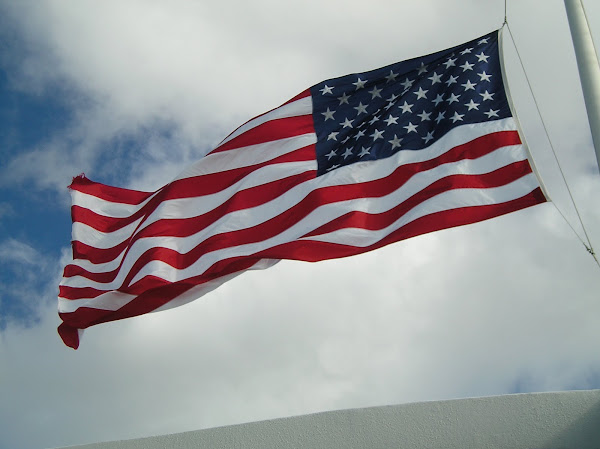
Image courtesy: Pfc. David Hauk, U.S. Army. Kandahar, Afghanistan, November 12, 2009

Saturday, July 30, 2011

Pay It Forward

Image courtesy: Spc. David Sharp

For Staff Sgt. Daniel Higgins, every day is a gift.

During a chaotic eastern Afghanistan firefight on May 26, 2008, Sgt. 1st Class Leroy Petry picked up an enemy grenade just as it was about to explode. The Army Ranger tossed it out of harm's way, losing his right hand in an act of heroism that spared Higgins and Pfc. Lucas Robinson. Petry was awarded the Medal of Honor by President Obama on July 12.

The day after he attended the emotional White House ceremony, I asked Higgins, who deployed three times each to Afghanistan and Iraq before leaving the Army, what it's like to walk around knowing someone saved your life.

"Robinson and I were actually talking about that (on the day of the ceremony)," the combat veteran replied. "We pretty much feel forever indebted to him, and that's not going to change. There's not going to be a hell of a lot of opportunity for us to pay him back," he added.

Sgt. 1st Class Jerod Staidle, a fellow Army Ranger who has deployed nine times to Afghanistan and thrice to Iraq, helped convey the enormity of what Petry, the second living Afghanistan war hero to receive the Medal of Honor, did for the men beside him.

"Staff Sgt. Higgins here, for instance, he went on to become a squad leader himself," Staidle said. "Just the impact that he made in the lives of his men below him is going to continue to echo throughout the platoon and the company.

"I'd like him to come back in the Army, but if he doesn't, whatever he does, he's going to continue to make an impact on people's lives," the battle-hardened warrior continued. "You just keep doing what you're doing, and that's how you pay it forward."

In his first news conference since the Medal of Honor ceremony, Petry, a 31-year-old wounded warrior with a wife and four children, displayed unflinching acceptance of the hand life has dealt him.

"At the end of the day, I didn't risk any more than any other service member over there," Petry said about his brothers and sisters in arms serving in Afghanistan. "There are people with bigger families and just as much in their lives, and they risk it every day."

One Army Ranger — 21-year-old Spc. Christopher Gathercole — made the ultimate sacrifice during the Paktia province battle. One of the most stirring moments of the White House ceremony honoring Petry, who has Gathercole's name engraved on a plaque bolted to his prosthetic hand, came when the commander in chief asked the fallen soldier's brother and grandma to stand.

"Gator — we called him Gator — meant everything to us," Higgins told The Unknown Soldiers. "When you spend as much time together as we all do, we were pretty much brothers, so losing him hurt like crazy."

In a bitterly divided nation's capital, Democrats and Republicans applauded Gathercole's relatives, providing a rare moment of genuine unity not seen since Navy SEALs killed Osama bin Laden.

"I really appreciated that the president did that," Staidle said. "I think I speak on behalf of everybody, from the people who knew (Gathercole) in that room ... who were probably holding back some tears, I'll be honest."

After an astonishing eight combat deployments and an act of bravery that will be remembered for generations, nobody would have blinked had Petry opted to retire from the Army. Yet in his most selfless act since tossing aside an exploding grenade, the wounded hero re-enlisted, pledging to use his higher profile to lend a hand to fellow troops and veterans.

"It represents those who paid the ultimate sacrifice, and it gives me the opportunity to help those living today and still serving our great nation and those who have served before," Petry said.

As he attends college in South Carolina, Higgins often reflects on the gift he was given by his fellow Ranger.

"I think about Petry because I know that Robinson and I wouldn't be here if Sgt 1st Class Petry hadn't done what he did," he said. "But it doesn't surprise us that he did it. That's the kind of guy he is."

COPYRIGHT 2011 CREATORS.COM

Saturday, July 23, 2011

Voices Carry

Image courtesy: Samantha Bell

When I started a difficult phone conversation with the widow of Sgt. Christopher Bell, the voice of the couple's 1-year-old daughter, Lana, filled the background. While the child is too young to understand that her daddy was killed last month in Afghanistan, she senses that a bond has been broken.

"She can tell something's going on," Samantha Bell told The Unknown Soldiers.

When Sgt. Bell deployed overseas, his wife was left behind in Alaska, where the soldier was based, to care for their little girl. With most of their relatives residing far away in Alabama and Mississippi, Samantha needed her husband. But from the beginning, she knew his country needed him, too.

"It was hard," she said. "We tried to stay hooked in as much as we could."

While being separated by thousands of miles is incredibly difficult for any couple, nothing was more important to Samantha — or Christopher — than making sure the father could still hear his little girl's voice.

"I would keep Lana up real late at night so he could talk to her," Samantha told The Unknown Soldiers. "He didn't get to really talk to her as much as I would like, but when he did, it was something."

With a penchant for service, Christopher talked about joining the military or the police since the day he and Samantha met while working on a school project. When considering his options a few years later, joining the Army as a military police officer seemed like the perfect fit.

"He wanted to make a difference and make a change," Samantha, 25, said. "He was all about making a good life for himself and his family."

Bell threw himself into his job, exhaustively studying protocol and reciting Army manuals. Despite being a relatively young soldier at age 21, he quickly became the 793rd Military Police Battalion's "go-to guy" when it came to doing things by the book.

"He knew his job, and he did it well, and tried to be the best," the soldier's wife said. "If someone was in the wrong when it came to any kind of military violation, he would set him or her straight."

Bell's combat deployment to the treacherous mountains of northeast Afghanistan was going relatively well until an improvised explosive device detonated in front of his vehicle on April 4. The attack injured several soldiers and shook up his entire unit. While he was "never the same" after the attack, according to his wife, Bell took it upon himself to make sure his fellow troops pressed forward.

"His platoon sergeant told me that Chris motivated him to motivate the other guys," Samantha explained. "I've heard a lot of people say he was their inspiration to keep going."

On June 4, Bell was killed alongside Sgt. Joshua Powell, 28, Spc. Robert Voakes, 21, and Sgt. Devin Snyder, 20. Amid the whirlwind of pain brought home by the tragic explosion, Samantha cites the opportunity to meet loved ones of her husband's fallen brothers and sisters in arms, including Sgt. Snyder's mother, as one of her most important steps forward.

Dineen Snyder, who flew to Alaska from New York to meet other relatives of the fallen at Fort Richardson, said she was overwhelmed by Samantha's strength. But even as the death of her own daughter sunk in, the grieving mother expressed genuine compassion and concern for little Lana.

"She's going to grow up and not know her dad except through stories," Snyder painfully lamented.

I asked Samantha what she plans on telling Lana about her father. She paused, put down the phone and began to sob. As I waited in agony for her response, feeling guilty for asking the question, the young widow gave a remarkable answer.

"I'll sit her down and tell her that her daddy was a hero," Samantha said. "He accomplished what he wanted to so that we could be taken care of.

"He loved her more than anything," she poignantly added. "He was the best father and husband I could ask for."

Shortly before our conversation concluded, Lana's voice again filled the background. With a mother this strong, Sgt. Christopher Bell can rest peacefully, knowing that his little girl will be OK.

COPYRIGHT 2011 CREATORS.COM

Image courtesy: U.S. Army

Saturday, July 16, 2011

The Never-Ending Day

Image courtesy: HN Samantha Paulson

Just before U.S. Navy Hospital Corpsman Second Class Chris Paulson left for Afghanistan at the end of February, he had an unthinkable conversation with his new bride.

"If something happened, he wanted me to take care of everything," the sailor's wife told The Unknown Soldiers. "He wanted me to take care of his body."

As HM2 Paulson provides medical care for U.S. Marines, Afghan soldiers and civilian bystanders during the volatile Helmand province fighting season, his wife waits nervously on the home front for the chance, someday, to live with her husband for the first time. Yet while every military spouse faces challenges, Hospitalman Samantha Paulson is a warrior, too.

"There's a chance I could be turning around and going on a deployment when he gets back," said HN Paulson, who is stationed at North Carolina's Camp Lejeune. "But I can't sit here and say 'woe is me,' either, because this is what we signed up for."

The Dec. 27, 2010, marriage of Chris and Samantha Paulson can be attributed, in part, to a sprained ankle she suffered during training. After treating her injury, Samantha's future husband invited her to a barbeque. The rest is history.

"We were going to try to wait and have the big, fancy wedding," she said. "But shortly after we started dating, his deployment papers came up."

This is Chris Paulson's third deployment to a war zone, after previously serving in Iraq and Afghanistan. According to his wife, he's never seen anything like this year's fighting in Helmand province.

"I'm inspired by him every day, and I hope one day I can be as talented and skilled as he is," she said. "He's very dedicated to treating his Marines and tries to stay focused on the mission as much as possible."

Despite her military training, Samantha has to limit how much she thinks about day-to-day operations in Afghanistan.

"If I started letting it get to me, I don't think I would ever stop crying," the sailor admitted. "You can't prepare yourself for the idea that your spouse might die."

Samantha's husband and the Marines he treats spend almost every day out on foot patrols. The risks they face are very real.

"In addition to the improvised explosive devices buried underneath them, (terrorists) are now putting IEDs in trees so they can blow up over a vehicle," Samantha said. "The enemy had been sitting there angry all winter, and now they're ready to fight."

Samantha said Chris recently pulled a bullet out of a civilian's leg and has probably treated more Afghans than Americans during his current deployment. But the tragic June 27 combat death of a Marine in his care, Cpl. Michael Nolen, 22, will likely haunt her husband for the rest of his days.

"This isn't the first Marine they've lost, and it won't be the last, unfortunately," the sailor said, her voice trembling. "Out there, all you have is your job. It's just one never-ending day."

Taking advantage of the resources available to her as an active duty sailor and military spouse, Samantha frequently visits chaplains and family readiness groups.

"I've definitely used these things because there have been days when, of course, I'm worried about him," she said. "I'm just as worried about his fellow Marines. I jump every time my phone rings," Samantha added.

When her husband returns in the fall, the couple will have a few days together before Chris heads to Naval Station Great Lakes in Lake County, Ill.

"We're going to try to spend as much time together as possible and meet up with some of the Marines he served with and their wives," Samantha said. "They're all hungry for real food, so I imagine a good steak is in order."

As HM2 Chris Paulson risks his life thousands of miles away, with even more time apart from his wife on the horizon, one would think HN Samantha Paulson would be full of despair. But like her husband, she took the Hospital Corpsman Pledge and won't let her country down.

"I'd do it all over again," she said. "This relationship and my job are that important to me."

COPYRIGHT 2011 CREATORS.COM

Saturday, July 9, 2011

Somebody to Love

Images courtesy: Facebook

Sgt. Devin Snyder could always make her friends laugh, even during long patrols in northeastern Afghanistan. A week into her first overseas deployment, the 20-year-old military police officer was still doing what she loved most.

"She was always the first to smile," Sgt. Jonathan Enlow said June 11 at Forward Operating Base Mehtar Lam. "She was someone who was always able to bring a smile out from everybody else, too."

A few days later, the laughter faded when several of Sgt. Snyder's fellow soldiers were wounded in a roadside bomb attack.

"She wasn't hurt, but I think it started making her see that it was truly dangerous," the soldier's mother, Dineen Snyder, told The Unknown Soldiers. "Knowing those people wouldn't come back to her platoon ... it brought her down."

While still agonizing for the friends injured in the April 4 attack, Snyder picked herself up. "A few days later, she was upbeat again and ready to do another mission," her mom recalled.

But things weren't the same. During the rest of her deployment, Snyder worried that the sacrifices being made by her unit were being overlooked. "She was worried that people weren't seeing how hard she worked," the soldier's mother said.

Snyder, who joined the military after graduating high school, spent a lifetime surrounded by service. Her father, Ed, is a retired Navy officer. Her sister, Natasha, currently serves in the Navy, while the youngest of her two brothers, Damien, recently joined the Army. Devin wanted to serve, and as she showed during her stellar high school track career in Cohocton, N.Y., nothing would prevent her from reaching the finish line.

"She was very strong-willed," Ed Snyder said. "She knew what she wanted."

The clash of what this radiant, fun-loving soldier ultimately wanted out of life is fascinating and reveals surprising similarities between Army fatigues and Snyder's favorite color: pink.

"She liked being a soldier," her mom said. "But she also loved being a girly-girl, wearing her heels and carrying her purses."

While admiring one of Snyder's pink handbags, you would undoubtedly notice the flowered tattoos covering the upper-half of her left arm.

Upon returning from Afghanistan, the soldier wanted to fill the rest of that arm and some of her right, before showing off her tattoos in magazines. At the same time, she would either stay in the Army and become a deception analyst, or head home to become a police officer.

"She was a go-getter all the time, even as a little kid," Snyder's mom said. "When she wanted something, she went after it."

On June 4, the dreams of Snyder and three brothers in arms, Sgt. Christopher Bell, 21, Sgt. Joshua Powell, 28, and Spc. Robert Voakes, 21, tragically ended. The Pentagon said the four soldiers, all of whom served with the 793rd Military Police Battalion, were killed by an improvised explosive device planted by terrorists in Laghman province. The military said a civilian contractor, Brett Benton, 37, also died in the attack.

"It was the worst day of our lives," Ed Snyder said.

"It was our worst nightmare. ... It really was," Dineen Snyder added.

As an unwanted chapter of unimaginable grief begins for five American families, something "huge" is comforting the Snyders. When thousands filled the streets of Cohocton to salute Devin, two grieving parents realized their daughter was loved by more people than they could have imagined. Indeed, she and her fellow soldiers were noticed.

"It's such a tribute to her," her mom said. "It makes me feel like she touched so many people, whether it was with her smile or a kind word."

A recent trip to Alaska's Fort Richardson, where Snyder's relatives spent time with loved ones of the soldiers she died alongside, also helped the family carry on.

"Everybody is just trying to get through and find the new normal," Dineen Snyder explained. "The four that were killed were a good team; they worked together and never had a bad word to say about each other."

Somewhere, Sgt. Devin Snyder is once again laughing with her friends. Hopefully, she knows how much she is loved by the country she died for.

COPYRIGHT 2011 CREATORS.COM

Saturday, July 2, 2011

Faces of War

Three days after the tragic combat death of Pfc. Brian Backus in Afghanistan's Kandahar province, a Facebook tribute page was launched in the 21-year-old warrior's honor.

"I have never met this soldier," the page's unidentified creator wrote on June 21. "But I felt this page was needed for this fallen hero."

More than a thousand people have since "liked" the page, including many of the Harbor Beach, Mich., soldier's relatives, friends and fellow troops. People who hadn't seen Pfc. Backus in years have also been sharing fond memories.

"I used to babysit Brian and his brother," Lisa Bain posted on June 23. "We will always remember him as a smart, energetic boy who insisted on having his back scratched during bedtime."

The heartfelt messages of support are comforting the Backus family during a time of unrelenting grief.

"It means more to us than you can imagine," the fallen hero's grieving mother, Anne Backus, posted on June 22. "To see that our son, Brian, touched so many lives helps ease the pain of loss."

Facebook communities like this one harness the staggering toll of the ongoing Afghanistan and Iraq conflicts. As the national media obsess over next year's presidential election and the Casey Anthony trial, these posts, filled with genuine compassion and raw emotion, remind us that we are still a nation at war.

Another 21-year-old fallen hero, Pfc. Josue Ibarra, made the ultimate sacrifice while conducting combat operations in Afghanistan's Helmand province on June 19. In the dark hours following the tragedy, a Facebook page was quickly, caringly created to celebrate the Marine's life.

"You wanted to protect us; you did protect us," Dennis Ly wrote on June 23. "There's no way we can thank you in person now, but what we can do is live out the rest of our lives to the fullest and to the most positive way we can for Josue.

"He will live on through us, the people he wants to protect," he continued. "We won't let you down."

After coordinating on Facebook, Pfc. Ibarra's community didn't let him down. When the Marine returned to Midland, Texas, in a flag-draped casket, city streets were lined with patriotic supporters.

When an American service member is killed in action, fellow troops are deeply affected. Facebook pages like the one memorializing Pfc. Eric Soufrine, 20, of Woodbridge, Conn., give grieving warriors a place to pour out their hearts.

"As a soldier also raised in Connecticut just returning from Afghanistan, I'd like to thank you for your service, and for making the ultimate sacrifice," Tara LaDore posted on June 17. "Though I've never met you, you are my brother in arms and you will never be forgotten."

Pfc. Soufrine, who died on June 14 in Afghanistan's Farah province when terrorists attacked his unit with an improvised explosive device, had a girlfriend who couldn't wait for him to come home. As war's harshest reality sinks in, the Facebook page is painful but also therapeutic for Paige Woodward.

"We were supposed to have such an amazing life together," she posted on June 16. "But I promise you, I will see you in heaven eventually, and we will pick up where we left off."

Pvt. Ryan Larson, 19, hailed from a tiny Wisconsin village called Friendship. Since his June 15 combat death in Afghanistan's Kandahar province, more than 2,000 people — nearly three times his town's population — have "liked" a Facebook page in tribute to their friend.

"To see men and women, old and young, rich and poor, all races, types, personalities, and positions in our community all as one yesterday for Ryan was so amazing," Izzy Jackson wrote on June 26. "God was shining his light down yesterday to welcome Ryan home."

During past conflicts, Americans could not instantly connect to wars being fought by our friends and neighbors, nor could families of the fallen visit virtual communities filled with memories of their loved ones. In the 21st century, through these interactive, invaluable tribute groups, parents can teach their children about the indelible sacrifices being made in Afghanistan and Iraq.

I never met these four fallen heroes. But today, thanks in part to four remarkable Facebook pages, they are dearly missed.

COPYRIGHT 2011 CREATORS.COM

Image courtesy: U.S. Air Force/Roland Balik

Saturday, June 25, 2011

The Fourth Day

Image courtesy: Crystal Tumey

As he boarded a helicopter in a volatile war zone, Spc. Cody Tumey sent his mom a heartfelt text message:

"I'm on the bird, takin' off," the young soldier wrote. "I love you. Don't worry."

Not worrying is impossible for this mother, especially as her son battles terrorists in Afghanistan's Paktika province, which has been called one of the most dangerous places in the world for an American. Yet for Crystal Tumey, the instinct to stand behind her son and his fellow troops overrides her worst fears.

"Our whole family tries to be the kind of supporters that Cody needs us to be through this, his first deployment," she said in an e-mail to The Unknown Soldiers.

Spc. Tumey's maternal grandmother, Dee Dover, said the most difficult part of the deployment for her daughter is the frustrating reality of sporadic communication. While the soldier always tries to warn his family when he expects to be out of contact during a mission, the waiting, wondering and worrying would wear on even the strongest military mom.

"She gets very anxious on that third day or fourth day," Dover said. "I tell her it's going to be OK, because every time it's the fourth day, he gets back and he calls."

As Tom Petty once wrote in his ode to the Hoosier State, Cody "grew up tall and (he) grew up right with them Indiana boys on them Indiana nights." While always good-natured, the future soldier struggled at times in high school and, according to his grandma, "bummed around" for about a year after graduation as he pondered life's next step.

"His paternal grandpa pointed him in the direction of the military," Crystal said. "Cody also had a great deal of respect for his maternal great-grandpa. Both of them were veterans, and they clearly had a big impact on him and his decision to join the Army."

As soon as basic training started, everything changed.

"The truth is, the Army has truly brought out the best in Cody," the soldier's mom explained. "Cody has become a young man with purpose, bravery and commitment."

The soldier's forward operating base recently withstood a "direct hit" by enemy fighters, an incident that greatly concerned Spc. Tumey's loved ones. When the soldier's dad, Chuck, asked his son about the attack, Cody had a simple response.

"The attempt happens every day here, Dad," the soldier said, according to his grandma. "It's not something isolated."

As day-to-day combat operations heat up during another volatile summer at war in Afghanistan and Iraq, patriotic Americans are praying for our troops, especially in small rural communities outside Indianapolis.

"We pray during the day, we pray at night, we pray every time we think about him," Dover said. "Cody has prayers beside him, over him and under him."

While faith sustains the soldier's family, the unknown is still terrifying.

"We have absolutely zero control over his safety," Cody's grandma said. "He has a job to do, and he's dependent on other soldiers to do their jobs right, too."

Awarded a leadership medal before he could legally be served a beer, the young specialist was serving with the Army's 1st Battalion, 16th Infantry Regiment, known as the "Iron Rangers," when he turned 21 years old on June 15.

"I wish we could be together to celebrate this milestone birthday," Crystal wrote on June 14. "But I know that he is where he wants to be right now."

As another dreaded fourth day without hearing from her son approached, the military mom was again comforted by her son's poignant words:

"This was my dream and my choice," Spc. Tumey's text message continued. "If something happens, don't ever forget that."

COPYRIGHT 2011 CREATORS.COM

Saturday, June 18, 2011

The Dogs of War

Images courtesy: Sgt. Jason Cartwright

The temperature hit 110 degrees as Sgt. Jason Cartwright and his specialized search dog hunted for improvised explosive devices buried beneath some of the world's deadliest terrain. During a perilous nine-hour search in the southern Afghanistan heat, the soldier tried to cool down Isaac, a 4-year-old black Labrador he trained to save lives.

With Taliban spotters looking down from mountaintops and radioing back American positions to fellow terrorists, the Army dog handler knew his patrol was a prime target as he and Isaac searched for bombs in a dry waterway, with a platoon depending on them following closely behind. That's when all hell broke loose.

"The gunfire started, and it was just everywhere. You could hear the echoes of it," Cartwright told The Unknown Soldiers. "All you can hear is the sound of automatic machine guns — you can hear the bullets whizzing by your head."

Immediately upon hitting the ground, the 28-year-old soldier, who went through five months of intense training to become a dog handler after returning from Iraq, screamed for Isaac. The dog was searching for IEDs about 35 feet ahead when the chaos erupted.

"I saw bullets hit right in front of him, and he flinched a little bit and hesitated," Cartwright said. "But once the dog was back to me, I told him to stay, very loudly, of course, but he wasn't shaking. He laid down right beside me."

With Isaac safe, his handler frantically shot back before the firefight ended and the brave tandem finished a "hasty search" for IEDs. There were no American casualties in the battle.

Cartwright and Isaac are part of the Engineer Canine Company of the 5th Engineer Battalion, a unique company of valiant soldiers stationed at Missouri's Fort Leonard Wood. Along with their dogs, handlers deploy individually to combat theaters to support units across the military that are deemed to be at high risk of IED attacks.

"It's pretty much just you and your dog," the Alabama native said of deploying overseas. "You go by yourself and you don't know anybody."

While training Isaac was "fun," knowing the risks they would face together in battle heightened the stakes.

"I have no issues going to work every day because I love my job, but when you are deployed, it changes things up a little bit," the soldier explained.

"These are real IEDs — real explosives — and everything else is out of the picture."

Cartwright said he and Isaac found 28 improvised explosive devices during their year together in Afghanistan, saving countless Americans and Afghans from being killed or wounded. Today, one 40-pound homemade bomb, which was wired to a mortar round, sticks out in the sergeant's mind.

"The Taliban (plants) IEDs around schools and hospitals so villagers can't access them," Cartwright said. "There was a school, and we went to check it.

"Within 20 minutes, we get to a bridge, and Isaac lets me know that there is some kind of explosive that he detected," he continued. "I told everyone behind us to stop and get down."

Isaac was closest to the bomb, and the dog's odds of living were probably about 50-50.

"The dangerous part about calling your dog off is that I'm thinking he's going to step on a pressure plate," Cartwright said. "But I called him back to me, took care of him and secured him."

A heroic explosive ordnance disposal team was called to the area and subsequently disabled the device. Without this soldier and his dog, though, they never would have known where to look.

"You have guys coming up to you and patting you on the back and wanting to play with Isaac," Cartwright said. "They are saying, 'We appreciate it, we've lost so many guys from IEDs — you probably saved my life or someone else in my platoon.'

"It's a good feeling."

Seizing the chance to save even more fellow troops from the biggest post-9/11 threat to their safety, Sgt. Jason Cartwright will soon head back to Afghanistan. But he won't be alone.

"I couldn't imagine going back without my dog," he said. "We have a special rapport and special bond; I know I trust that dog, and that dog trusts me."

COPYRIGHT 2011 CREATORS.COM

Monday, June 13, 2011

Wide Awake

Image courtesy: Cpl. Adam Leyendecker

As millions of Americans drink coffee and wake up for another week at work, or another week trying to find a job, thousands of U.S. troops are on patrol in the dangerous heat of Afghanistan and Iraq.

Tuesday's high in Kandahar is expected to reach 109 degrees, while Baghdad's forecasted high is 104. To many service members apart from their families in post-9/11 war zones, the day of the week simply doesn't matter; it's just another brutally hot day in a strange land.

Outside of base facilities and USO centers, troops in Afghanistan are not enjoying air conditioning and cold lemonade. They are wearing uniforms and carrying heavy gear, as enemy fighters look down from mountaintops, hide in caves, or use women and children as human shields.

Despite challenging conditions that are unimaginable to someone like myself, who hasn't served in the military, our forces are doing a spectacular job every day, night, and weekend. A successful Special Operations Forces mission to secure a village in Afghanistan's Badghis province is a perfect, albeit tough, example. Upon being attacked while arriving at the Panerak village, heroic American forces and their Afghan counterparts killed 23 terrorists, making the area much more secure for civilians caught in the hellish triangle of war.

These types of missions carry significant risk. The first of three U.S. Marines listed below to recently die in combat in Afghanistan was reportedly killed in the Panerak village firefight.

Cpl. William Woitowicz, 23, Middlesex, Massachusetts
Cpl. Matthew Richard, 21, Acadia, Louisiana
Lance Cpl. Nicholas O'Brien, 21, Stanley, North Carolina

As the tragic death of another soldier in Iraq shows us, on the heels of five U.S. troops being killed there last week, that country remains dangerous for thousands of Americans still serving there.

Pfc. Matthew England, 22, Gainesville, Missouri

As the hot, hard sun beats down on their backs, brave American troops in Afghanistan and Iraq are wide awake. Good townsfolk in Massachusetts, Louisiana, North Carolina, and Missouri are also thinking about our men and women in uniform at this hour, as they mourn the loss of hometown heroes.

It's time for the rest of America to wake up too. Now would be an appropriate time.

Saturday, June 11, 2011

All the Young Dudes

Images courtesy: Sgt. 1st Class Mark Burrell

Since arriving in Afghanistan in October, Sgt. 1st Class Mark Burrell has witnessed a lifetime's worth of tragedy and triumph. As a military journalist attached to the U.S. Army's 210th Mobile Public Affairs Detachment, his job is to carry the news.

"It's a long war, but there's progress," Burrell told The Unknown Soldiers from Jalalabad, Afghanistan. "Just the littlest things like going out, and maybe you got shot at for a month in this one village, and then, a month or two months later, they're giving you (food) and shaking hands with you."

Getting shot at is a part of life for this 30-year-old soldier from Highland Park, Ill., who was at Forward Operating Base Fenty when we talked over Skype. Burrell, who appeared upbeat and focused, had just returned from several days in the field, two of which he spent holed up while the unit he was on patrol with took enemy fire.

"Eastern Afghanistan, in Nangarhar, Kunar and Nuristan, where I operate, is one of the — if not the most — volatile areas in Afghanistan," Burrell said. "And (the Taliban) is still here, but these guys have really good morale, and we're doing some really good stuff in terms of kicking butt."

Burrell, who spent two years in Iraq, calls recent events in eastern Afghanistan "the most ferocious fighting I've seen in all my tours." He has experienced some terrible things.

"In combat, I've seen such different reactions," the soldier said. "When bullets start flying around, people act different."

After recently meeting and bonding with Staff Sgt. Bryan Burgess, 29, and Spc. Dustin Feldhaus, 20, Burrell learned that both of his buddies had been killed, along with four other 101st Airborne Division paratroopers, during a chaotic Mar. 29 battle. Instead of meeting again and sharing some laughs with his friends, Burrell packed up his gear and traveled through the mountains to photograph their memorial service.

"I was in an eight-hour firefight with those dudes, you know?" Burrell said. "I got pretty close to them. I heard about their passing, and I really wanted to go and cover (the memorial service) for them and for their families."

Less than two weeks later, Gen. David Petraeus arrived at a remote forward operating base to award Silver Stars to Capt. Edward Bankston and Sgt. Joshua Bostic, two of the many surviving heroes who helped the 101st win the crucial battle. After the emotional ceremony, Burrell became overwhelmed when several grieving soldiers thanked him for caring enough to interview them and take their photos.

"To me, that's a better feeling than any sort of award or any sort of recognition that someone else could give me," Burrell explained. "It's the dudes that I'm actually with telling me thanks."

Like many fellow troops in Afghanistan, Burrell is frustrated that stories of sacrifice from the 10-year conflict aren't filling up television, computer and smartphone screens at home.

"That's the stuff that the media — the mass media — doesn't care about," Burrell said. "They have a 24-hour news channel that doesn't cover things as important, I think, as the soldiers and their loved ones."

Regardless of where his stories end up, Burrell will be in Afghanistan until at least the late summer, giving his countrymen a window into a war that's mostly out of the spotlight. When asked how he copes with his job emotionally, Burrell, who usually asks the questions, paused.

"It's sort of cathartic to write about it — it's cathartic to take all those photos and keep them all," he responded. "It's crazy; I've seen guys pick up their battle buddies and run through a hail of gunfire to get their guys to a medevac.

"Sometimes, I feel happy with a camera in my hand — I almost hide behind it," the humble warrior admitted. "I feel like I'm looking at (war) through a movie screen or a video."

Along with his camera and heavy backpack, Sgt. 1st Class Mark Burrell hauls scores of haunting images around the treacherous mountains of eastern Afghanistan. The news he risks his life to send home — always unpredictable, sometimes unforgiving — carries tremendous weight.

COPYRIGHT 2011 CREATORS.COM

Saturday, June 4, 2011

A Family of Value

Image courtesy: McEvoy family

The scariest moment of Deb McEvoy's life came on Oct. 24, when her phone rang just after 9:30 a.m. On the other end of the line was a U.S. Army official, who said that her son had been wounded in Afghanistan.

"Which one?" the startled mother replied.

Deb's oldest son, Capt. Riley McEvoy, was serving in Kandahar with the 101st Airborne Division's 2nd Brigade Combat Team. Her youngest son, 1st Lt. Connor McEvoy, was somewhere in Kunar province. They left for Afghanistan from Kentucky's Fort Campbell just two days apart in June 2010.

"That was an overwhelming weekend," Deb told The Unknown Soldiers about seeing both her sons leave for war.

Deb's mind wandered in a thousand different directions as she learned it was Connor who had been hit. Her son's Army vehicle had been struck by a rocket-propelled grenade on a mountain road, leaving him with "non-life-threatening" injuries but still serious enough to airlift the soldier out of a dangerous war zone.

After more than 24 hours, which seemed like "an eternity," Deb finally spoke to her son when he arrived in Germany. The platoon leader had sustained leg injuries that would require months of recovery and rehabilitation, but he would survive.

"Our family is so fortunate," she said. "Even though Connor was injured, we came out of it OK."

While having two sons deployed at the same time was "much different" than her initial experiences as a military family member, Deb, 50, had grown to understand the sacrifices of service. Her husband, 1st Sgt. Joe McEvoy, spent 21 years on active duty. While living on Kentucky's Fort Knox, Joe was given the chance to move to Texas' Fort Hood to train for his first combat deployment. Instead of going to Iraq, Joe, now 51, retired for the sake of his children.

"We wanted to give Riley the opportunity to stay stabilized and graduate without moving again," Deb explained.

As a good big brother, Riley, 26, was trying to figure out how to lift the spirits of Connor, 23, as he continued his recovery at Georgia's Fort Gordon. The Army captain helped arrange a special ceremony in the hospital, where Connor was promoted to his current rank of first lieutenant.

"I think they're doing fine," Deb said of her two sons. "They've changed — nobody can go over there and not come back a different person — but I think they're better men and better soldiers."

The youngest McEvoy is changing right before Deb and Joe's eyes as well. On May 13, the family descended on Blacksburg, Va., for the graduation of 2nd Lt. Erin McEvoy, 22, from Virginia Tech. The day before, she graduated from the Virginia Tech Corps of Cadets and was sworn into the Army by Connor, who had been read the oath by Riley two years earlier.

Now the proud father of three American soldiers, Joe gave his little girl her first salute. Erin, a military intelligence officer with the 1st Cavalry Division, will soon head to Fort Hood, where her father would have been stationed before a deployment to Iraq.

Through trial and tribulation, the scariest moment of Deb's life gave way to the proudest.

"It was probably the happiest day of my life," she said. "I say that because both my boys were home safe and my daughter finished her college career. We're all happy, we're all healthy."

Not a day goes by that Deb isn't thankful for her family's blessings.

"It breaks my heart to hear about families that aren't able to welcome their soldier home the way they had hoped to," the military spouse and mother said poignantly. "Our family is lucky, and I am very grateful."

America is lucky, as we should all feel grateful to live in the same country as even one family like the McEvoys, let alone 1 percent of our population, which volunteers to defend us. Their commitment to service is strong, substantial and quintessentially American. As members of this family of heroes salute one another, they salute the flag with astounding vigor.

COPYRIGHT 2011 CREATORS.COM