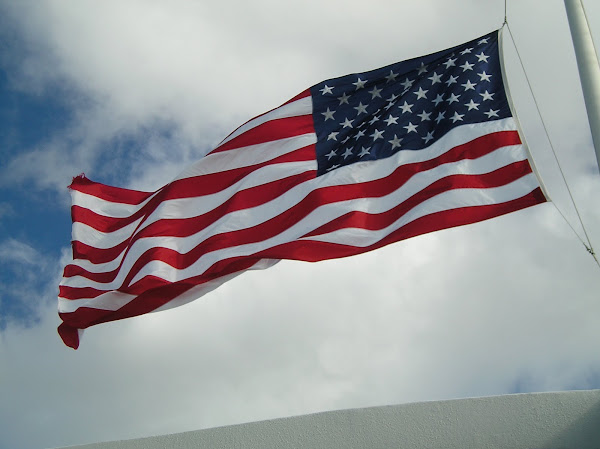
Image courtesy: Pfc. David Hauk, U.S. Army. Kandahar, Afghanistan, November 12, 2009

Friday, February 19, 2010

Moshtarak: The darkness

Image courtesy: Sgt. Aubree Rundle

Since Tuesday, when the Pentagon announced the death of Marine Cpl. Jacob Turbett, notices of military casualties in Afghanistan's Helmand province have been released at an alarming rate. Since I first subscribed to the Pentagon e-mail list while working at CNN, I cannot remember a volume of e-mails this high in one short period, all from Afghanistan, in the same province.

With Operation Moshtarak well underway in the region, a spike in coalition casualties was inevitable. This is not to say the anti-Taliban offensive is going poorly from a military standpoint; most analysts say it has been very successful, and one cannot evaluate an armed conflict based only on casualty figures.

But the below names are not statistics. They are real people with families, friends, and futures that will never be realized. We mourn these American patriots, as well as British, Canadian, Afghan, and other coalition forces who have bled alongside them. No matter how long it takes, this website will make every effort to bring all these important stories to you in the coming weeks and months.

Sgt. Jeremy McQueary, 27, Columbus, Indiana
Lance Cpl. Kielin Dunn, 19, Chesapeake, Virginia
Lance Cpl. Larry Johnson, 19, Scranton, Pennsylvania
Pfc. Kyle Coutu, 20, Providence, Rhode Island
Pfc. Eric Currier, 21, Londonderry, New Hampshire
Lance Cpl. Alejandro Yazzie, 23, Rock Point, Arizona
Lance Cpl. Noah Pier, 25, Charlotte, North Carolina
Pfc. Jason Estopinal, 21, Dallas, Georgia

During World War II and beyond, first lady Eleanor Roosevelt carried a prayer in her purse.

"Dear Lord, lest I continue in my complacent ways, help me to remember that someone died for me today. And if there be war, help me to remember to ask and to answer, 'am I worth dying for?'"

USO, Troops First Foundation bring peace to aching heart

Editor's note: This is a reprint of an article I wrote for the USO, which was posted Friday. Please click on the article, and support both the USO and Troops First Foundation with donations.

Finally back home after a difficult combat tour in Iraq, 1st Lt. Jim Kirchner sat in a busy TGI Friday's restaurant with his wife. While the wounded veteran was happy to be spending time with his family, something was clearly bothering him. Sissy Kirchner offered a penny for her husband's thoughts.

"I have to get healed up so I can get back over there," Jim responded.

Shocked by his answer, Sissy took a moment to regain composure. Why would her husband want to return to the war-torn country that he barely escaped alive? After all, Jim still carried a piece of Iraq with him, in the form of shrapnel embedded inside his heart. 1st Lt. Kirchner said that in order to be sure his ordeal had true meaning, he had to see it for himself.

"I wanted to leave the war back in Iraq and not bring it home with me," he said, while explaining his post-deployment mindset.

A few months later, Sissy read an online article about Operation Proper Exit, the new program funded by the USO and executed by the Troops First Foundation. The idea was both powerful and creative: give wounded heroes a chance at closure by taking them back to war zones that have left physical and emotional scars. She immediately forwarded the story to Jim, knowing he would jump at the opportunity. After speaking with Rick Kell, the program mastermind and Troops First Foundation president, Kirchner later found out he would be returning to Iraq in December 2009, with the third group of wounded veterans to make the emotional voyage.

A little over four years earlier, 1st Lt. Kirchner sat in a guard tower at Forward Operating Base St. Michael, during one of the most difficult periods of the Iraq war. He was in Mahmudiyah, an area south of Baghdad commonly referred to by troops serving there as the "triangle of death." There was intelligence indicating an imminent attack by terrorists, and the soldier was ready for action. Worried about his safety but driven by his sense of duty, Jim put his fears aside and manned his post.

"If it wasn't me in that tower, it would have been somebody else," Kirchner said. "You serve for the men or women beside you."

Jim was moderately surprised that there were no attacks, and retired to an Army tent to get some sleep before a patrol set to begin in a few hours. As he tossed and turned while trying to shake off the adrenaline that built up in the guard tower, the soldier flipped over his pillow and reversed his position on the bed. A few moments later, Kirchner heard a massive booming sound, then felt a strange numbness. He knew he had been hit.

Shrapnel from a mortar had torn into Jim's back, from his head all the way down to his knees. A shoulder and elbow were blown out, and he later found out a lung had collapsed. There was damage to his liver, pancreas, and heart, and prospects of survival seemed dim. Due to incredibly dangerous conditions on the ground, flying the badly injured soldier out of FOB St. Michael would be next to impossible, so a risky ambulance ride to the nearest hospital was the only option. Kirchner, knowing that terrorists would not hesitate to attack a medical caravan, thought he and everyone else in the ambulance would surely be killed.

When Jim miraculously arrived at Camp Anaconda, doctors told him he "probably wasn't going to make it." Before losing consciousness, he remembers being asked if he would like to be read his last rites, while "surrounded by guys pumping blood" into his weakening body. After pulling through in Iraq, Kirchner was flown to Germany, where he said the process was repeated all over again after his condition worsened. After several surgeries at Landstuhl Regional Medical Center and then Walter Reed Army Medical Center, the wounded veteran was told he would survive. He was left with scars, no feeling in half an arm, constant pain, and a permanent reminder of his near-death experience whenever he saw an x-ray of his heart.

The way Rick Kell saw it, Kirchner was a perfect candidate for Operation Proper Exit. While retired from the Army and still struggling with the demons of war, Jim had demonstrated that he wanted to move forward as a husband, father, and private American citizen. Kell, his Troops First Foundation, the USO, and top military officials like Gen. Ray Odierno and Col. David Sutherland had worked tirelessly to give heroes like Jim this unique chance at closure.

"On these trips, I have seen 18 people change physically in front of my eyes," Kell said. "To simply tell you that does not do it justice."

1st Lt. Kirchner travelled back to Iraq along with retired Master Sgt. Tom Carpenter, retired Sgt. Bill Congleton, Sgt. 1st Class Josh Olson, Sgt. 1st Class Mike Schlitz, and Capt. Sam Brown. Meeting Brown was a unique experience for Kirchner, who had his first face-to-face conversation with a severe burn victim. The two immediately developed a bond, and Capt. Brown, who was injured in Afghanistan in September 2008, would later get to spend time with his wife, Capt. Amy Brown, during the group's visit to a Baghdad palace, where the military rolled out the red carpet for the returning heroes.

Despite the serious nature of their wounds and the grief associated with visiting areas where comrades had fallen, the five combat veterans developed a friendly rapport. They joked around and even teased each other about their injuries.

"It may surprise people that wounded guys pick on each other," Kirchner said. "But it helps us all."

Everywhere the group traveled, U.S. troops of all ranks and backgrounds saluted them and wanted to hear their war stories. The conversations were positive not just for the participants of Operation Proper Exit, but for morale of the troops on the ground.

"It was phenomenal," Kirchner explained. "It didn't matter where we were, every branch was supporting us."

While the enthusiasm inside the military meant the world to Kirchner, seeing the changes to daily life in Iraq since he served there is what finally gave Jim's aching heart peace.

"Going back and being able to talk to the Iraqis had made a difference," Kirchner said. "The Iraqi people are now reporting al Qaeda. They don't want them there. That never would have happened back in 2005."

With his vastly different second trip to Iraq complete, Jim relaxed at home during a wintry day in Douglasville, Georgia. Now a health physicist for the CDC, Jim is helping Sissy raise their four children and watching his son, Pvt. Dustin Carney, finish training at Fort Gordon. Carney has made his dad proud, but Kirchner's real-life war experience has also left him concerned.

"I'm not sure if it's harder to be deployed yourself or see a loved one get sent overseas," Jim said. "I now realize what my wife was going through."

The chilly February weather makes Kirchner's constant pain a bit worse, and the shrapnel in his heart isn't going anywhere. But unlike many of his fellow wounded warriors, he was able to confront his past so he could have a brighter future, thanks to the Troops First Foundation, USO, and the United States military. Instead of dwelling on the past, Jim says he cannot wait to see what tomorrow brings.

"A lot of guys want to go back," Kirchner said. "I absolutely cherish that I got the chance."

Thursday, February 18, 2010

Moshtarak: Quietly doing their duty

Image courtesy: Lance Cpl. James Clark

The American media won't be talking very much about Operation Moshtarak the next 36 hours. That's because Tiger Woods is holding an 'apology' news conference on Friday, which many news executives see as ratings gold. U.S. troops, who are busy fighting terrorists and helping Afghans like the little boy pictured above, will once again take a back seat to the celebrity flavor of the week.

Across the pond, the BBC has a very helpful map and timeline to help its readers keep track of the day-by-day events of this crucial joint mission. Today's report says U.S. Marines are facing stiff challenges, like heavy machine gun fire and a brutal enemy that uses civilians as human shields. Yet despite the resistance, U.S., British, and Afghan forces continue to advance in Marja and Nad Ali.

The below video, produced by Tech Sgt. Rodolfo Castro, shows soldiers from the 4th Battalion, 23rd Infantry Regiment, Bravo Company, First Platoon in Helmand province. Seeing this raw footage from the ground, which includes the unit taking machine gun fire, yields valuable perspective. No matter what Tiger Woods says to America, the war to protect it won't pause.

Three soldiers killed in Zhari province attack

The Pentagon just announced the deaths of three American troops in Zhari province, Afghanistan. The three men were killed when an improvised explosive device planted by terrorists exploded near their patrol on Saturday. All were assigned to the 1st Battalion, 12th Infantry Regiment, 4th Brigade Combat Team, 4th Infantry Division. They were based out of Colorado's Fort Carson.

Staff Sgt. John Reiners, 24, Lakeland, Florida

Sgt. Jeremiah Wittman, 26, of Darby, Montana

Spc. Bobby Pagan, 23, of Austin, Texas

The Unknown Soldiers will have more on the lives of these three fallen heroes in the coming days. Please keep their families in your thoughts.

Image courtesy: The Colorado Connection

Tuesday, February 16, 2010

USA goalie told to remove 'Support Our Troops' from helmet

I was just about to start watching Team USA hockey take on Switzerland at 3 p.m. eastern when I came across this insane story, which has left a bad taste in my mouth about the 2010 Winter Olympics in Vancouver. According to Reuters, Los Angeles Kings goaltender Jonathan Quick has offended the International Ice Hockey Federation and International Olympic Committee by painting a "Support Our Troops" tribute on his helmet. He has been told to remove it, because it somehow falls under the ridiculous banner of "political propaganda."

The Reuters report, which includes a picture of Quick's helmet, said starting goalie Ryan Miller and backup Tim Thomas had already agreed to cover up unrelated slogans on their helmets. But it is not yet clear if Quick, who did a noble thing by remembering those sacrificing their lives for our freedom, intends to cooperate.

Here is my message to the International Olympic Committee. Were it not for the actions of the U.S. military following the 9/11 attacks, it is quite possible that it would not be safe enough to hold a large, global gathering like the Olympics without a terrorist attack on the event. You may choose to view that as a "political statement," but many others view it as simple reality. Regardless, there is nothing political about a country supporting its Armed Forces. Instead of trying to censor a patriot like Jon Quick, you should be thanking him, and his country, for keeping you safe.

Now, it's time to watch Team USA begin its march to the gold medal.

Friday, February 12, 2010

'You're going to write the next chapter of our history'


Image courtesy: Lance Cpl. Walter Marino

While much of America is shoveling snow or watching the opening ceremonies of the 2010 Winter Olympics, a key chapter in the war on terror is beginning to unfold.

At 2 a.m. in Afghanistan's Helmand Province, or 4:30 p.m. at New York's Ground Zero, 15,000 American, Canadian, British, French, and Afghan troops launched a significant offensive that you may have read about before on this blog, Operation Moshtarak. Coalition forces plan to overwhelm the southern city of Marja, which has a population of about 125,000 and is flooded with terrorists and Taliban forces.

The Army and Marines did not keep this key operation a secret, as they strategically tried to scare insurgents away from civilians, hoping they would then funnel into areas already controlled by the United States and our allies. The enemy fighters who stayed will be brought to justice. Military commanders have said repeatedly that this mission is to protect innocent people who live in Marja, who have been advised to stay inside during the intense battles that are now taking place.

A major concern, of course, is the bombs the terrorists have been planting before and after they learned of the planned invasion of Marja. Top commanders, while confident in the mission, have said they are extremely concerned about the IED threat the troops face. Yet once Helmand Province is under complete coalition control, which will be accomplished after Marja falls, hopefully there will be fewer and fewer posts on this site about U.S. servicemembers being killed by roadside bombs, and Afghan civilians being kidnapped, murdered, or enslaved.

Gen. James Conway, Commandant of the Marine Corps, flew into Helmand Province to address Marines before they put their lives on the line for Americans, Afghans, and each other during this critical operation. His speech begins about two minutes into the below video. Yet the most compelling aspect of the footage, which was produced by Cpl. Jenn Calaway, are the shots of Afghan troops listening to an American general's speech. We are helping this country rid itself of terrorists who have endlessly attacked them, as well as America and its global interests. Operation Moshtarak must succeed. As Gen. Conway assures us, it will.

Thursday, February 11, 2010

5 Americans injured in Afghanistan base attack

A terrorist disguised as an Afghan police officer has reportedly blown himself up at an American base in the Dand aw Patan district of eastern Afghanistan.

According to an Associated Press article linked on the USA Today website, the attack happened near dusk at the military installation, which is not far from the Pakistani border.

If all the facts the AP is reporting are verified, the attack is similar to the December 30 strike on a U.S. base in Khost, which killed seven CIA agents and a Jordanian. Hopefully, all the wounded will survive this attack, but this is another reminder of how the enemy operates. They often come disguised as friendly allies, and will target soldiers and civilians in the most cowardly methods imaginable. Al Qaeda, the Taliban, and all terrorist allies must be defeated.

Wednesday, February 10, 2010

'God has revealed his will'

It was a different world when Air Force Maj. Ken Bourland landed in Haiti on January 12. He was making a quick visit for a disaster-preparedness relief course, and checked in with his family via the internet upon his arrival. Then, everything changed.

After an agonizing search, which this blog followed closely, the Bourland family has confirmed that the 37-year-old husband, father, and son died in Haiti's catastrophic earthquake. According to to his family, his body was recovered on Sunday in the rubble of the Hotel Montana. Throughout this unimaginable ordeal, I have been astonished by the strength of Ken's family, which has been on display on a Facebook group called "Praying for the rescue of Ken Bourland." As Maj. Bourland's mother wrote, faith is giving his mourning relatives guidance and comfort.

"As you all know by now, God has revealed his will to us," Adrienne Davis Bourland said on Facebook. "Ken is with our Lord! Ken's body was found Sunday morning and recovered within a few hours. Peggy, Chance, Kellie, Dennis and I went to Dover Air Force Base yesterday to receive Ken's body from Haiti. We were escorted by Gen. Fadok. He and Mrs. Fadok have been very gracious to us, as have many others. Thank you all for loving 'on us'. We are sad but Ken is with Jesus!"

Peggy Bourland, Ken's wife, also posted in the group about the devastating news her family received.

"Today was a difficult day. My precious husband is with Jesus and will be missed and forever in my heart and thoughts."

Ken is also survived by two young sons, a stepson, and a sister.

It is difficult to accept or understand why these children have been challenged to grow up without a dad, or why so many Haitian youths are orphaned because of this shocking tragedy. Yet when you see a family like the Bourlands show such tenacity and unshakeable belief in God, even in their darkest days, a glimmer of hope begins to flicker through the rubble. Perhaps it is shining from above, because of a man who dedicated his life to serving others. Rest in peace, Maj. Ken Bourland.

Friday, February 5, 2010

U.S. soldiers killed in Pakistan identified

The Pentagon is identifying the three American troops killed on Wednesday in Timagara, Pakistan.

Sgt. 1st Class David Hartman, 27, of Okinawa, Japan.

Sgt. 1st Class Matthew Sluss-Tiller, 35, of Callettsburg, Kentucky.

Staff Sgt. Mark Stets, 39, of El Cajon, California.

According to officials, the special operations forces were training Pakistan's Frontier Corps when terrorists detonated a remote control bomb, destroying their vehicle. The convoy was on its way to the reopening of a girls school, which had previously been destroyed by al Qaeda. We mourn the loss of these three gifted American patriots, who were serving a noble cause in a dangerous land.

Wednesday, February 3, 2010

Danger zone

According to an unofficial count of Pentagon figures, 31 U.S. troops lost their lives in Afghanistan in January. All have families and loved ones mourning their deaths, and all volunteered to serve their country. As February begins, the volatile situation in Afghanistan continues to make the country a very dangerous place for our men and women in uniform.

The Pentagon sent out these news releases a short time ago:

Lance Cpl. Michael L. Freeman Jr., 21, of Fayetteville, Pa., died Feb. 1 while supporting combat operations in Helmand Province, Afghanistan. He was assigned to 2nd Battalion, 2nd Marine Regiment, 2nd Marine Division, II Marine Expeditionary Force, Camp Lejeune, N.C.

Staff Sgt. Rusty H. Christian, 24, of Greenville, Tenn., died Jan. 28 in Oruzgan province, Afghanistan, of wounds suffered when enemy forces attacked his unit with an improvised explosive device. He was assigned to the 2nd Battalion, 1st Special Forces Group, Joint Base Lewis-McChord, Wash.

As U.S., NATO, and Afghan forces prepare for a major offensive in Helmand Province, we mourn these two fallen warriors and support their fellow troops, who will undoubtedly perform brilliantly during their critical upcoming mission.