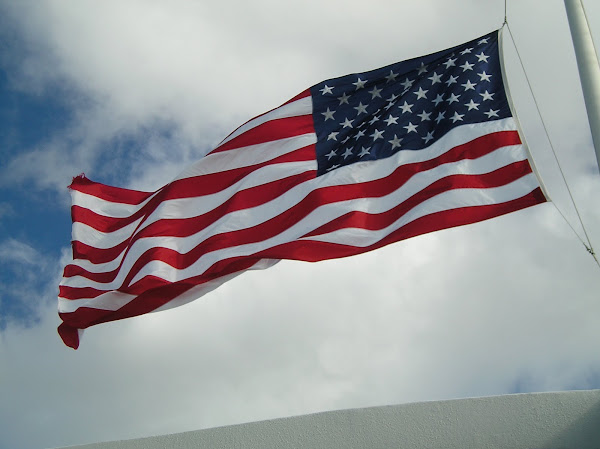
This website is about valiant U.S. troops who do their duty - largely without media attention or fanfare – and how a nation at war cannot afford to stand idly by.
Image courtesy: Pfc. David Hauk, U.S. Army. Kandahar, Afghanistan, November 12, 2009
Tom Sileo is co-author of 8 SECONDS OF COURAGE (Simon & Schuster, 2017), FIRE IN MY EYES (Da Capo, 2016) and BROTHERS FOREVER (Da Capo, 2014). He is a contributing senior editor of The Stream and recipient of the Marine Corps Heritage Foundation's General O.P. Smith Award for distinguished reporting. Previously, Tom worked at CNN as a copy editor. Follow him on Twitter @TSileo.
The Pentagon sent out four separate news releases on Friday and Saturday, naming more U.S. troops who lost their lives this week in attacks by insurgents and terrorists in Afghanistan.
Staff Sgt. Daniel Merriweather, 25, Collierville, TN (Combat Outpost McClain, Jan. 13) Pfc. Geoffrey Whitsitt, 21, Taylors, SC (Combat Outpost McClain, Jan. 13) Spc. Kyle Wright, 22, Romeoville, IL (Kandahar, Jan. 13) Sgt. Christopher Hrbek, 25, Westwood, NJ (Helmand Province, Jan. 14) Sgt. Lucas Beachnaw, 23, Lowell, MI (Darya Ya, Jan. 13)
As many Americans start their weekends, let's keep these fallen troops and their grieving families in our thoughts. The Unknown Soldiers will post more details on all five of these fallen heroes when they become available.
Image courtesy: Sgt. Ashleigh Bryant, U.S. Marine Corps. Kandahar, Afghanistan, July 2009.
On December 12, this blog asked you, the readers, this question:
Do you think the American media devotes enough time to U.S. troops serving in Iraq and Afghanistan?
The poll results are staggering. 99% of respondents, or 109 of you, answered no. One person voted yes. While this poll is of course unscientific, a result this lopsided spotlights an obvious disconnect between journalists and the public, which other scientific surveys have backed up. A 2009 Sacred Heart University poll found only 17.4% trusted the news media to report news honestly. That percentage was down a substantial margin from 2003, the year U.S. forces invaded Iraq.
Several scientific surveys have also found viewers think the national media covers too much celebrity news. As someone who worked in newsrooms for over eight years, I can tell you there is a huge push among management to focus on entertainment. It's silly, irresponsible, and wrong, and many of the individual stories of sacrifice you see on this blog don't get covered as a result. In the wake of a real human tragedy in Haiti, as well as the continuing violence in Afghanistan and Iraq, there is no better time for the media to confront this issue.
Thanks to everyone who voted in the poll, and a new one will be posted shortly.
An e-mail was just sent out by the Department of Defense, confirming the deaths of three U.S. Marines on Monday in Helmand Province. Here are their names:
Staff Sgt. Matthew Ingham, 25, of Altoona, Pennsylvania
Cpl. Jamie Lowe, 21, of Johnsonville, Illinois
Cpl. Nicholas Uzenski, 21, of Tomball, Texas
The Unknown Soldiers will be working in the coming days to bring you the compelling individual stories of each of these Marines. Simply listing their names and moving on is not enough.
Jake Rademacher grew up with five brothers in Decatur, Illinois, thinking he would one day be a soldier. Had life worked out the way he planned, he would have almost certainly deployed to Iraq as a young man.
God's plan was different. Jake's poor eyesight kept him outside the military ranks; a disappointment he struggled to overcome. But after the tragic death of one brother and the departure of two more to Iraq, he eventually wound up in the same war-torn country his initial path was taking him.
In "Brothers At War," the critically-acclaimed documentary now available on DVD that's executive produced by Gary Sinise, Jake sets out to learn more about why two brothers choose to spend months at a time away from his family in foreign lands. While embedding with their units and filming his experiences at home and abroad, he accomplishes his mission, while also producing a valuable historical document of U.S. soldiers completing theirs. But in two separate trips to Iraq, Jake also learns being related by blood does not solely define the brotherly bond.
In the film, we see Maj. Isaac Rademacher and Sgt. Joe Rademacher deploy to Iraq. We are given a difficult glimpse into the pain of a wife, girlfriend, mother, father, and a beautiful little girl who may never know her father. While Jake's embedded footage in the war zone is important, the scenes shot on the homefront are a revelation. At one point, Isaac, who his younger sister lovingly lauds as "Superman," actually reveals he is fighting a "two front war" in Iraq and North Carolina, where he is shown with his family between deployments. Adjusting to life back home after a year in Iraq is taking its toll, just like it is on Joe. Going to Wal-Mart and hearing people complain about phone bills and other trivial problems is actually more difficult for the Long Range Surveillance Company commander than kicking the door in of an insurgent hideout. As he puts it, "nobody understands."
The film's unglamorous realism leads to its greatest achievements. Instead of seeing soldiers triumph daily in Iraq, we see them digging makeshift toilet holes in the desert. We see them playing video games, and in a hysterical segment, gathering around to watch "The O.C." on a rare night off in Iraq, after reluctantly admitting to each other that they all love the show. We see the brutal sandstorms, treacherous heat, and painful boredom of a five-day desert mission that produces almost no tangible results. "We're not here to blow things up," Sgt. Ben Fischer explains, offering the filmmaker what seems to be a semi-apology for the lack of action to record on the mission.
What the young filmmaker does best, though, is finally bring the military's almost mythical camaraderie to the big screen. This is what makes "Brothers At War" reality TV that's actually worth watching. We don't just hear troops talking about putting buddies ahead of their own welfare: we see it. In one of the movie's most powerful scenes, American and Iraqi soldiers put their lives on the line for each other in a way we never thought possible when 1990's America was captivated by smart-bomb footage during the first Gulf War. The film does not endorse the 2003 invasion of Iraq, since the troops fighting the war did not make the decision to invade. What it does endorse is hope. If American and Iraqi forces can become brothers in arms, can't we all learn from their example?
While he never says it, Jake's visits to Iraq help him realize that Joe, Isaac, Claus, and the late Thad are not his only brothers. He speaks to U.S. troops who were putting their lives on the line for him before they ever met.
"If you have kids, if anybody else has kids, we're out there for them," Spc. Christopher Mackey says.
Jake then poignantly asks: "Is it worth it if it costs you your life?"
"Yeah, it'd be worth it," Mackey answers after a brief pause. "That's why I'm here; I'd give my life for America any day. Wouldn't think twice."
Some sad news from Afghanistan today, where NATO confirms that 2 U.S. soldiers died in an explosion in the eastern part of the country.
CBC News reports the troops were killed in a bomb attack. No further details have been released, and as always, names of the fallen will be withheld until their families are given the tragic news in person by U.S. military messengers. To learn more about this delicate notification process, I highly recommend seeing the new critically-acclaimed movie "The Messenger," starring Woody Harrelson and Ben Foster.
The CBC report says 28 NATO soldiers have been killed so far in 2010. According to an unofficial analysis of Pentagon statistics, today's two deaths will be the ninth and tenth, respectively, for U.S. forces in January. We mourn each and every fallen hero.
While the story has not gotten much airtime on CNN in the United States, embedded international correspondent Atia Abawi does an admirable job reporting on how the military's largest helicopters are being used in Afghanistan.
Abawi did a nice job letting the troops on the ground (or in this case, in the air) tell the story for the viewers. I was also surprised to learn that choppers are moving more material in Afghanistan than Iraq.
Good job here, CNN. Now all you have to do is give these stories the airtime they deserve, as well as prominent placement on your website, and do it on a consistent basis.
The Pentagon announced the death of Pfc. Michael Jarrett last night. The North Platte, Nebraska, soldier was 20 years old and was killed on January 6 in Balad, Iraq. The military said the tragedy was a "non-combat" incident. Jarrett's death is under investigation.
According to the Lincoln Journal Star, Jarrett was based in Illesheim, Germany, before his deployment to Iraq. His flag-draped casket returned to Dover Air Force Base in Delaware on Thursday.
58 U.S. troops with ties to the Cornhusker State have been killed in Afghanistan and Iraq.
According to various media reports, A U.S. Marine was killed Saturday in Nawa, Afghanistan, when a vehicle struck a roadside bomb. Another five U.S. Marines were wounded in the attack, according to the British Ministry of Defence.
This CNN article, which I will discuss more in the coming days, says British journalist Rupert Hamer was also killed in the terrorist attack. A photographer, Phil Coburn, was seriously wounded. Both men are employed by the British Sunday Mirror newspaper and were embedded with the United States Marines. The Marine killed in the attack has not yet been identified by the Pentagon, which never releases names of the fallen until next of kin has been notified.
Let's all say a prayer for the families of this fallen warrior, the five fellow Marines wounded in the attack, and the loved ones of both journalists.
You may have noticed that this site's address has changed. The permanent link is now http://www.unknownsoldiersblog.com. Thanks to all of you for supporting our troops and this site as it continues to evolve.
If you're like me, you love the weekends. They're a time to relax and spend time with your family and friends. Many Monday through Friday workers take Saturday and Sunday to watch ballgames, go to the movies, enjoy the outdoors, play golf, or fix up the house.
For U.S. troops in Afghanistan, Iraq, and around the world, Saturday is just another day, and Sunday is just the day after Saturday. A war doesn't pause for a weekend or even a holiday, although some servicemembers are given breaks for Thanksgiving and Christmas. These warriors are out on missions, spying on the enemy, training local police like you see in the above photo taken in Iraq, or trying to endure miserable conditions at makeshift mountain bases in Afghanistan. Some troops do have downtime, but many don't. One thing is certain: nearly all are missing their loved ones, and wishing they could be together for the weekend.
As Americans on the homefront, I don't think we should feel guilty for enjoying our days off. It's important to carry on with our lives during wars, recessions, terror scares, bad weather, and anything else God throws our way. But one thing I try to do at least once a day, and even more since I started running this blog, is pause for a moment and remember that half a world away, fellow Americans are doing extraordinary things to give me the privilege of relaxing for the weekend.
Image courtesy: Pfc. Jessica Luhrs, U.S. Army, Kirkuk, Iraq.


 The Pentagon sent out four separate news releases on Friday and Saturday, naming more U.S. troops who lost their lives this week in attacks by insurgents and terrorists in Afghanistan.